Introducing ‘Bert’, our Current Overland Vehicle
“Good things come in threes” so, for Australia, we now have Bert, our Hino FT truck carrying our familiar “home”.
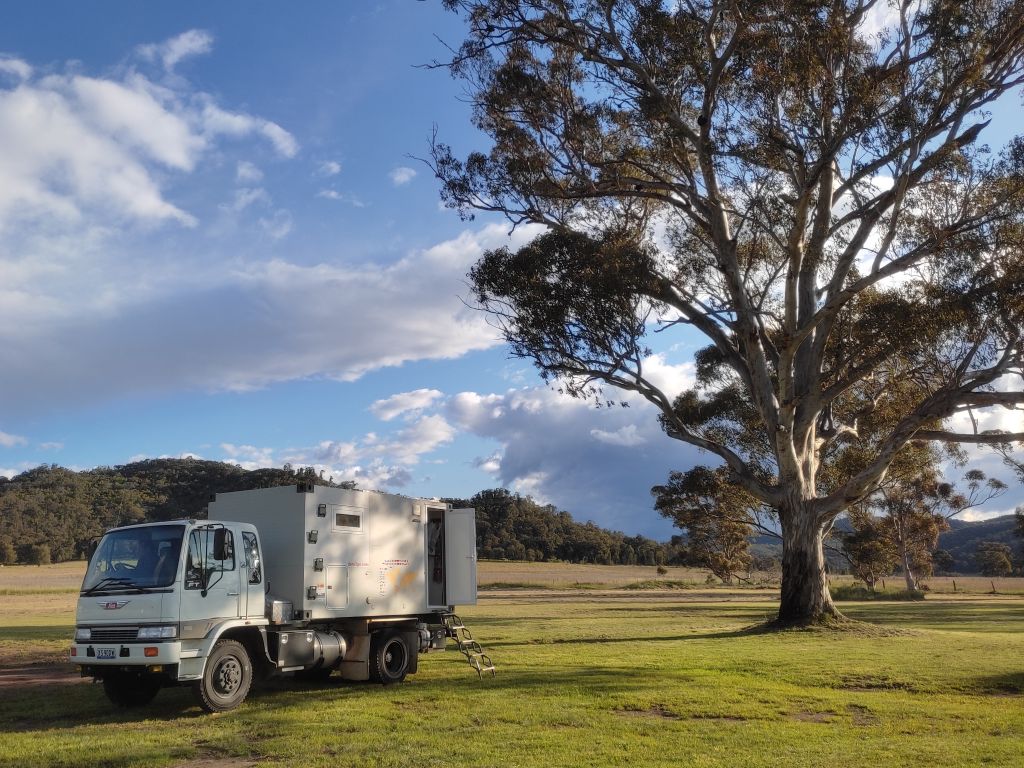
Our new base vehicle for the old habitation box: Bert, a 1994 HINO FT truck. Here parked under a magnificent gum tree.
I realise that this introduction is way too late, but better late than never. Actually, I had started an article about our current vehicle in November 2023, but then lost myself by adding the story of us being stranded in Europe during the pandemic and our problems getting back. That’s a story, which is way too convoluted (and now outdated) to tell in a short write-up.
The name ‘Bert’ comes from Yasha. She thought it was a logical continuation from our previous trucks, ‘Berta’ and ‘Bertita’ ; and ‘Bert’ is a good name for an Aussie bloke.
In reality, ‘Bert’ is not truly an Australian bloke. He’s actually of Japanese origin: a HINO truck, made by the then sister company of Toyota. I say “then”, because at the end of 2024 Toyota merged the brand with Mitsubishi/Fuso *) to form a new truck building company.
*) Mitsubishi/Fuso is now owned 25% by Mercedes Benz Trucks, 25% by Toyota
Like ‘Berta’, ‘Bert’ was also a fire-engine in his previous life. We actually bought him in an online auction while we were still stuck in Germany (in the middle of the night, due to the time difference between the continents). As it was the middle of the crazy pandemic times, we also paid a lot more than expected, but unfortunately those were the going prices at the time…
Since we were still stranded overseas, Yasha’s nephew offered to pick him up in Adelaide at the Pickles Auction site and drive him to Renmark. In the meantime we were busy arranging the shipping of our habitation box from Germany to Australia.
The end of our overland dream in Europe
First we had to clean the camper fastidiously to comply with Australian quarantine rules, and then bring it to the port of Bremerhaven. Luckily, some online acquaintances offered us a space on their farm property, not far from Bremen and Bremerhaven. And they had a friend with access to a crane from the German disaster support services [THW].
‘Bertita’, our beloved Mercedes Vario 815D, was advertised on “Kleinanzeigen”, a German site similar to “Gumtree” in Australia and the UK. We got almost the same amount we had paid for her, and she went to an earth moving business not far from where we had bought her. So now ‘Bertita’ is carrying a front end loader on her tray instead of our home.
Click the images to display a large version!
-
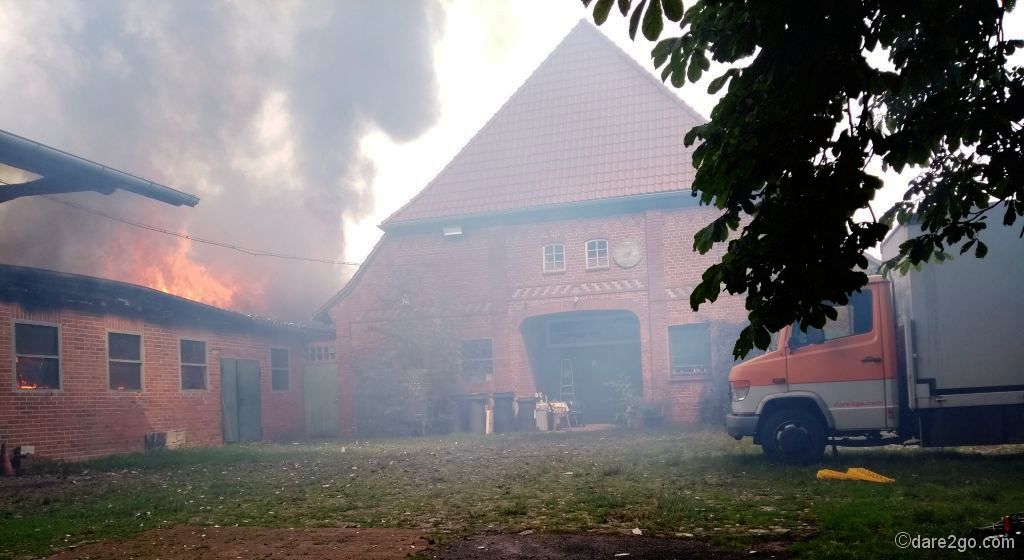
- Germany: before we even got started with cleaning our camper, we almost lost it. Unfortunately the people, who invited us, lost a lot. Their house was saved but their workshop, with countless tools, was completely destroyed. I couldn’t move Bertita because she wouldn’t start, and the police were chasing me out of the yard.
-

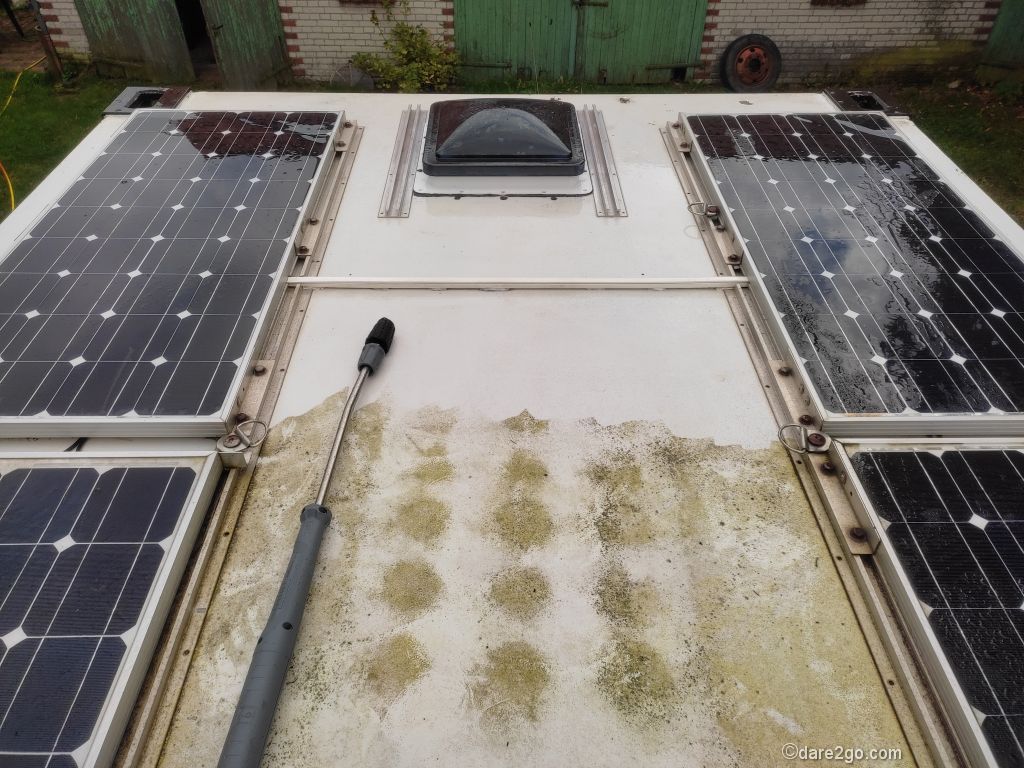
- Germany: part of the cleaning was the roof with all its tricky spots to get to – like removing the last dried leaf under the solar panels. But you can see the difference.
-
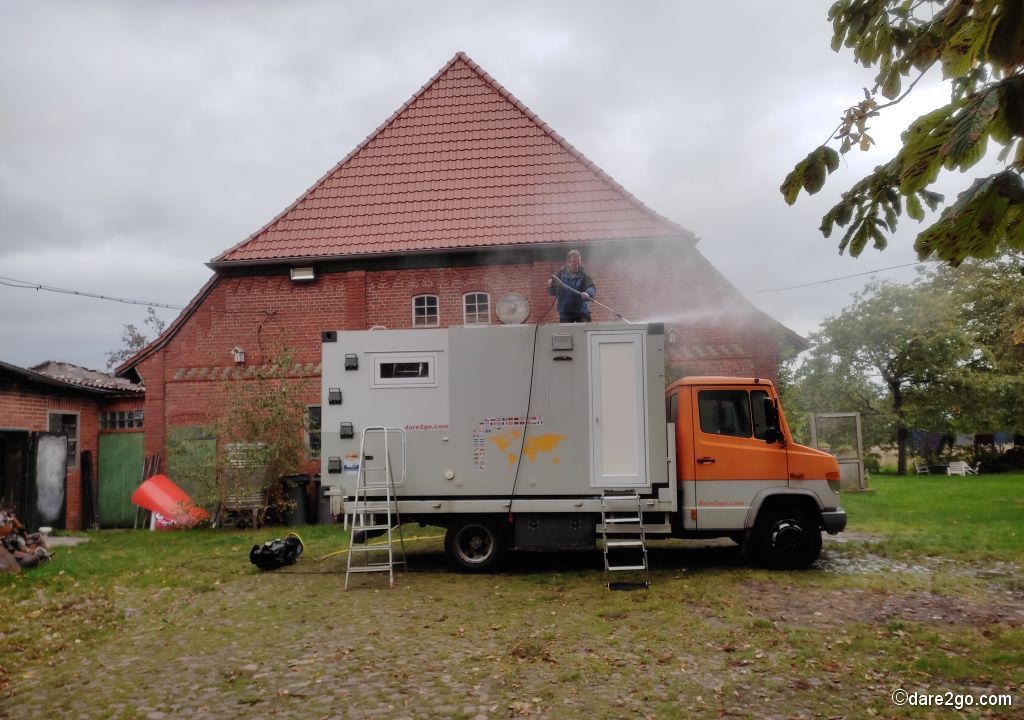
- Germany: washing the roof with a high-pressure cleaner.
-
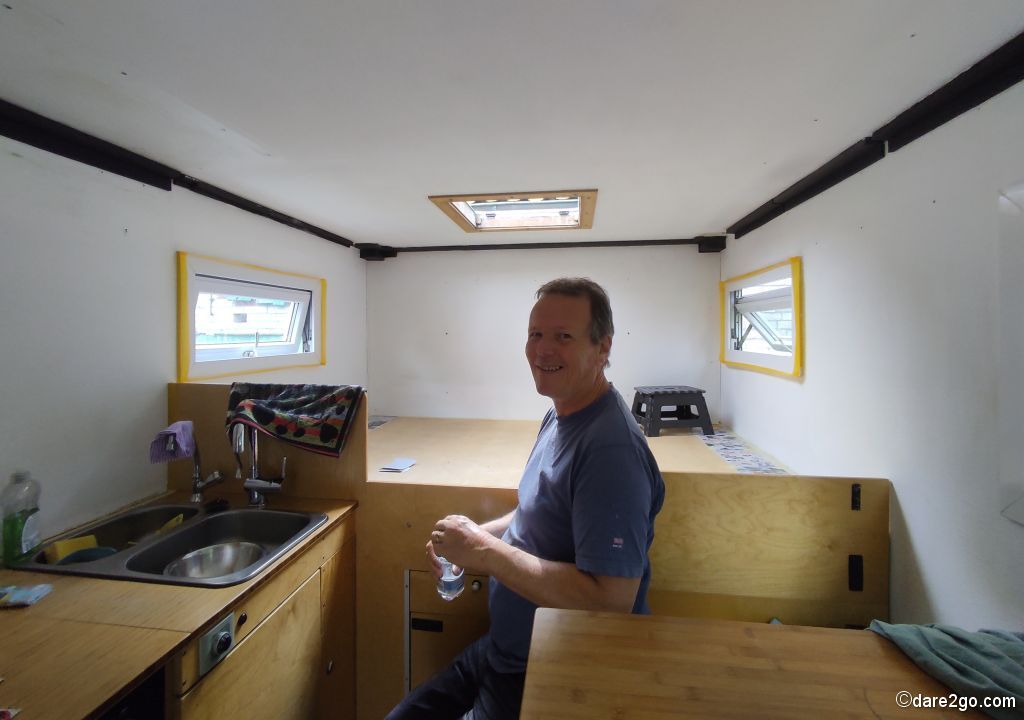
- Germany: once again we stripped down the interior of the camper, cleaned it thoroughly, repainted the walls, and even repainted the some of the cupboards.
-
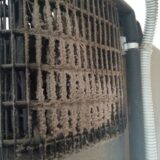
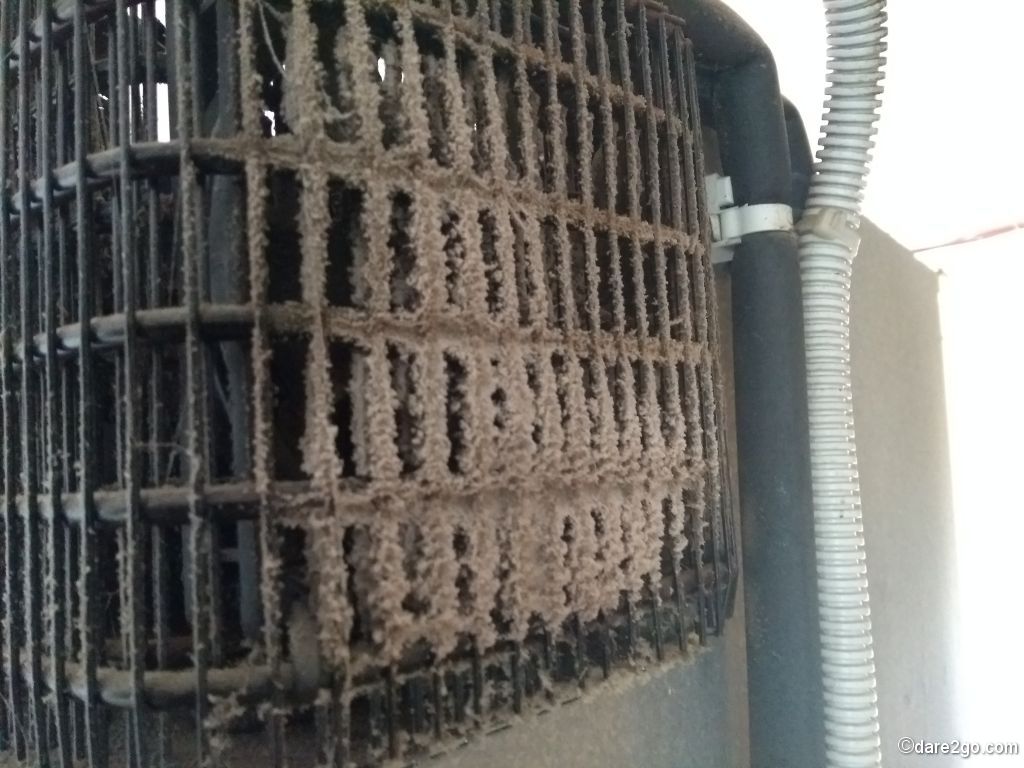
- Germany: since we didn’t know how thorough the Australian quarantine inspection would be, we also removed the fridge from the cupboard. This is what the compressor looked like… Disgusting – after almost 9 years!
-

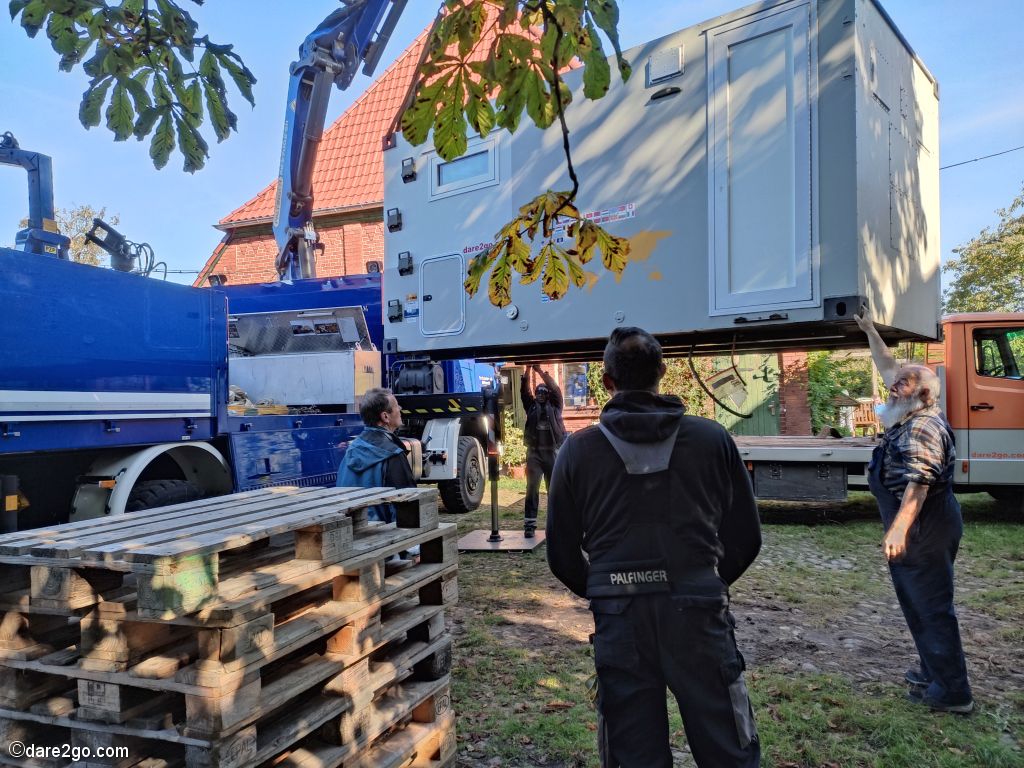
- Germany: we were really grateful to have this place and get access to a THW crane to move our habitation box. This was the evening we moved it off the truck (and stored on palettes).
-
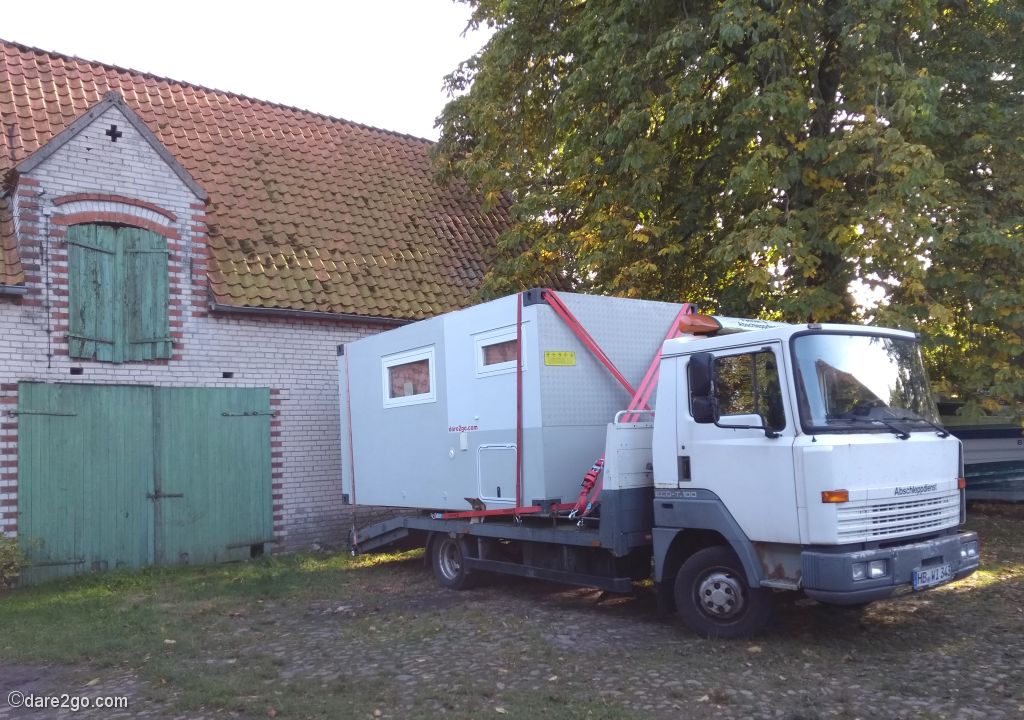
- Germany: the end of all the cleaning work and the habitation box tied to a tow truck, which I had initially rented for a day. And then our delivery date in port was moved (when I already was in Bremerhaven) from Friday to Monday… All loaded up – nowhere to go!
-
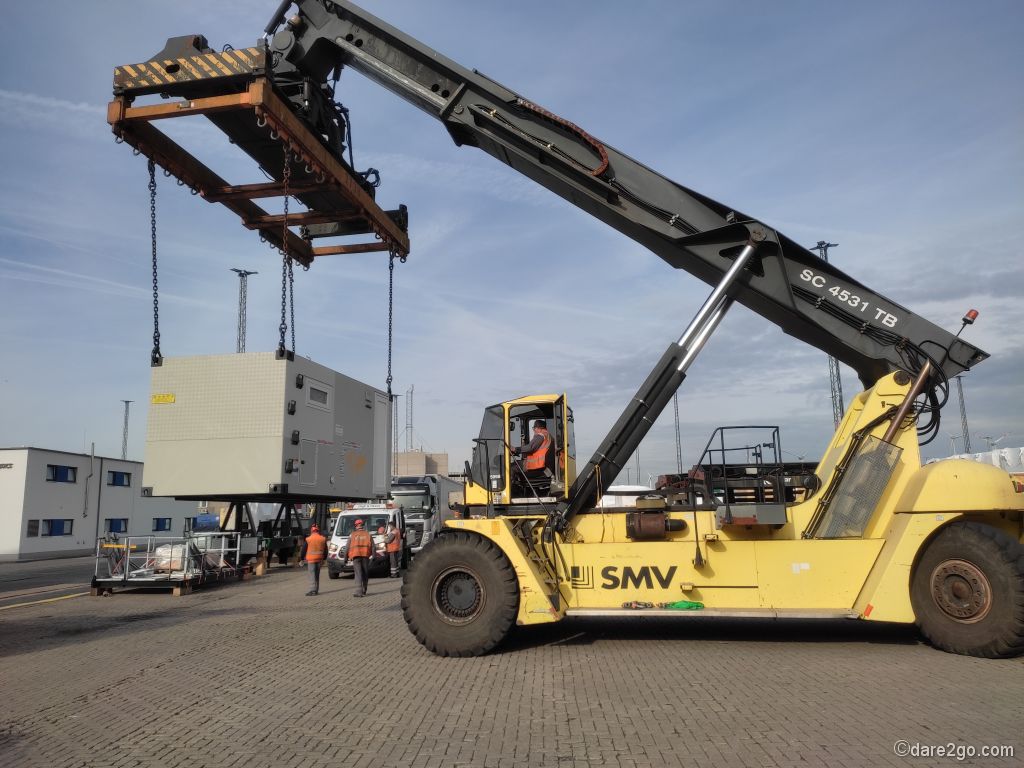
- Germany, Bremerhaven: I just drove the truck from under our habitation box, which will now be placed on a trolley to load onto the RoRo vessel to go to Australia.
Most of this happened from late August until mid October 2021. We finally caught a so-called repatriation flight on the 23rd of October to Darwin, where we spent 2 weeks in quarantine before being allowed to freely enter the country.
Once we were in Adelaide, we needed some rest and also some kind of vehicle for daily use. Again the crazy “pandemic market” made it more complicated than otherwise, but we bought a simple, little Mazda 121, which served us well for several months. Once we had it, we set off to Renmark.
Renmark, in the Riverland of South Australia, was our first place to call “home”, because our real home had tenants in it. Yasha has relatives in Renmark and her niece, Catherine, offered us a room in her home.
Our truck was already standing in her yard and had become the favourite “adventure playground” for her son Harvey. That was the first time we both laid eyes on Bert, still with most of the fire department equipment on the back.
Yasha and I were both still exhausted and in a bit of a haze after the very up-and-down and turbulent last few months through lockdowns, cancelled flights, financial uncertainty, and whatnot.
We needed time to get our bearings, accept that we were back in Australia, and make plans for travelling around our home country. Little did we know that these, so far fairly vague plans, would soon all fall apart! But more about that later…
We also had heaps of things to organise: apply for our pensions, Yasha’s passport and driver’s licence needed renewal, the truck needed a technical inspection and to be registered, we needed to sell the tray on the back or everything on the tray in separate lots, and other bits and pieces. And we needed to find somebody to build a frame for our habitation box, the camper, and to organise the arrival of it in Australia.
To my surprise the fire-department tray with everything on it sold fairly quickly and we got (what we think) a fair price for it. We drove it to a large farm nearly 200 kilometres south from Renmark: they needed to replace their old fire-engine to fight possible grass fires on their property.
Finally, we settled with a local steel manufacturer, JCK Engineering in Renmark, for the frame build. Jeff, who had never done a spring-loaded kinetic frame, did a fantastic job. We helped a little with photo material from the internet to show details of other approved designs, and with addresses of special suppliers for the springs. But, overall he was just very flexible to “try something new”.
Our habitation box was scheduled to arrive in the second half of November, but was so delayed that it arrived “punctually” for Christmas, which caused a lot of drama. First of all, Christmas into mid January is the main holiday in Australia, being also our summer holidays – hardly anybody goes to work at that time of year.
Then Quarantine was closed for nearly two weeks due to a single Covid case, which delayed getting the box out of port even longer. In the end, it arrived in Renmark in early February. For all this delay, we were shocked to receive an additional invoice for “storage in port”, which surpassed the amount we had paid for the (expensive!) shipping from Bremerhaven to Melbourne! Thanks to Martin from ivssuk.com this ridiculous bill was finally waved.
Jeff from JCK had been hesitant to finalise our frame until he had the box in his yard to cross-check the position of the container locks, even though I had given him the technical drawings of our Zeppelin shelter. On the other hand, he needed it out of his workshop, because in the Riverland the wine harvest was about to start – his busiest time of year.
Finally, at the end of February, it was nearly all done. The frame was painted and mounted on the truck ready to fix the habitation box onto it (we only bolted it on this time, no quick release container locks).
Click the images to display a large version!
-
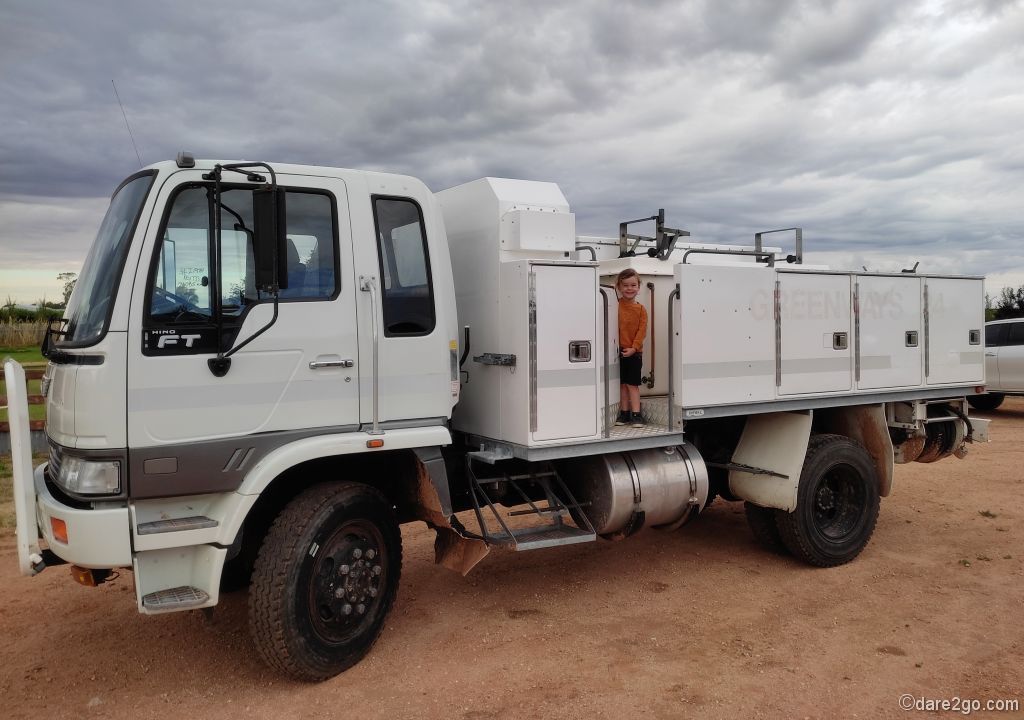
- Our Hino truck “Bert” as we bought him
-

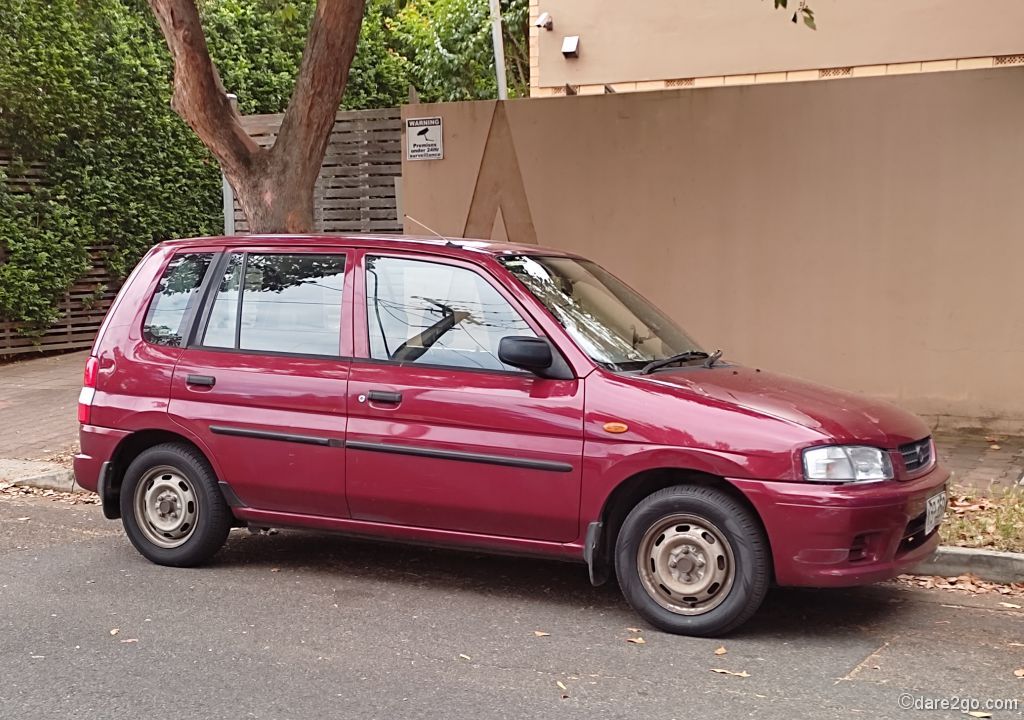
- Our little Mazda 121. Of all the “shitboxes” I could find, this seemed to be the best one. Apart from a service and change of CV-joints, it didn’t let us down and took us all the way from Renmark to the Gold Coast and back. We sold it for the same amount as we had bought it…
-
- The truck is ready to have the entire tray, with watertank and pump, removed from the chassis.

-
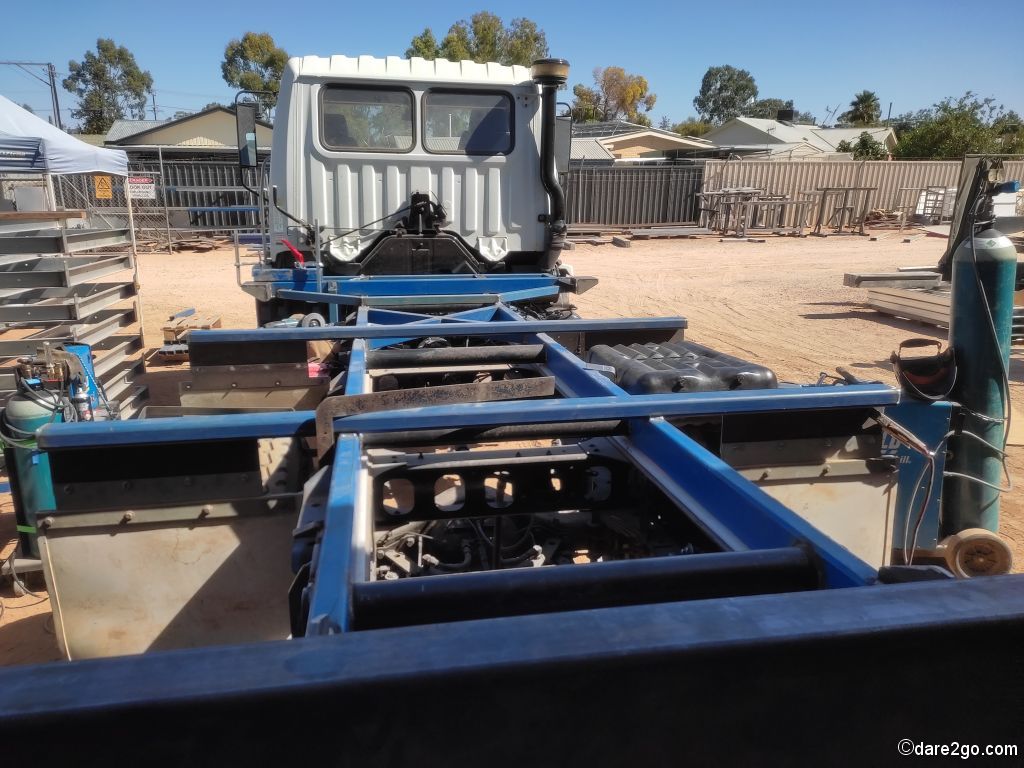
- The first steps to weld our helper frame are finished.
-
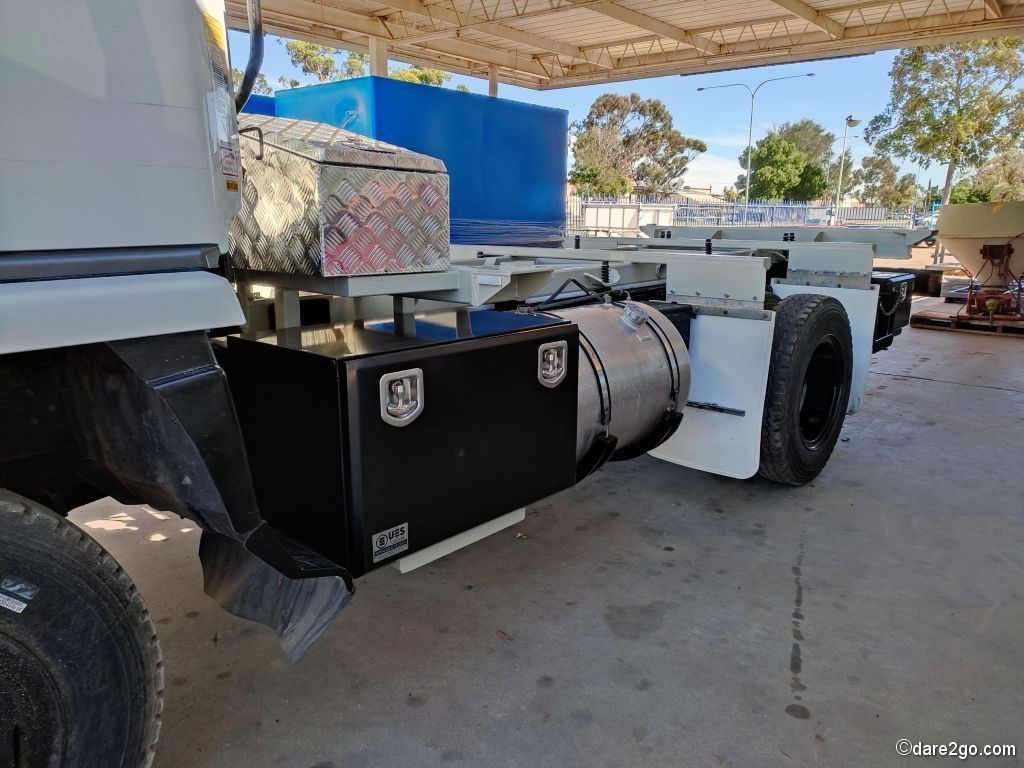
- Finally the finished frame is mounted to the truck. The storage boxes are attached to the frame and the old mudflaps have been also attached to the frame.
-
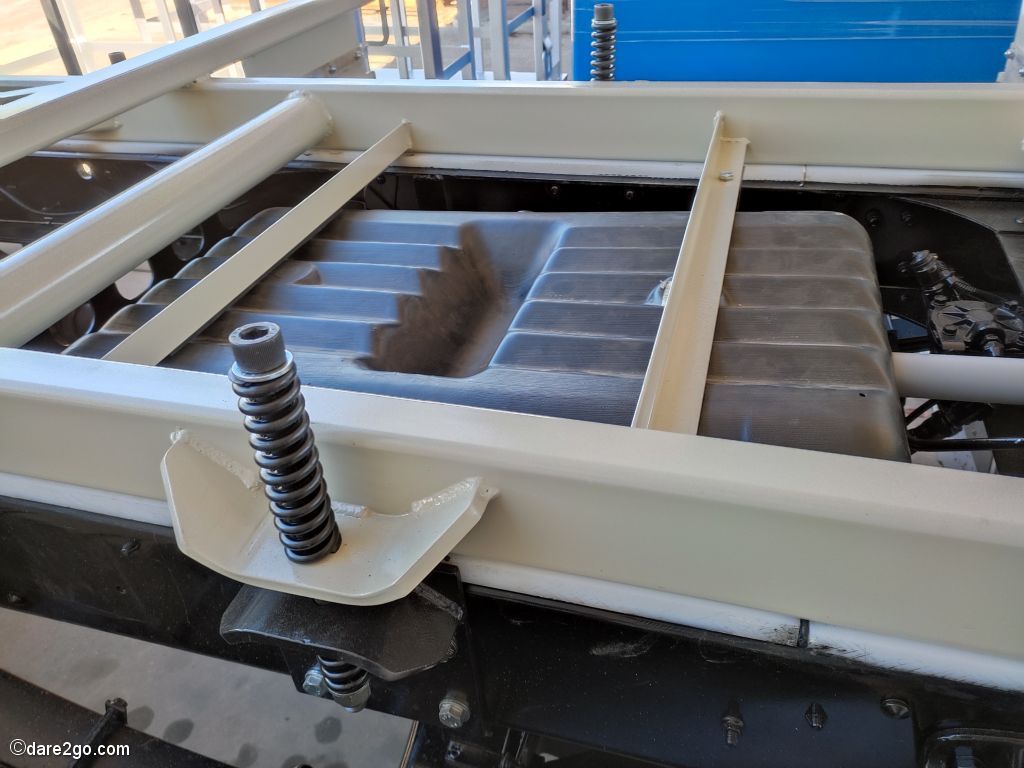
- Details: we fitted a small poly tank for grey water between the chassis rails (with a little slope for easier emptying). In the foreground one of the helper spring mounts. You can easily see the layer of Nylon between chassis and the kinetic frame.
-
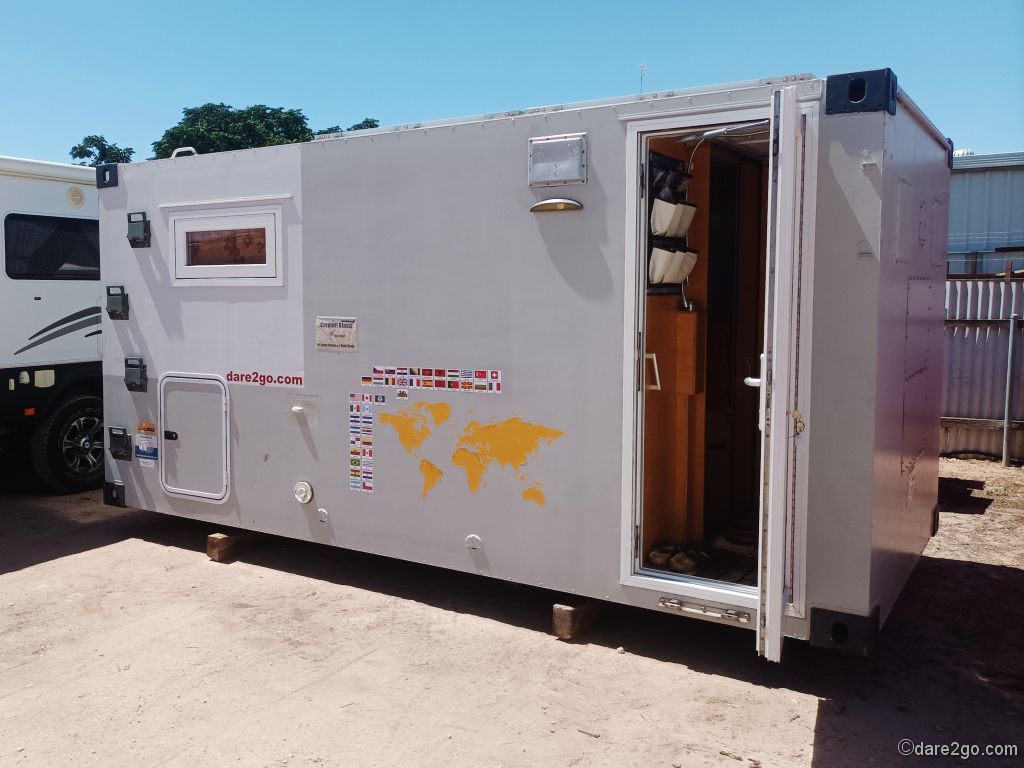
- Our shelter (the habitation box) has finally arrived in Renmark, South Australia
-
- Last adjustments of the bolts for the kinetic movement, but basically the truck is ready to leave the engineering business. Note: we had to turn the entire box 180 degrees for right hand traffic in Australia!
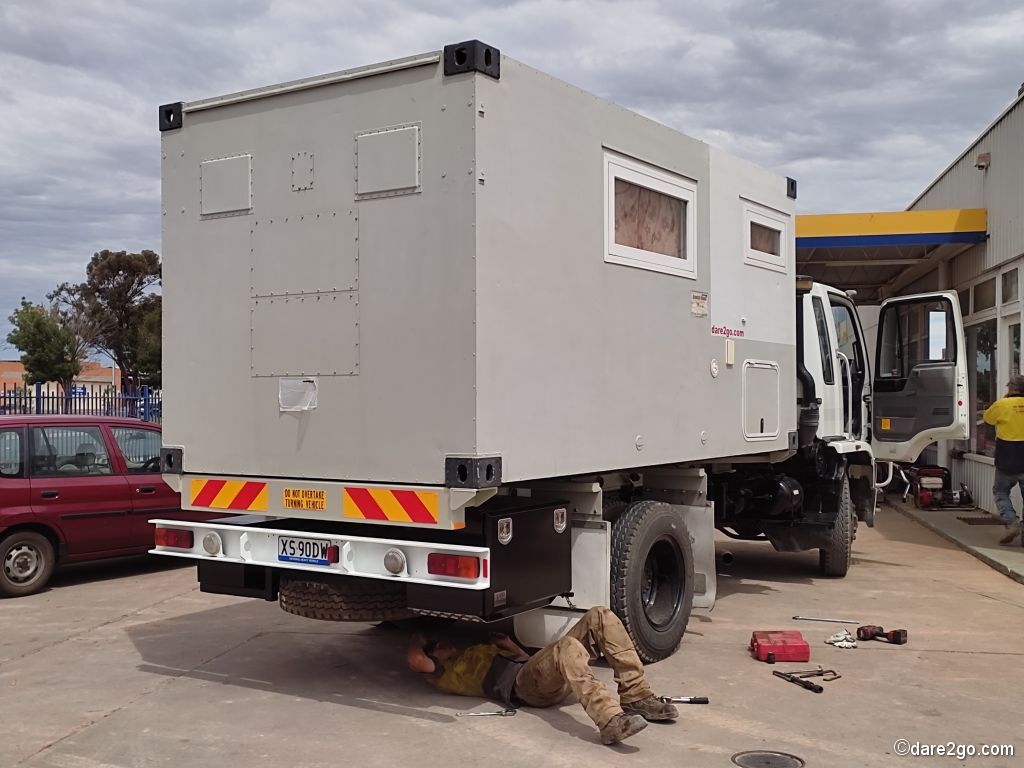
In Germany this step is called “Hochzeit” [wedding], when you bring truck and camper box together. It’s an exciting moment, a moment we’d been working towards for months. Finally a new vehicle to hit the road with and go travelling. And we missed this very special moment!
A big, and unexpected, spanner in the works
A few days before, we had been in Adelaide for a few appointments; mostly simple things like dentist and another specialist. While we were in Adelaide, I noticed some posts on Facebook that our hometown of Mullumbimby, where we own our small duplex, was flooding. Most messages were fairly vague, but it slowly emerged that it was a major flood – until all communication was interrupted because power, telephone and the mobile network all collapsed due to water inundation.
On Wednesday we drove back to Renmark, still not absolutely clear if and how our our house was affected, but determined that we should drive up and assess ourselves. It’s nearly 1800 kilometres one way along fairly average inland roads, no dual-lane highways, and nearer to Mullumbimby it was unclear where and if we could get through at all, because the entire region was affected by the flood.
So Thursday and Friday was mostly taken up with preparations for the trip, from bringing the little Mazda to the mechanic for a new CV joint and check-over, borrowing an Esky from our niece, packing, trying to contact the real estate agent in Mullumbimby, notifying the insurance about the flood impact, to finding somewhere to overnight close to Mullumbimby.
Friday morning we drove past JCK, on the way back from a doctor’s appointment, and caught a short glimpse of our truck standing in the yard with two forklifts trying to manoeuvre the habitation box into position. But no time to stop, we had a long drive ahead of us.
Getting close to our home was an eerie experience. On one hand we didn’t know what to expect. On the other hand it was impossible to find reliable information online, because the whole region had been cut off. When we arrived in Grafton, we stopped at a petrol station. We were told that the Pacific Highway was still closed going north. We couldn’t even find clear information about closures of secondary roads.
We finally took a route through Casino, the first town affected by the flood. We also encountered a detour to reach Lismore. This town was really badly hit. The flood waters had retreated, but it was absolutely unbelievable to witness the destruction whilst driving through. Even individual farms on hills outside Lismore had piles of soaked possessions laying in their driveways. In the evening we arrived in Byron Bay, without having been to Mullumbimby.
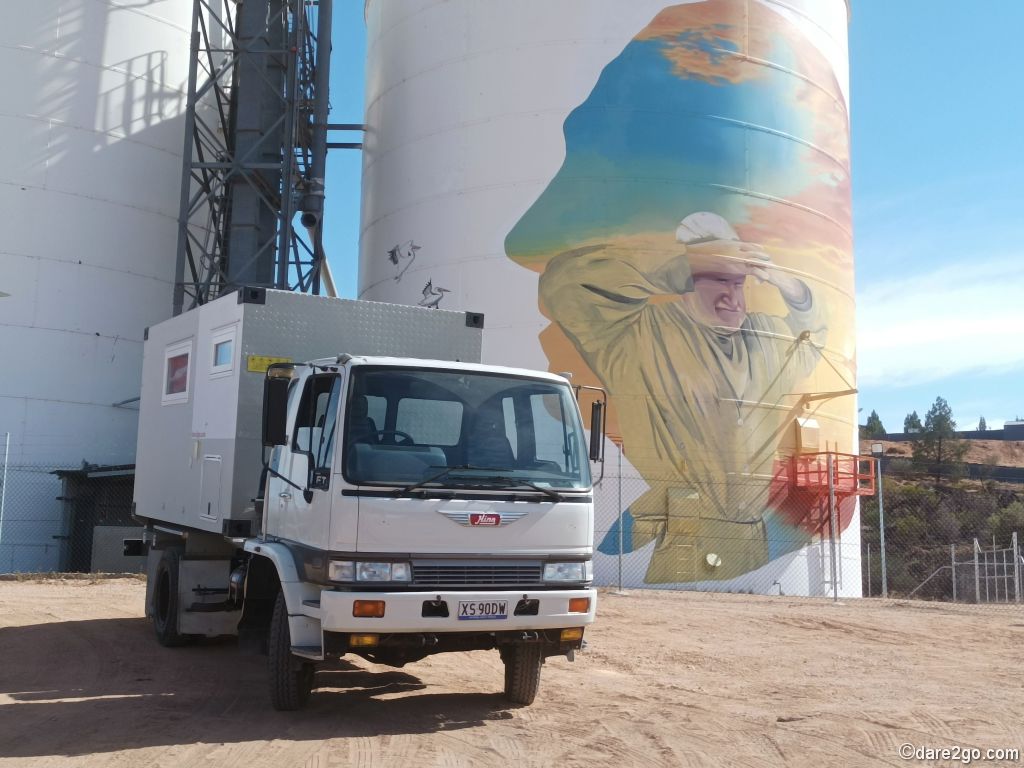
One of the first short outings and a good photo opportunity: the tank murals in Paringa on the River Murray. I had to visit an auto electrician in Paringa for a minor problem.
The next day, Tuesday, we inspected our house. On first impressions it didn’t look so bad because water had only come in about 10 centimetres deep. We also met the assessor sent by our insurance company. It was his job to see how much damage there really was.
The next day, my birthday, we received the key for our garage, where all our remaining private possessions were stored. To this day, we are amazed that hardly anything got damaged, because I had been so “smart” (?). I had decided to store everything on pallets and timber boards – not in case of flooding as such, but because our hot-water service is behind the garage and I had feared that it could spring a leak…
Anyhow, after three or four days we started the drive back to Renmark so we could pack up our truck and return home in it. Jeff had almost finished with ‘Bert’ when we arrived in Renmark. The overall outcome was really stunning and elevated our otherwise fairly depressed mood.
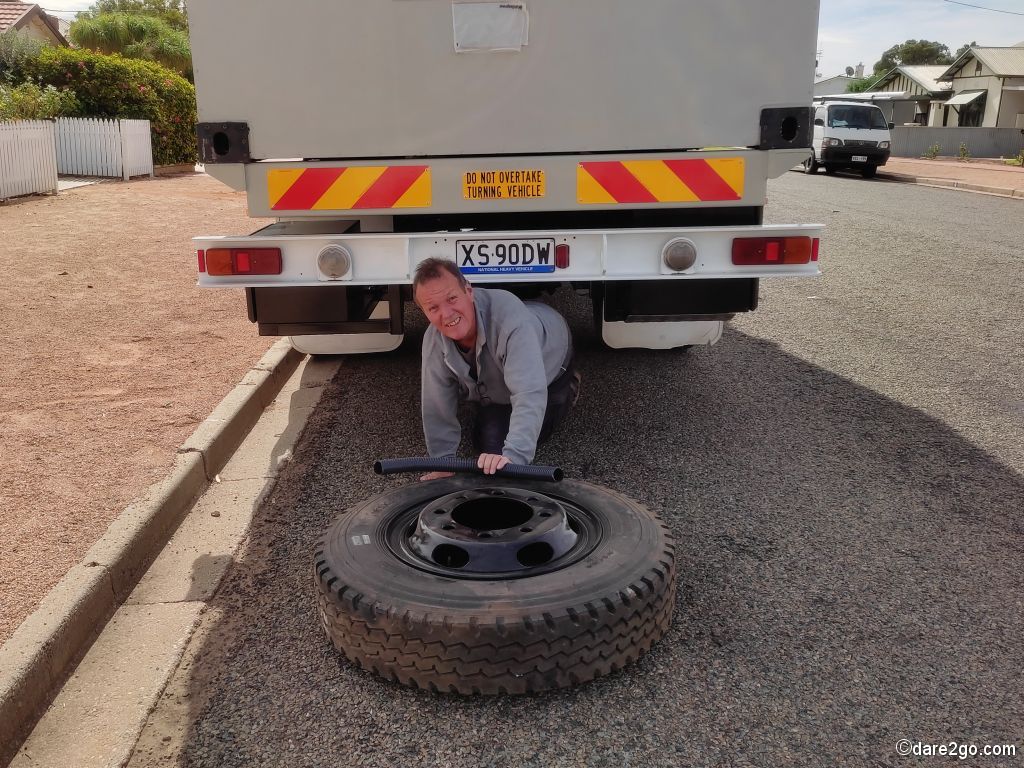
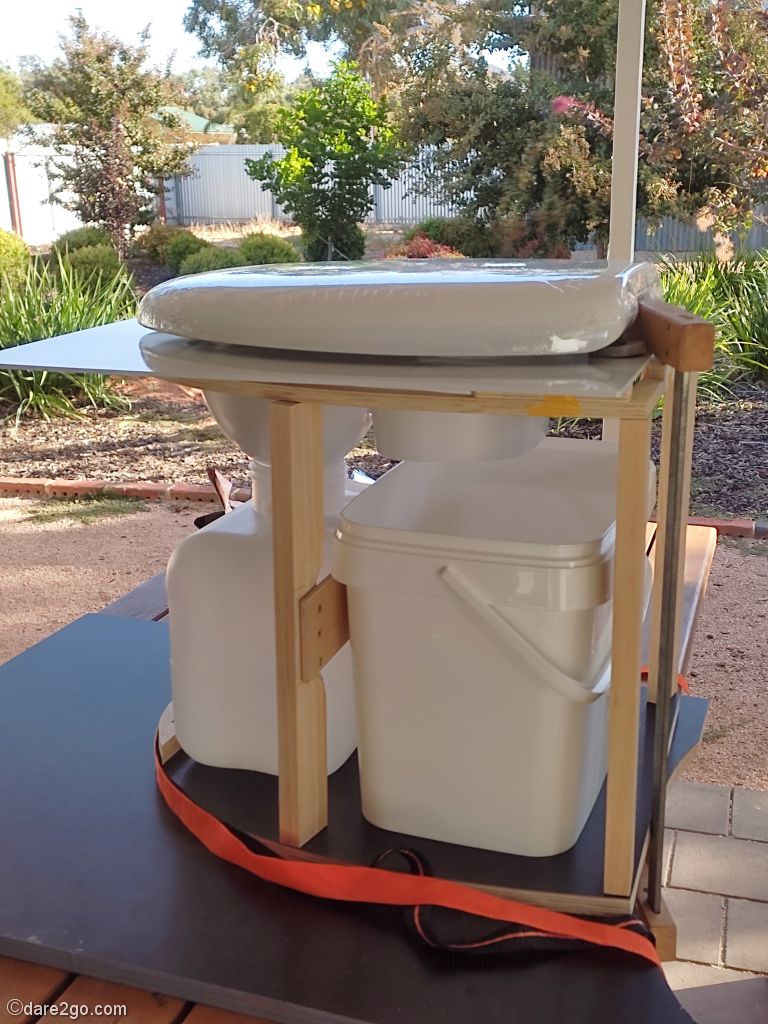
I still had to do a few things myself, like connect a grey water tank and organise the new storage boxes with some shelving, and get Australian gas bottles connected to our European system. I also needed to build our new composting toilet, for which we had brought a kit from Germany.
Click the images to display a large version!
-
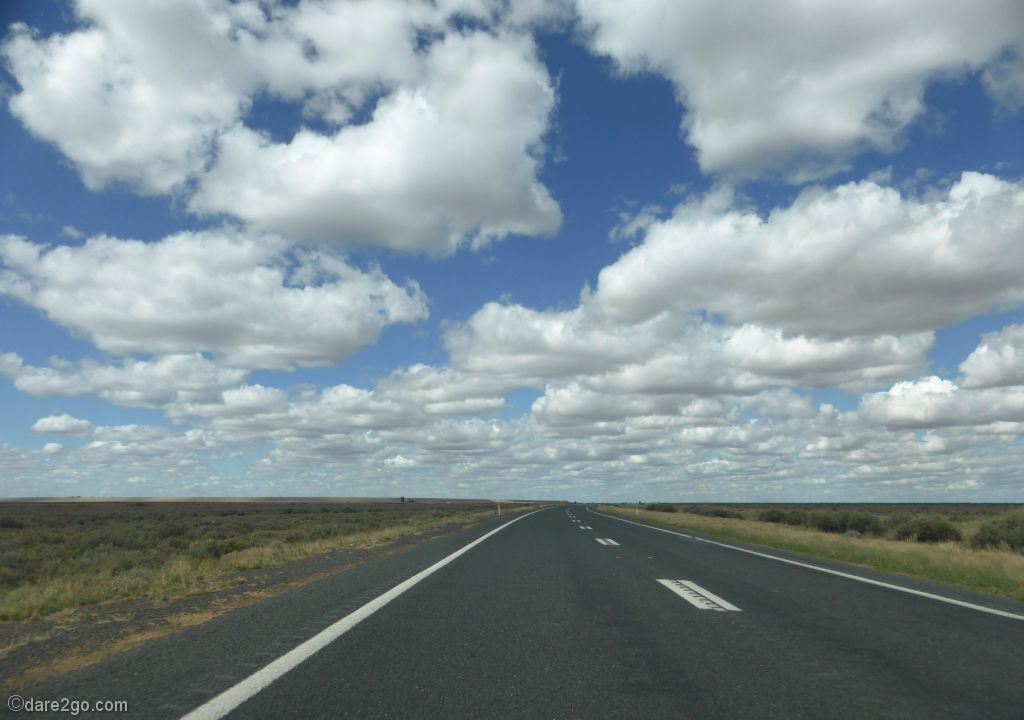
- Not all of Australia has interesting landscapes, but these clouds are rather beautiful. Here we are crossing the Hay Plain in March 22, on our way to inspect the flood damage in Mullumbimby.
-
- I had to crawl under the truck to connect grey water pipes into the new tank, and to construct a drain outlet for it.
-

- Australia: we had wanted to buy a complete composting toilet in Germany, but a mess-up in the delivery meant that we only got a kit with diverter and the required containers. Here are the first steps of my “self-built” composting toilet.
-

- Australia: the composting toilet is slowly taking shape. Of course, I “needed” to make it complicated and made it curved… All done under improvised conditions on a picnic table on the back verandah.

-
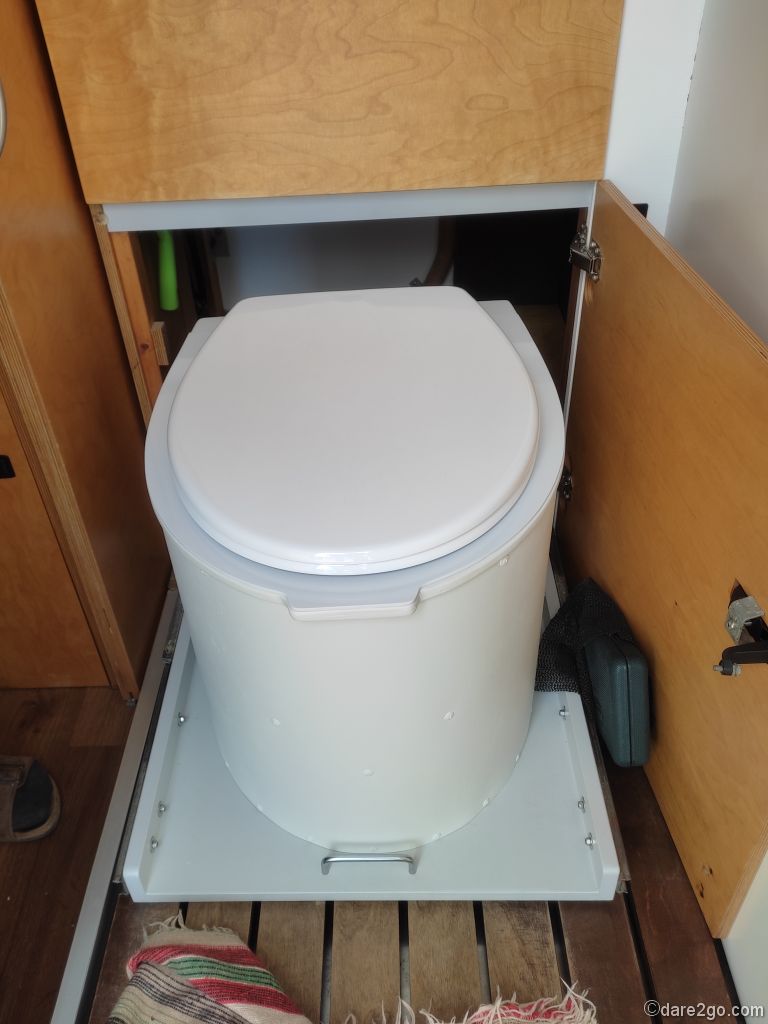
- Australia: our newly built composting toilet turned out quite well. Here it’s back in its place in our habitation box on “Bert”.
-
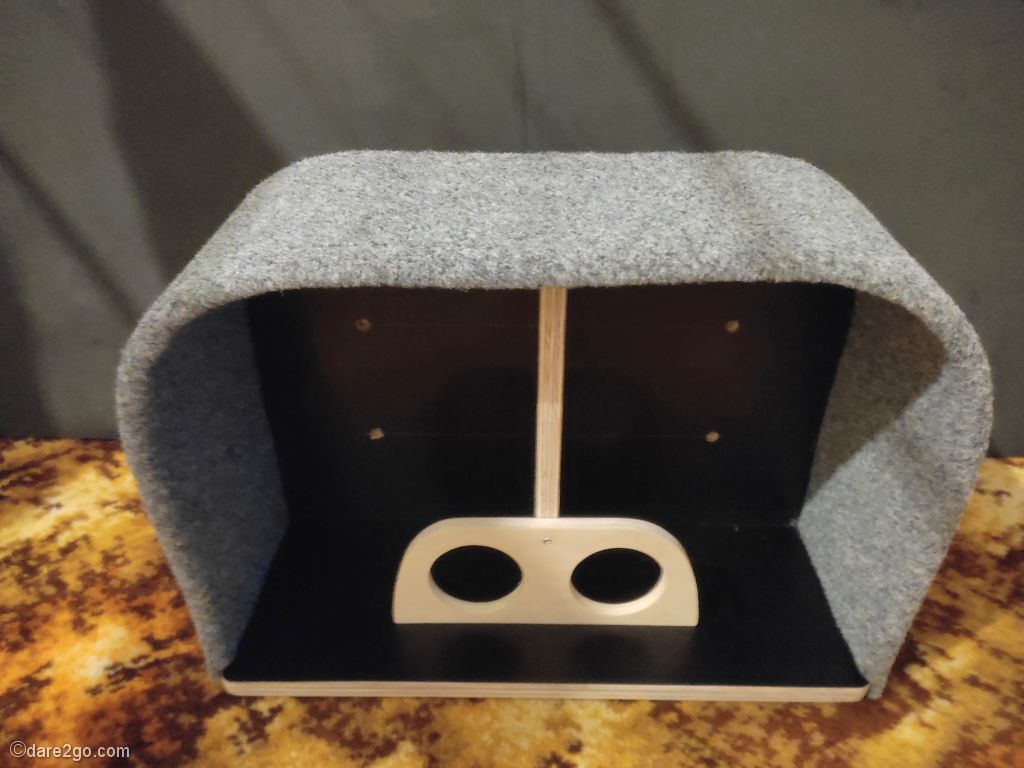
- Using the left-over offcuts from building the toilet, I made a small storage box, which sits between the seats in our truck cabin. The board with the holes holds our water bottles securely. The box also stores our camera, some snacks and other small stuff.
-
- Australia: one of the rare occasions that Yasha has driven our truck. This is on our way from Renmark to Mullumbimby.
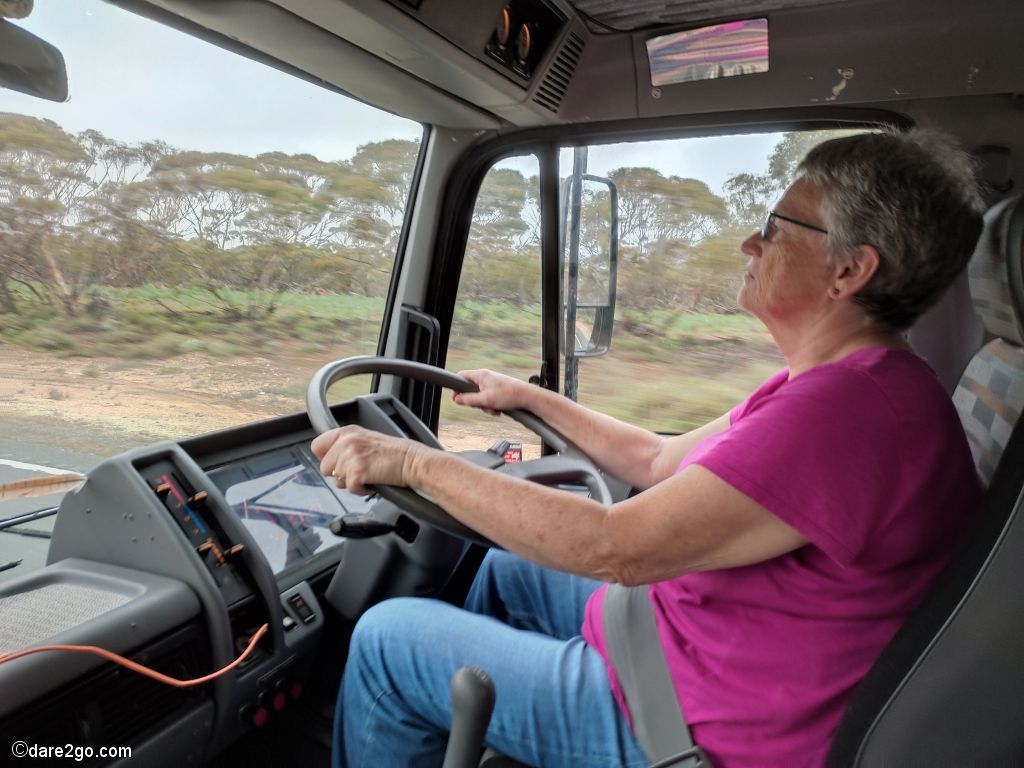
It took us nearly 3 weeks to finally pack up ‘Bert’ and start our first trip in him – destination Mullumbimby to oversee the flood repairs. It actually almost felt like a holiday to drive country roads in our own vehicle, spend the night in our familiar camper, and resume the lifestyle we had left behind in Europe.
The long wait is really testing us
Except that once we reached Mullumbimby, the trip was already over. A builder had already been assigned by the insurance company and he came to meet us to discuss the process of repair. When asked, he told us “6-10 weeks and all should be fixed”. Relief! (It turned out this was the biggest lie on the planet…)
Now we had to wait for trades people to show up (or not), decide on replacement fixtures for the things that needed to be stripped out of our home, and, and, and… Little did we realise at the time, that the promised 6-10 weeks would turn into 13 months living stationary in our camper in front of our duplex, getting more and more anxious to see it finished!
-
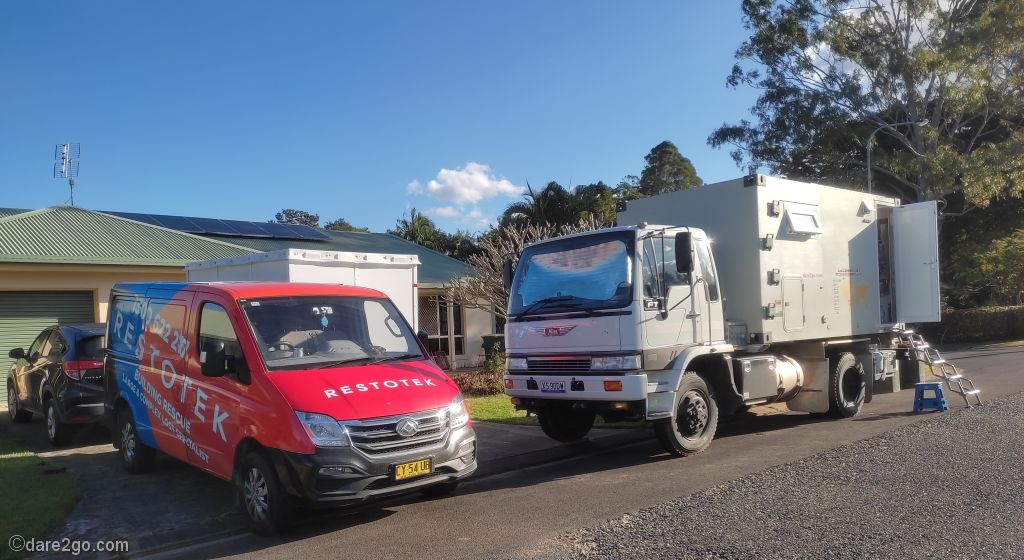
- Parked in front of our house: the “hygiene experts” we had been waiting for. Behind their car is a rented storage pod, which we had to move all our belongings into. And “Bert”, our stationary home whilst the renovations dragged on.
-
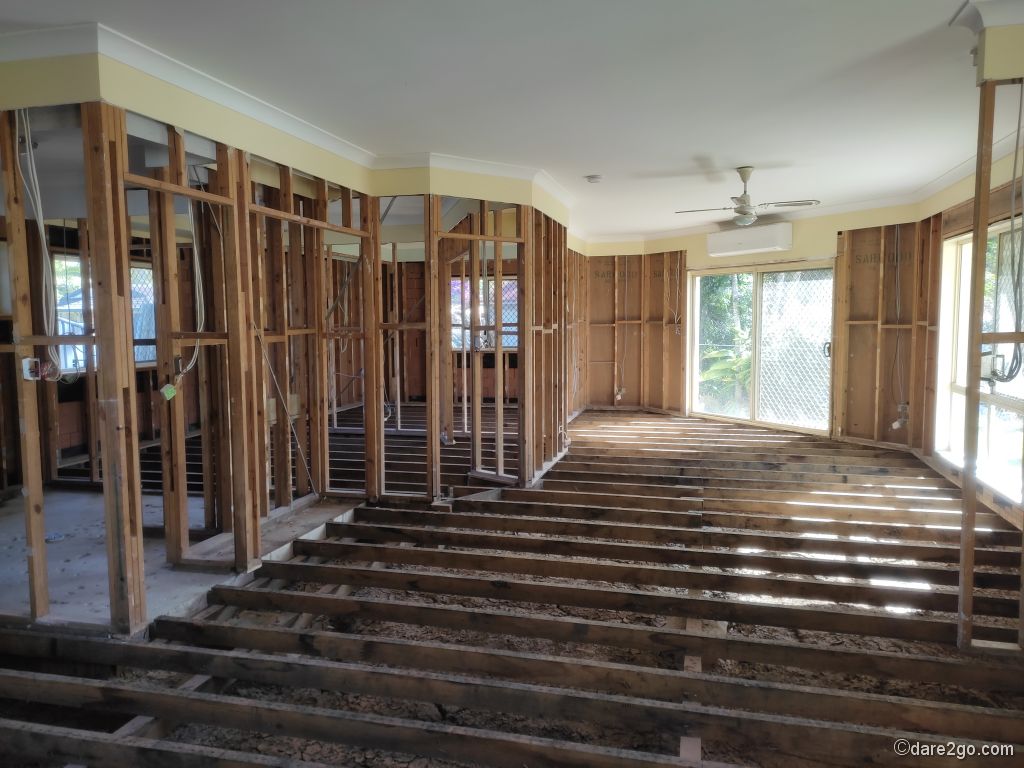
- Mullumbimby: the entire interior of our house had to be stripped because mould was growing on the timber frames and mud had washed under the floor boards. A very sad sight!
-
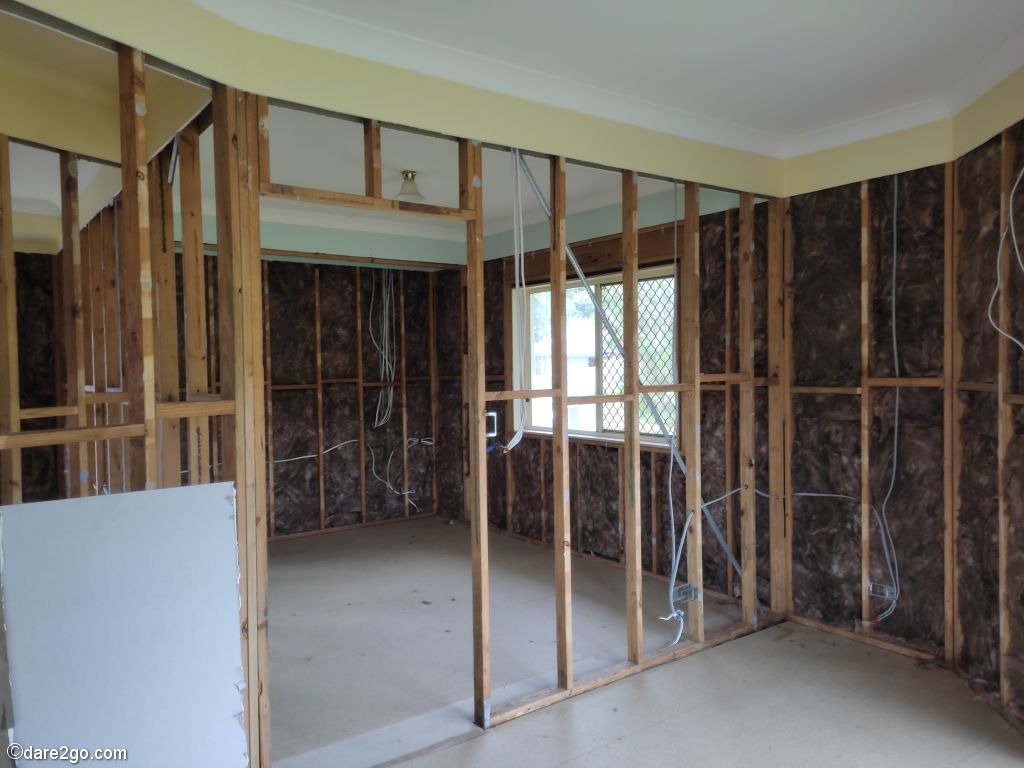
- Very, very slowly the house is getting restored. Here the floor under-construction is laid and the plasterboard delivered. We used the opportunity to add insulation to all wall cavities.
-
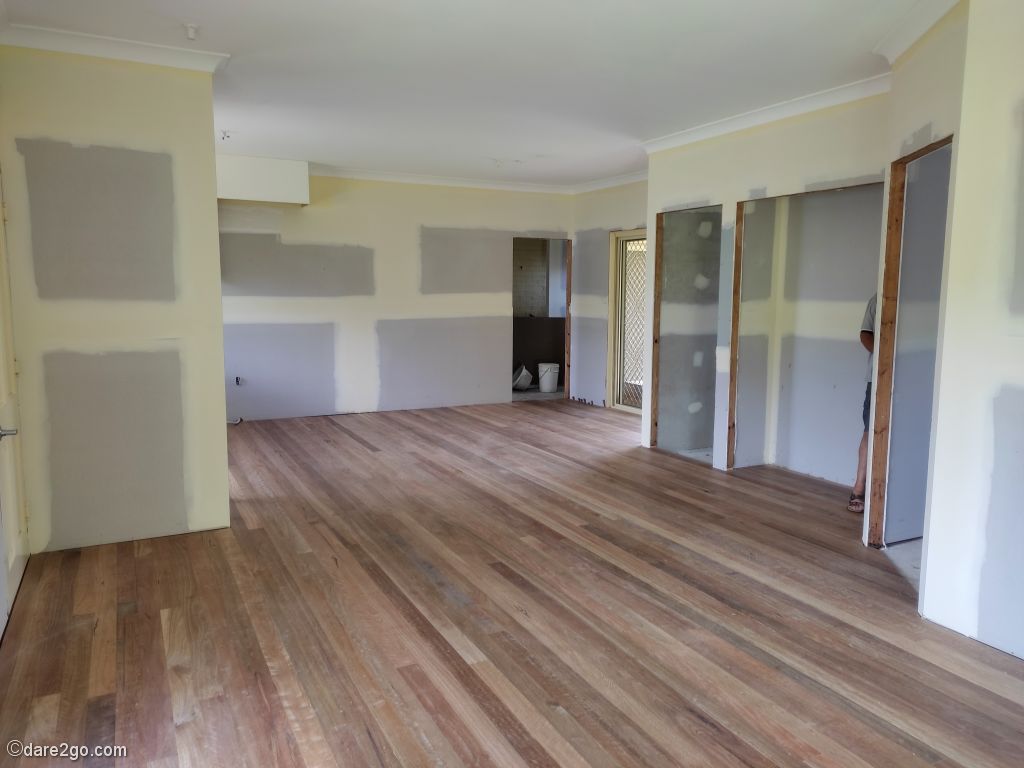
- Mullumbimby: finally some sign of progress. The floors are back in and the walls are lined with plasterboard again, ready to be painted. The kitchen still needs to be installed, the bathroom re-tiled, and, and… It’s still a long way to go!
-
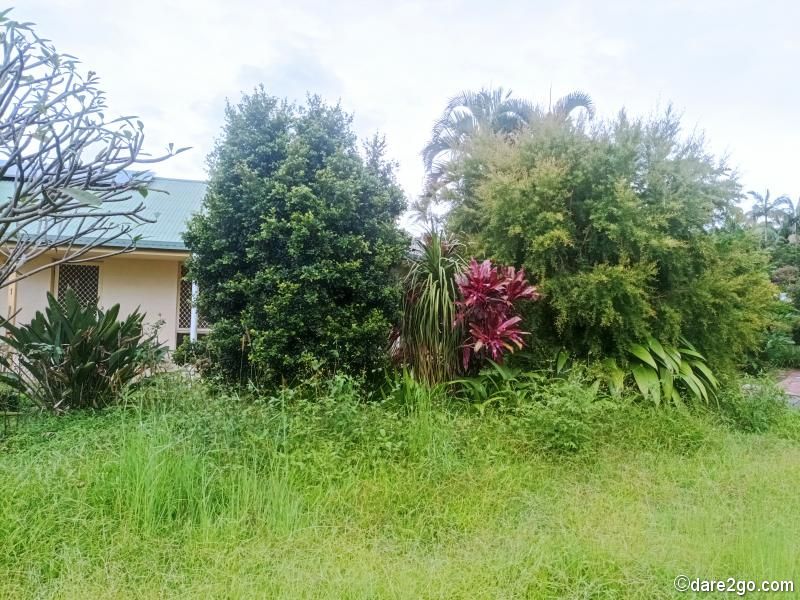
- When we returned in April 22, our garden was an overgrown mess, which needed a lot of work. Unfortunately, the large strelitzia (seen on the left) slowly died; it had become too waterlogged during the flood and slowly rotted away – despite our best efforts to save it.
-
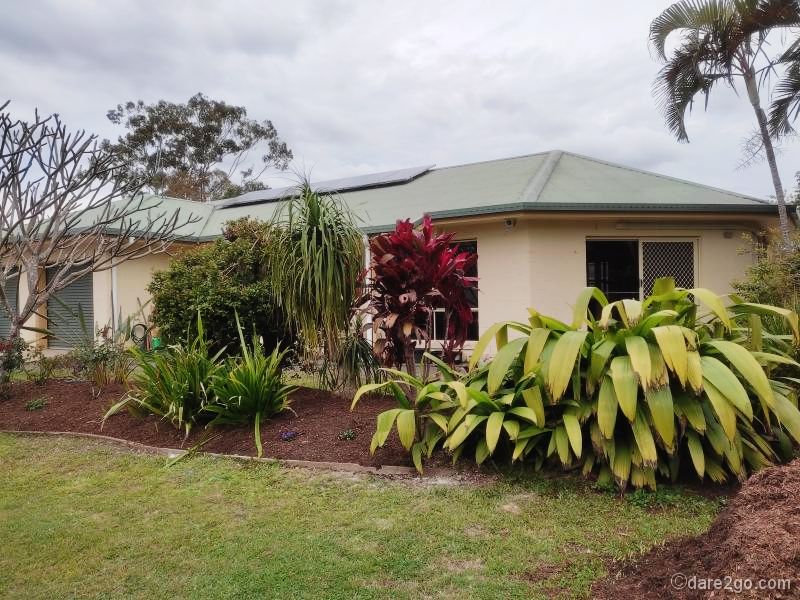
- Whilst we waited for the house to be fixed after the flood, we (mostly Juergen) fixed up our garden, which had suffered from neglect and the flood water washing out all nutrients.
-

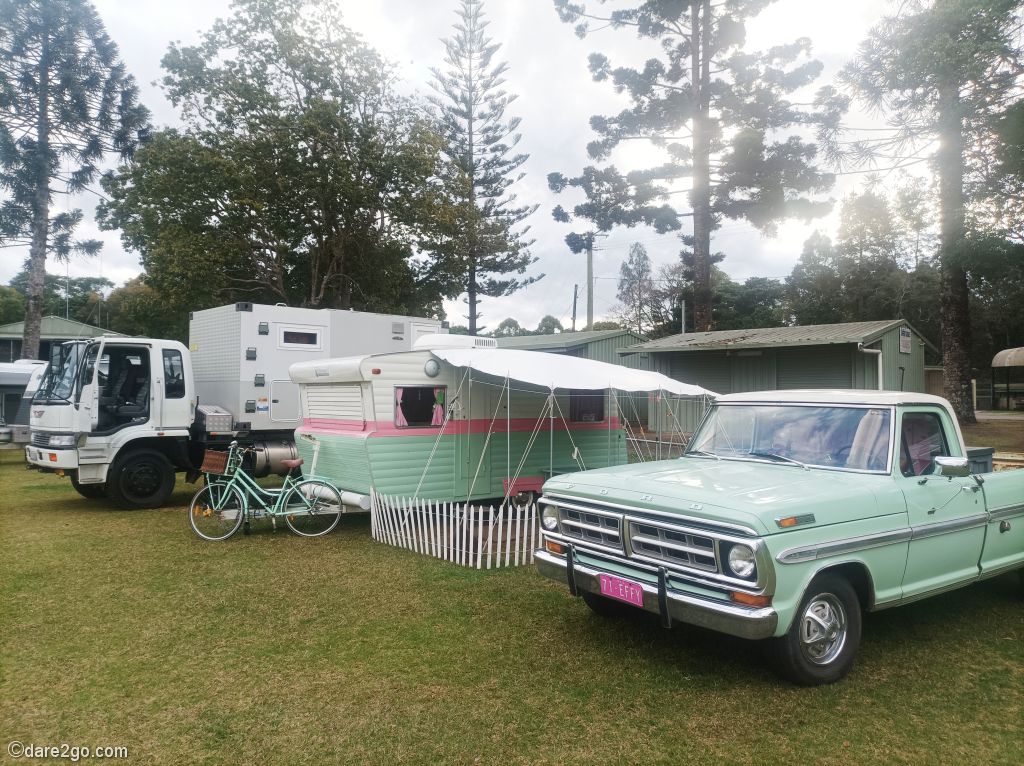
- Australia: after the renovations of our house were finally finished, and the storage pod emptied of our belongings, we took our first long trip to Queensland. Here we are parked for the night at the showground in Maleny.
Once the last trade had finally left, we slowly started to move into our home. This was not what we had planned. But as a rental we were losing so much money from our pension that it became nearly a “zero game”. Add to this that the interior is nearly brand new, the possible wear by tenants, and it really doesn’t look worthwhile.
It was also exciting to unpack our stuff. We discovered familiar or long forgotten items, every bit we had left in our garage in early 2013. As we had sold a lot before leaving, we also needed to buy a new washing machine, sofa, and other furniture – most of which we found on Facebook Marketplace.
Thus, we are now living in a brick-and-mortar home. We haven’t been travelling as much as we anticipated, but we have been on several trips, one of which took us as far as north of Townsville in Queensland, another to Port Albert in Victoria. We would love to find somebody reliable to share the house with us, so that we can go on a longer trip, but so far haven’t had any luck. We are missing the “travelling life” (and aren’t getting any younger)!
A few technical details:
HINO FT3W Kestrel
Model Years: 1991-1996 (ours is a 1994)
Engine: Hino HO7D 7.4L 6-Cylinder Diesel (approx. 180hp/132kW).
Transmission: 6-speed manual
Suspension: Leaf Spring Suspension
Brakes: Exhaust Brakes standard
Permanent 4-wheel Drive with High/Low Range
GVM (Gross Vehicle Mass): 9,000 kg
We bought Bert with under 24,000 kilometres, now we are just under 50,000 kilometres.
In between, we had tried for nearly a year to sell Bert, but we didn’t get much interest for a fair price. So now we have decided to use him for as long as possible, instead of buying a little smaller ute (pick-up truck) with a slide-on camper. Part of the reason that we had little interest could be that we are not near a densely populated area (apart from the Gold Coast); it takes some effort to get to us.