Are Evora and Alentejo Worth a Trip from Lisbon?
When visiting Portugal, you will probably arrive in the capital and then plan to take tours or road trips from Lisbon to the significant sights of this small country. But, will you consider Evora and the Alentejo Region worth a trip from Lisbon?
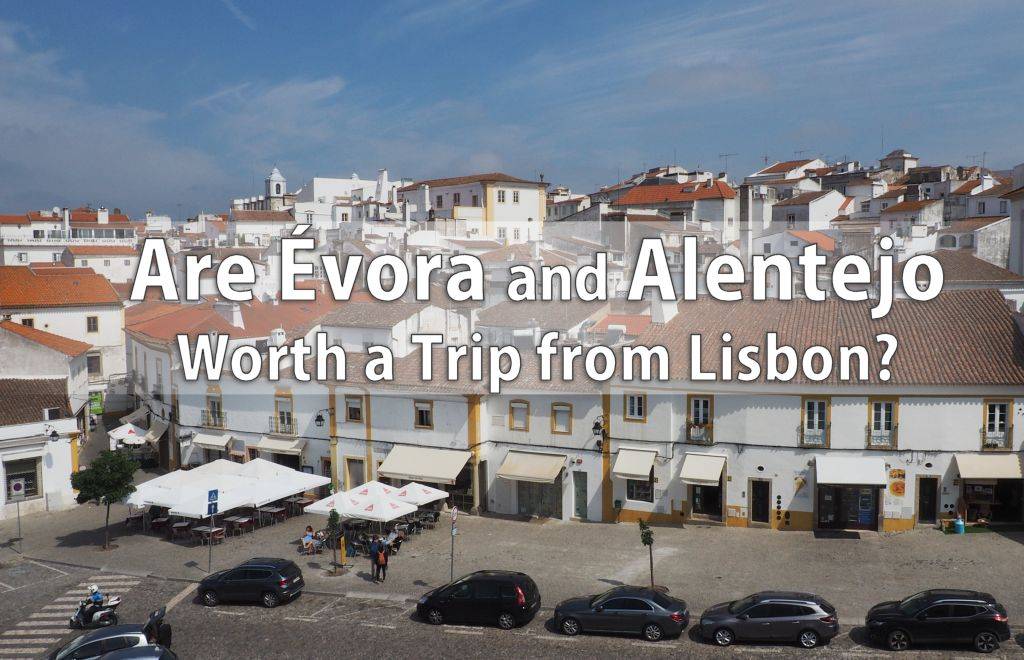
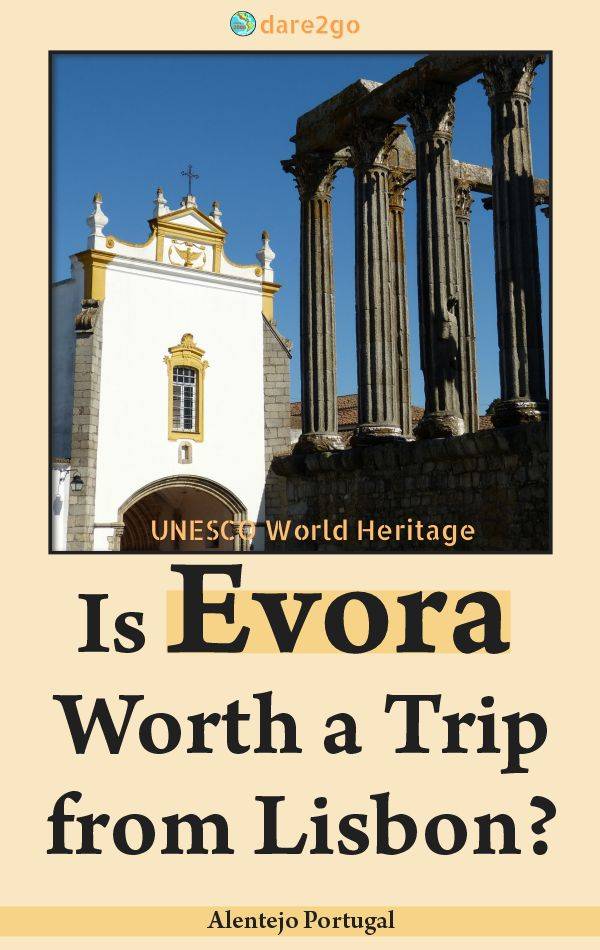
Alentejo: worth a trip to see world heritage Evora (shown here), Megalithic monuments, Roman relics, cathedrals & castles in fortified cities, cork forests, and more.
Before you make your decision, please consider these facts:
Things you may not know about Évora, Portugal
- Evora is the main city and culinary centre of the Region of Alentejo
- the Region of Alentejo is the largest region in Portugal, covering around 30% of the country
- Evora is situated in the centre of Alentejo, about halfway between Lisbon and the Spanish border
- the city of Evora is very close to the main highway from Lisbon to Madrid
- Lisbon to Evora is under 140 Km
- the Historic Centre of Evora is a UNESCO World Heritage listed site
Reasons why a trip to Evora from Lisbon is worth it
This museum-city, whose roots go back to Roman times, reached its golden age in the 15th century when it became the residence of the Portuguese kings. Its unique quality stems from the whitewashed houses decorated with azulejos and wrought-iron balconies dating from the 16th to the 18th century. Its monuments had a profound influence on Portuguese architecture in Brazil.
World Heritage Description of the Historic Centre of Évora
What you will find in this article:
Here are some of the sights that make Evora a city of ‘Outstanding Universal Value’:
The Cathedral of Évora
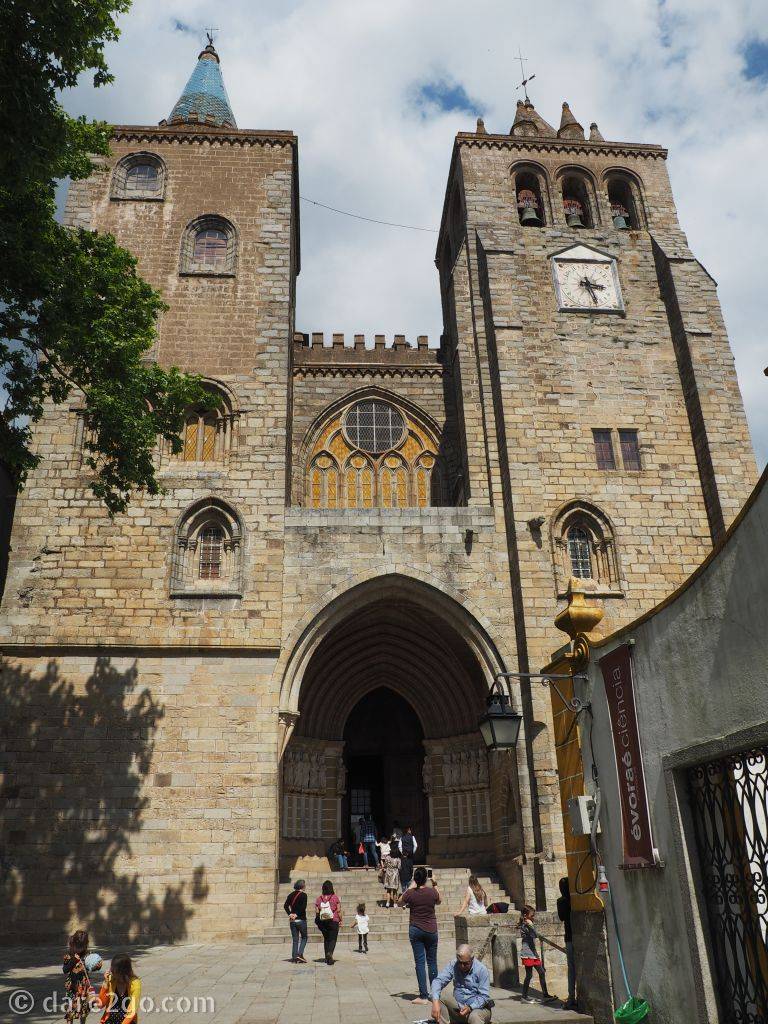
Sé de Nossa Senhora da Assunção, Basilica Cathedral of Our Lady of Assumption or just plain Evora Cathedral. The church is a landmark of the historic centre of Evora and stands at its highest point.
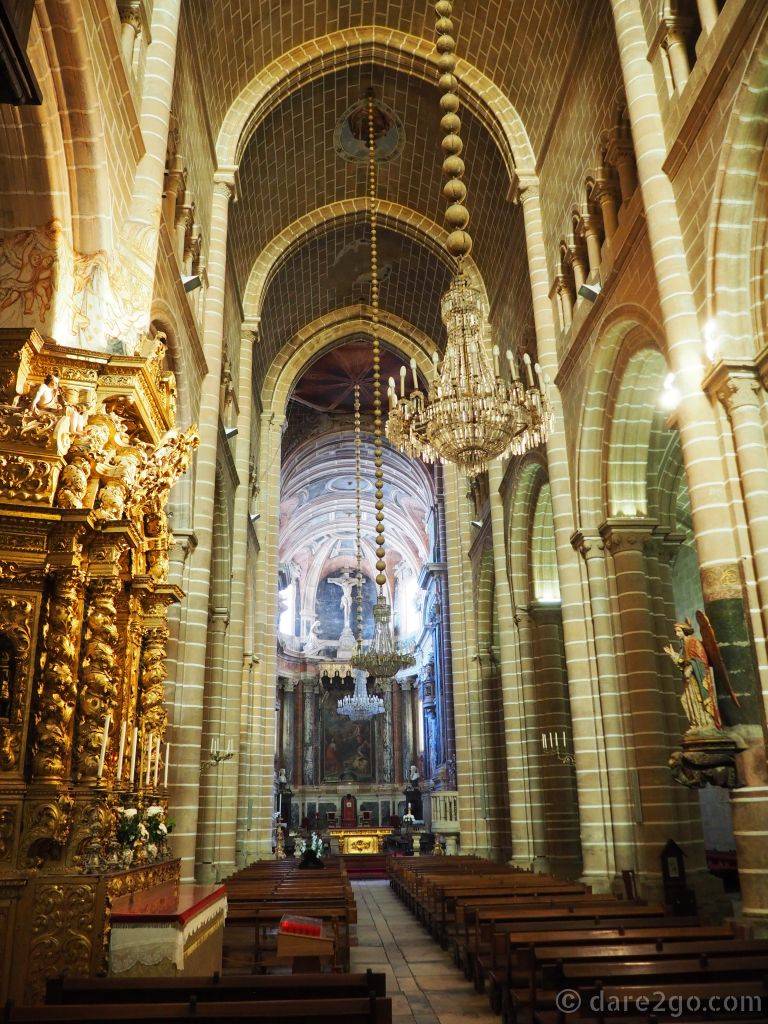
The interior of the Evora Cathedral exhibits a mix of historic, architectural styles.
Although it is commonly known as the Evora Cathedral, its official name is Sé de Nossa Senhora da Assunção (Basilica Cathedral of Our Lady of Assumption). Located on the highest point, you can see it from most places in the Historic Centre of Évora. It is the largest medieval cathedral in Portugal and was built around the turn of the 14th century. It became a Basilica in 1930.
Over the centuries, the Cathedral of Evora has been improved and extended, and now exhibits an eclectic combination of styles: Romanesque, Gothic, Renaissance and Baroque. A good example of this mix is the Baroque altar, which supports a gothic statue of a pregnant Mary (that’s a bit unusual). A Renaissance statue of the Archangel Gabriel faces the virgin, supposedly bringing her the ‘good news’ – in this context, he may just have been a little late!
It’s not a pretty church, but it’s a very interesting church and is certainly worth seeing.
There are several things to do at Evora Cathedral, other than exploring the interior of the church:
- wander the Cloister of the Cathedral, built in the gothic style of the mid-14th century
- go into the Museum of Sacred Art, which holds the Cathedral’s treasure
- climb the bell tower to the Roof Terrace, which has amazing views
In our experience, it’s becoming commonplace to pay an entry fee when visiting churches. But the prices for the Cathedral of Évora are reasonable. In this case, there are combination tickets for whichever parts you wish to explore. For all 4 areas, the price is €4.50 – slightly cheaper for students and retirees over 65. We chose to go into the cathedral and the cloister – it was €2.50.
The Convent and Church of San Francisco
Just like the Cathedral farther up the hill, the church of San Francisco is huge and also a mix of architectural styles spanning the centuries of its construction and improvements. We didn’t go inside because we were hurrying to get to the Chapel of Bones. When we came out, there was a mass being held. From all accounts, it is a very beautiful church inside and has been recently renovated.
Capela dos Ossos, Évora
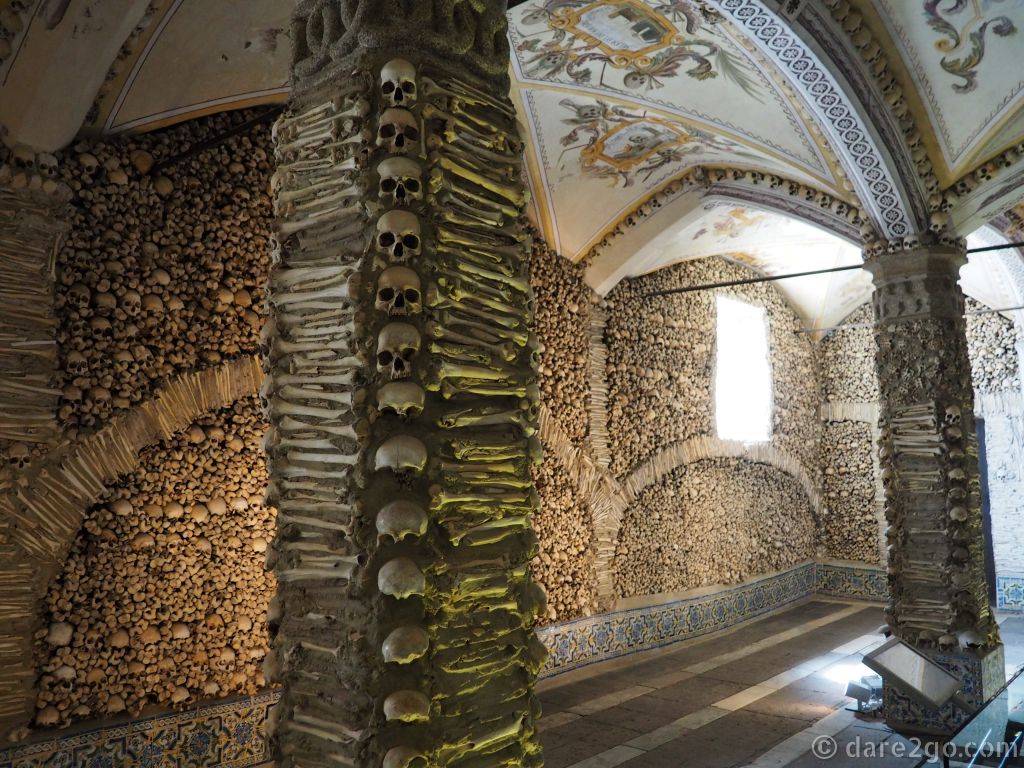
Inside the Chapel of Bones: this chapel is completely decorated with skulls and other assorted human bones.
The Chapel of Bones, probably the most renowned site in Evora, is attached to the Igreja de São Francisco (Church of St Francis). Franciscan monks built the chapel around the turn of the 17th century. They used thousands of bones from local cemeteries to decorate it, making the chapel a work of both art and devotion.
Some will find it rather morbid, but the monks wanted to remind those who come inside that their time on earth is purely transitory. Above the entrance a sign reads:
NOS OSSOS QUE AQUI ESTAMOS PELOS VOSSOS ESPERAMOS (We bones here for yours await).
The Canha da Silva Nativity collection
Above the side chapels of the church of St Francis, there are two long, narrow galleries, linked by a roof terrace, which gives an excellent view of Evora. Inside, you will find an interesting collection of nativity scenes from around the world. These are the property of Major-General Fernando Canha da Silva and his wife, who have been assembling the collection for more than 35 years. They have close to 2000 pieces, of which around 400 are on display. Originally, their interest was sparked by the traditional clay nativity scenes typical of the Alentejo Region, and it spread from there to a more general interest in nativity scenes from around the world.

This exhibition is found upstairs from Bones Chapel in Evora. These are just a few examples of the collection of international Nativity Scenes.
Coincidentally, the couple were present at the exhibition on the day that we were there. They introduced themselves when they heard us speaking English because they were interested in where we were from. We spent some time in conversation as we were walking around and discovered many small details about their passion for this collection. The Major-General had travelled a lot as part of his military career and always looked for new nativities wherever he went. He seemed to have his whole collection catalogued in his head and would drop small pieces of relevant information about something we were looking at.
Experiencing these two attractions at the St Francis Church was a fascinating – considering birth and death.
There is also a museum above the Chapel of Bones, which houses a collection of art and artefacts from Franciscan convents in Évora.
A combination ticket will get you into the Chapel of Bones, the Museum Centre and the Nativity Collection. The church is free.
Current cost: €5 adults, €3.50 students and retirees, €12.50 families
Opening Times: June – September 9:00-18:30; October – May 9:00-17:00
Open every day except 1st January; Easter Sunday; December 24 in the afternoon; December 25th
Roman Temple on Largo Conde de Vila Flor
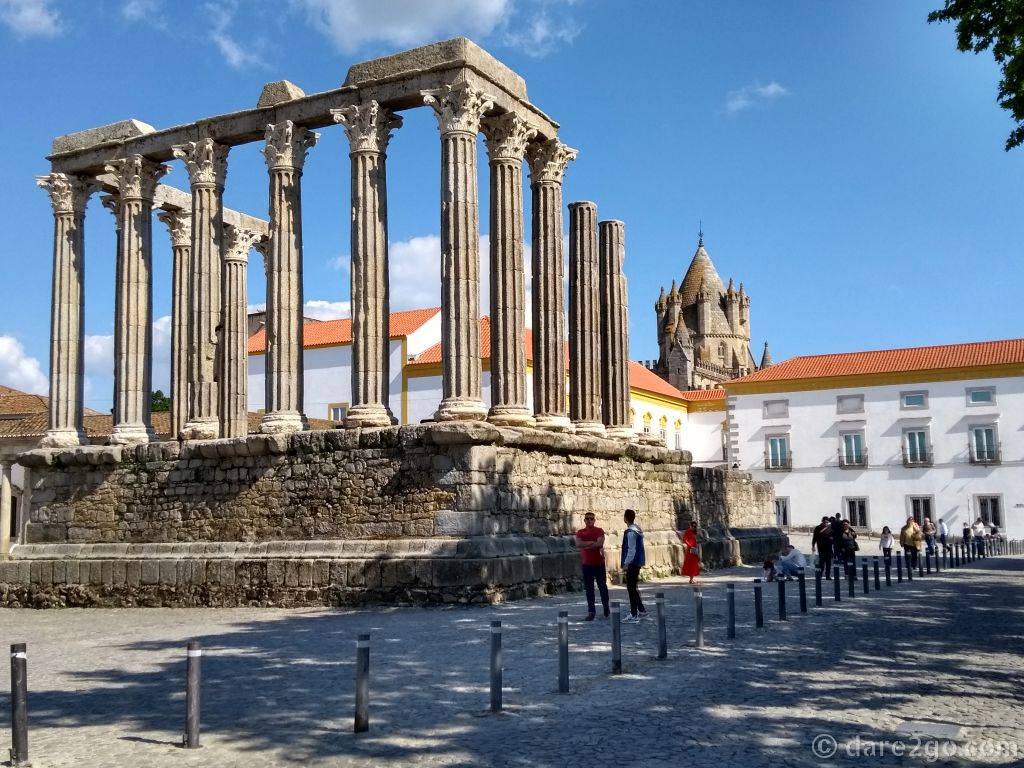
Sometimes referred to falsely as the Templo de Diana, the Roman Temple of Evora is a well-preserved relic of the Roman Empire on the Iberian Peninsula.
Also located on the highest point of the old city, not far from the Evora Cathedral, is the Templo Romano Évora. It is commonly referred to as the Templo de Diana, although there is some doubt about this claim. The structure is all that remains of the former Roman Forum.
In the past, it had been integrated into structures with a variety of uses: a theatre, an armoury, an execution site for the Inquisition, and a butcher are some examples. Being incorporated into other buildings over centuries actually helped to preserve it. It was recovered in 1870 and restored to what you see today.
Places to see near the Roman Temple:
- Diana’s Garden, in full bloom when we were there
- a mirador (viewpoint), giving a great view of the city
- Convento do Lóios, a 15th century monastery now a luxury hotel
- Palácio dos Duques de Cadaval (Cadaval Palace) from the 14th century, with a nice garden
- Igreja dos Lóios (Loios church), a small church with magnificent tile panels
- Museum of Evora, a collection of around 20,000 pieces of almost anything you can imagine finding in a museum
- Antiga Central Elevatória das Águas da cidade de Évora, an old water lifting unit now a museum
Giraldo Square
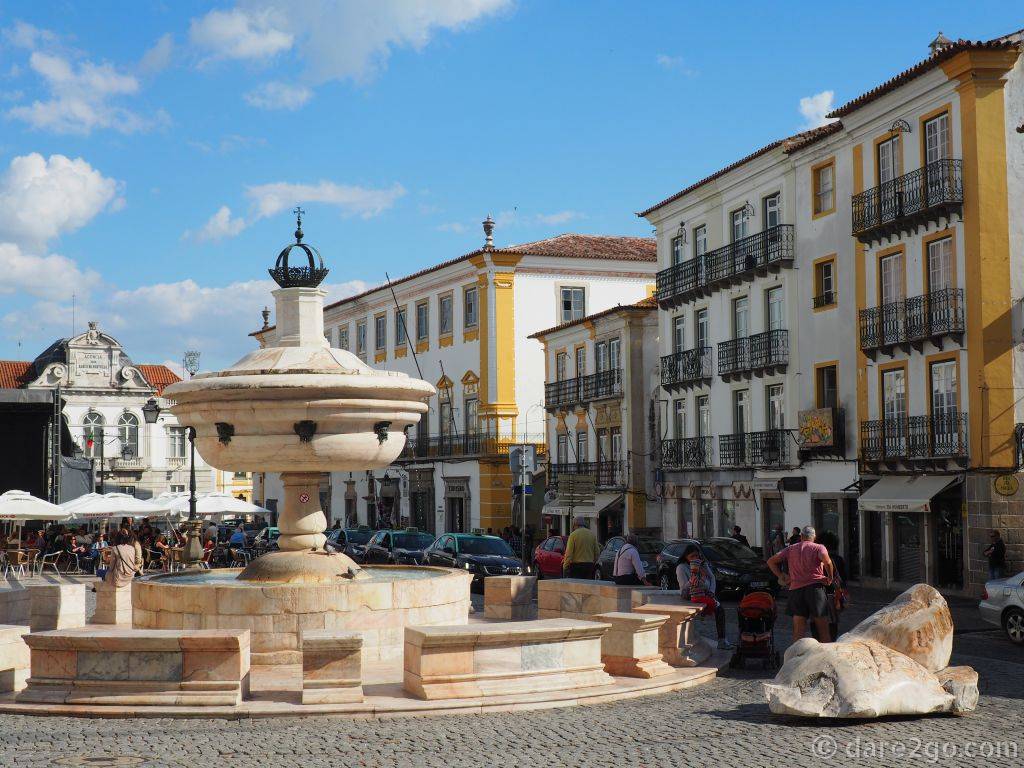
Praça do Giraldo is the heart of Evora with the iconic marble fountain as its centre-piece.
In Roman times, the centre of activity was at the highest point, where we saw the roman temple. Since medieval times the heart of Evora has been Praça do Giraldo. Today, it’s a meeting place with plenty of outdoor restaurants that are full during the long lunchtime that the Portuguese love.
Its centrepiece is a beautiful, marble, renaissance fountain from the 16th century.
Aqueduto da Agua de Prata
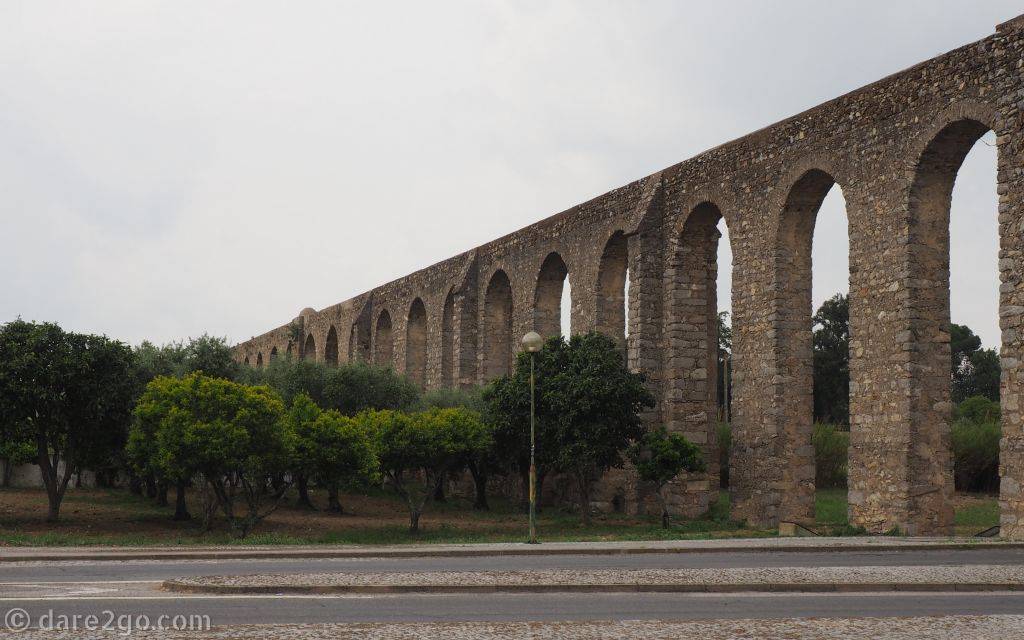
Aqueduto da Agua de Prata: an impressive structure from the 16th century, bringing water to the people of Evora.
We’ve seen quite a few aqueducts in Europe. Some of them, Roman constructions; the others, based on Roman constructions. Évora Aqueduct is the latter, but this doesn’t diminish the engineering feat of building it during the 1530s. Its original length was 18km, and it brought water right into Giraldo Square.
Go outside the walls to see the impressive height of this aqueduct. You can also follow a well-signposted walking trail along the remaining 8km. Then go inside the walls and see if you can follow it. This becomes more difficult because it decreases in height, and because people have built houses inside the arches, which is also interesting to see.
City Wall
The fortifications, which surround the historic centre of Evora, were built in the 17th century. These are also best appreciated from outside.
Getting around Evora
It is easy to walk almost everywhere. We parked just outside the walls to the south of the historic centre. Mobile homes are permitted to overnight in this parking lot. However, we did drive around the city to reach the aqueduct in the north.
![DK Eyewitness Travel Guide: Portugal [new edition]](https://images-na.ssl-images-amazon.com/images/I/51C%2Bp1W4ADL._SX286_BO1,204,203,200_.jpg)
How to get to Evora from Lisbon
You can take a day trip from Lisbon to Évora. There are bus and train services from Lisbon, as well as plenty of guided tours.
Or you could rent a car and make an independent road trip, allowing yourself the freedom to stop as often as you like, at the many places of interest.
If you have limited time in Portugal, a day trip from Lisbon is still worth it. But, if you have the flexibility to spend more time, there is so much more to see in Evora and its surrounds. Why not rent a car and take an extended road trip to some of the interesting destinations of Alentejo?
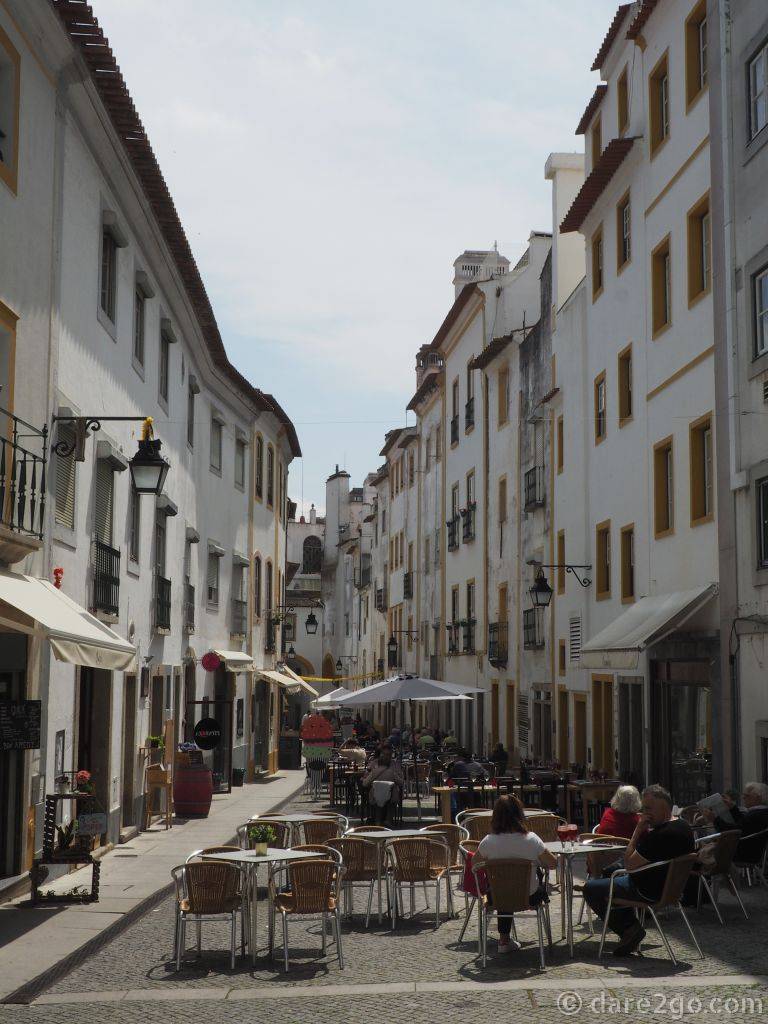
Evora side street off the Giraldo Square, full of outdoor restaurants.
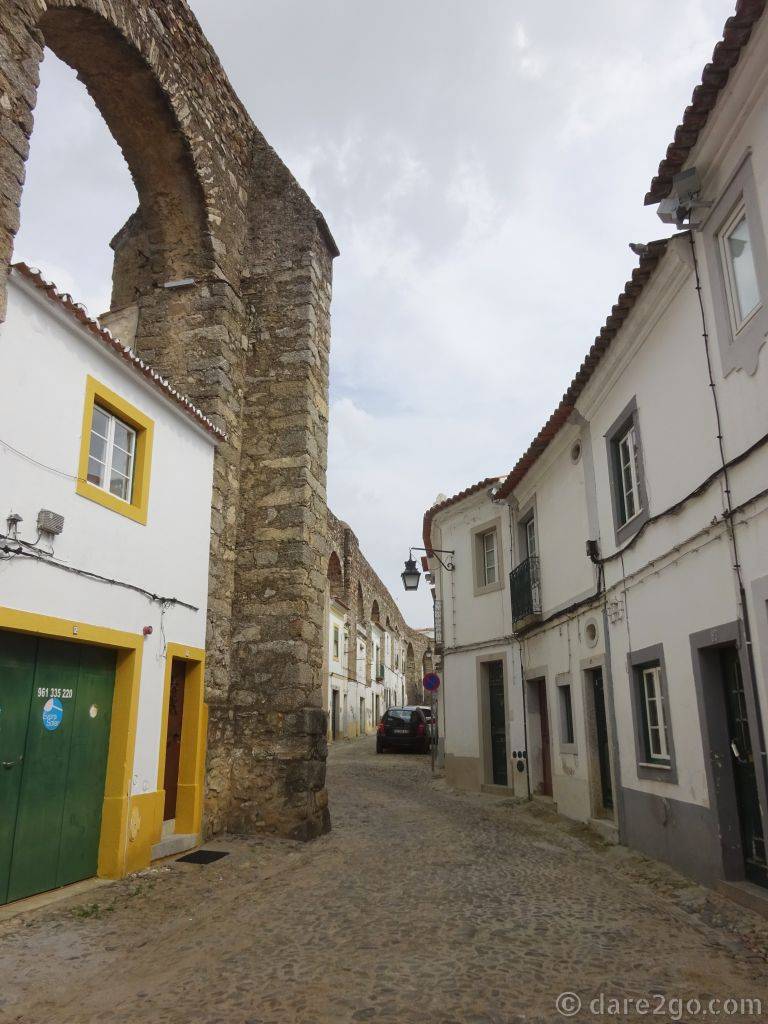
The Evora aqueduct inside the city walls. Houses and shops fill in the arches.
Interesting Things to See in Alentejo – it’s worth it
Évora’s location in the centre of Alentejo makes it a great launching pad to see other interesting sights in the region.
Alentejo is the largest region of Portugal, taking up around 30% of the country, but with only 5% of the population. There are many places just waiting to be discovered that you can experience now, without the crowds.
Whichever direction you take from Evora, there are plenty of interesting things to see.
West to Return to Lisbon
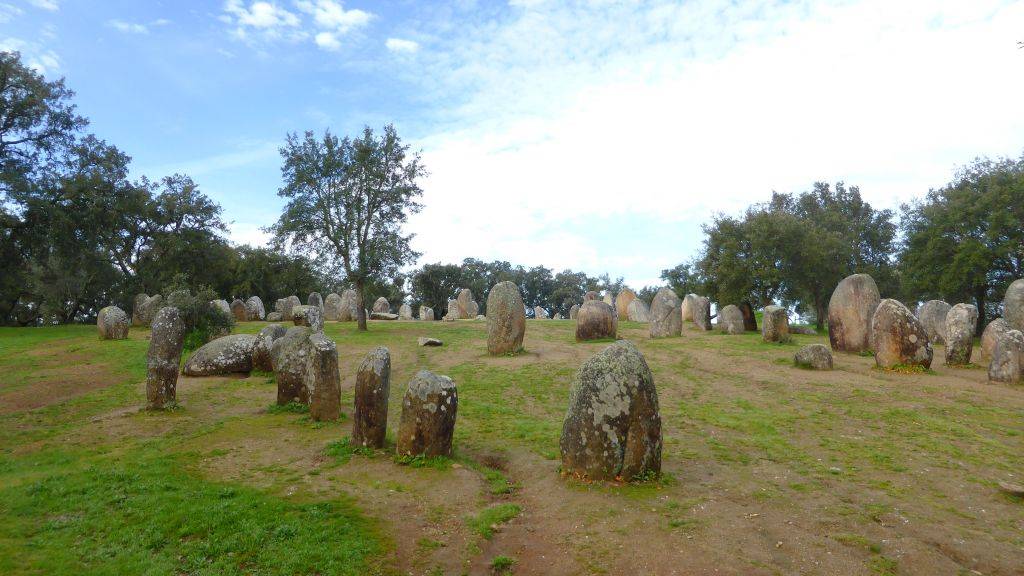
‘Portugal’s Stonehenge’: Cromeleque dos Almendres, near Evora, is the largest prehistoric standing-stone monument on the Iberian Peninsula. [photo credit ]
It might be that a short excursion to Evora is all you have time for. If that’s so, try to reserve a little for ‘Portugal’s Stonehenge’.
Although present all over Western Europe, the megalithic culture seems to have thrived in Alentejo. Évora has a lot of megalithic sites within easy reach of the city, the most important being Cromeleque dos Almendres. It’s the largest prehistoric standing stone monument on the Iberian Peninsula. Archaeological evidence suggests that it was constructed between the 6th and 4th millennia BC – making it around 2000 years older than Stonehenge! The stones were discovered in the 1960s.
Getting there:
- day tours from Lisbon to Evora often include Almendres Cromlech
- there are also tours from Evora to Megalithic sites
- you can rent a car and drive yourself
- unfortunately, public transport is scarce
South to Beja
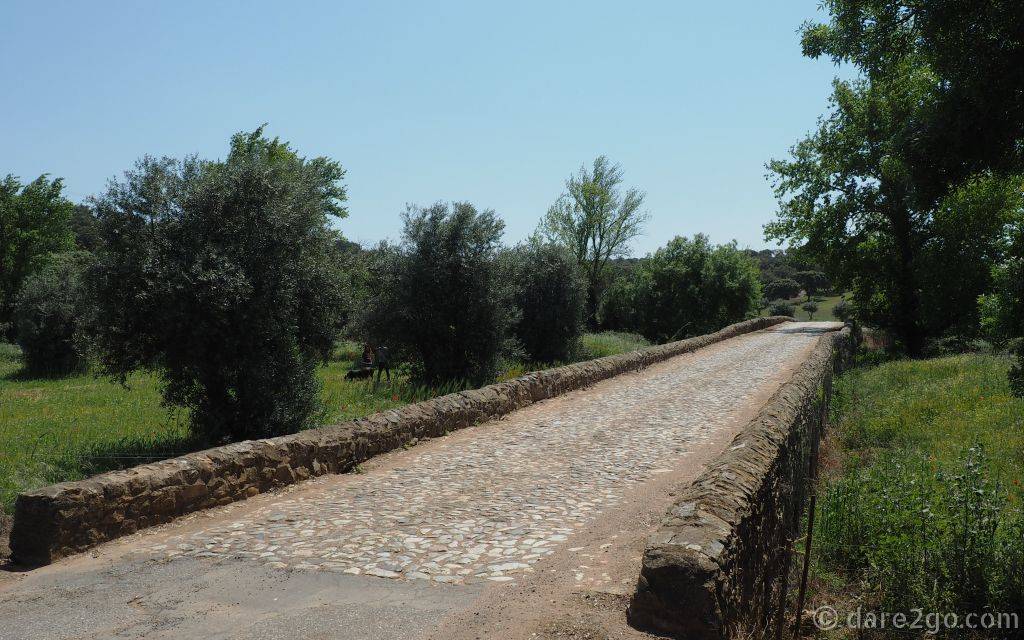
An original Roman road bridge found between Beja and Vidigueira.
If you decide to travel on towards the south from Évora, you will come to the interesting small city of Beja, Alentejo. But we do have a couple of suggestions for places to check out along the way. Following the N254, you will come to the small village of Alvito. It’s a pretty village of white houses. The Chapel of São Sebastian is on the main road through, and worth a short stop for its interesting architecture. It also has frescoes inside.
Between Alvito and Vidigueira there is an original Roman road bridge that is still in use today. Turn off the main road towards Vila Ruiva. When you reach the village there are signs to Ponte Romana, which crosses the Odivelas Brook just outside the town. It’s clearly marked on Google maps if you zoom right into Vila Ruiva.
Somewhat closer to Vidigueira there is an important archaeological site of the Roman ruins of São Cucufate. This was originally a small Roman villa built in the 1st century, which was built over with a much larger villa complex in the 3rd and 4th centuries. It was abandoned when the Romans left Lusitania. In the 9th-12th centuries, there was a convent on the site, which gives the place its name. We thought this sounded like an interesting sight to see and went to a great deal of effort to find our way there. Unfortunately, it was closed because it was Easter Sunday. But we could see through the fence and would still recommend it to those of you who are fascinated by Roman history.
15 Fascinating Things to Do and See in Merida, Spain
Volubilis, one of the 9 World Heritage Sites of Morocco
Things to see in Beja
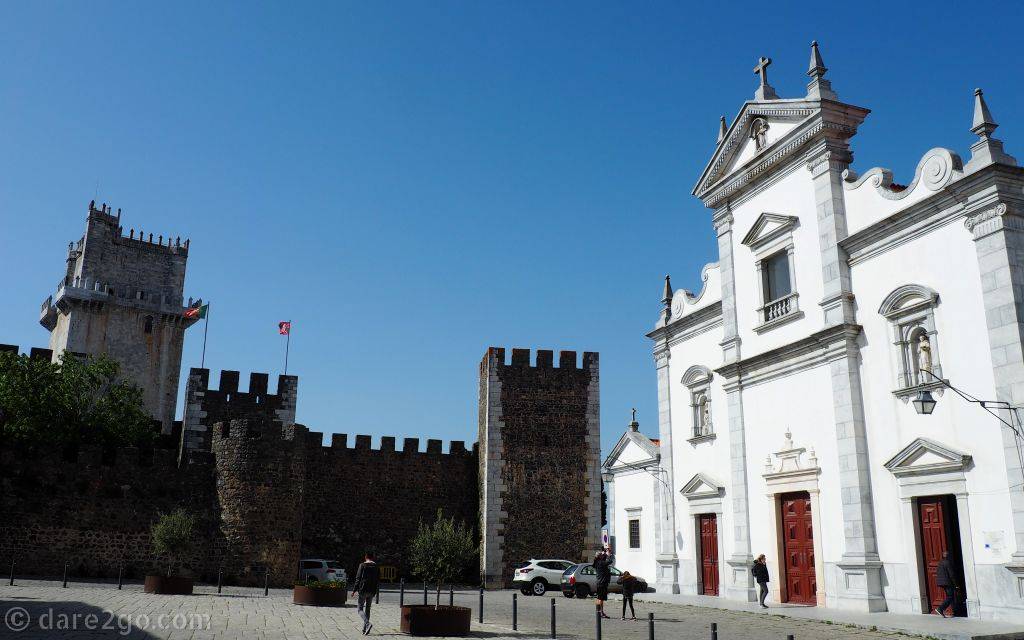
The Castle and Cathedral of Beja stand side by side.
Beja was a regional capital in Roman times, named Pax Julia by Julius Caesar because peace was made between the Romans and the Lusitani there. Its present name came much later from the Moors.
Beja Castle
The medieval Castelo de Beja is small by any standard, except for its tallest tower. The Torre de Menagem (the keep and main tower of the castle) is the most impressive part. It stands almost 40m high and contains a room on each of the 3 floors. Constructed from local marble and limestone, there is beauty in its simplicity. It’s considered by some to be a masterpiece of European gothic military architecture.
The castle is located on the north-eastern corner of the old city of Beja. Conveniently, it has a parking lot right next to it, which was big enough to accommodate Bertita. We left her there and walked into the historic centre.
The Cathedral of Beja
Right next door to the castle is the Beja Cathedral. The current church was consecrated in 1590. Formerly known as the Church of Santiago Maior (St James the Great), it was elevated to cathedral status in the 1930s.
It has undergone remodelling several times, including some reconstruction work following the earthquake of 1775 that caused so much damage in Portugal. The most recent attention, in 2014-15, presents you with its very neat appearance that you can see today. At the time of our fleeting visit to Beja, the church was closed, but the interior must be really something to see.
Regional Museum of Beja in the Convent of Our Lady of Conception
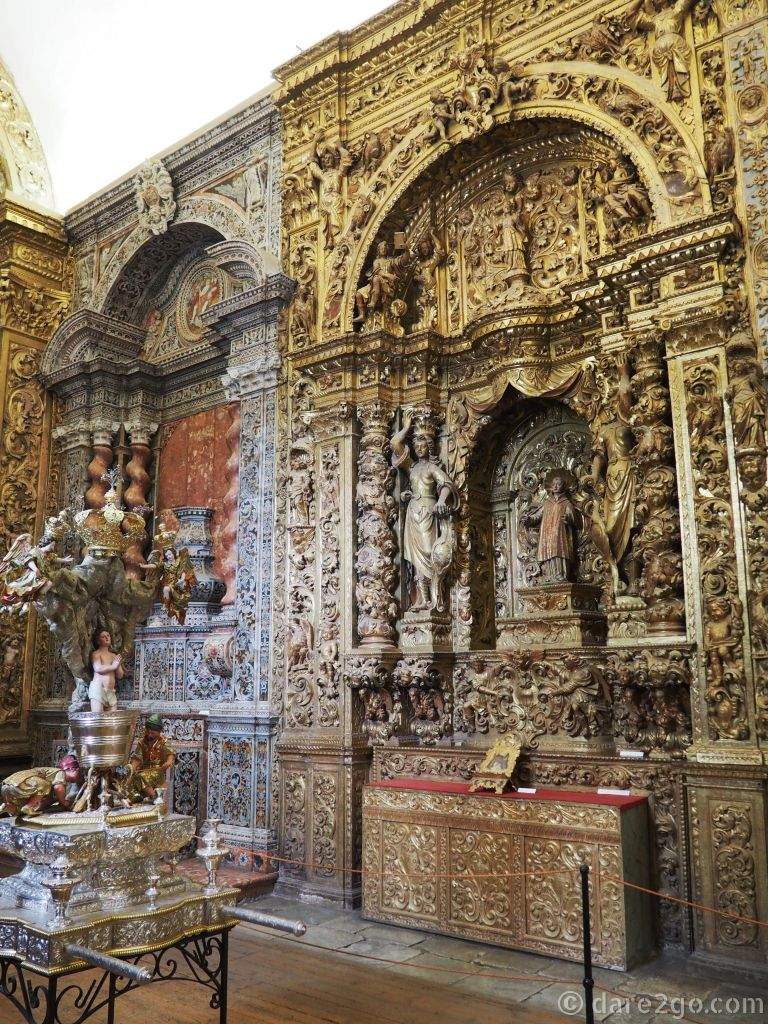
The richly decorated Baroque chapel of the old Convent of Our Lady of Conception, which now houses the Regional Museum of Beja.
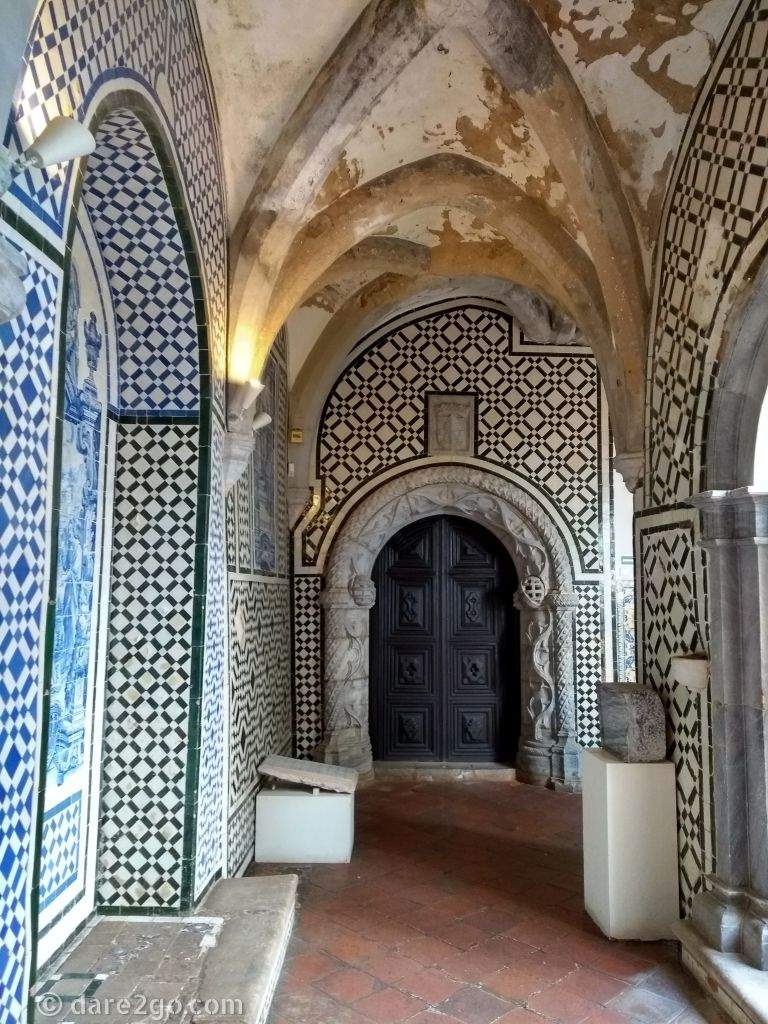
A Manueline carved stone door surround found in the cloister of the old Convent of Our Lady of Conception. The cloister is also beautifully decorated with many azulejos – tile panels.
This was what had brought us to Beja. Again we were lured by a description in our guide book . It mentioned that it wasn’t the exhibits but the building itself that was of real interest.
The former Real Convento de Nossa Senhora da Conceição “is a remarkable blend of architectural styles, with a Gothic church portal, Manueline windows and a dazzling Baroque chapel. Its azulejos are especially beautiful, the most notable being the Hispanic-Arab tiles in the chapterhouse and the early 16th century examples in the cloister.”
The Museu Regional de Beja or, more properly, the Museu Rainha Doña Leonor is a beautiful, interesting place to spend some time. In hindsight, we think that the city of Beja is worth much more time than we gave it.
Further South to The Algarve
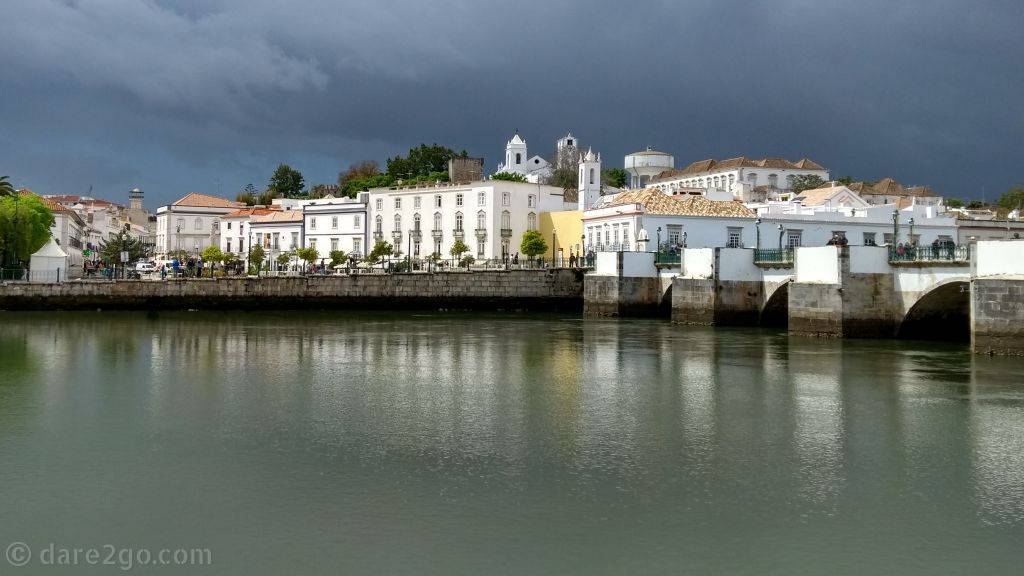
Tavira on The Algarve straddles the Gilão River.
You might choose to move on from Beja, further south to The Algarve. This small Region follows the beautiful southern coastline of Portugal. 45km south of Beja, you will find Castro Verde. From here you can join the N2 to reach Faro on the coast. You will be following almost 100km of one of the most scenic roads in Portugal.
The National Road 2 (EN2/N2) is nicknamed the Route 66 of Portugal . It’s a very exciting and scenic journey in the heart of the country, taking you from Chaves in the North to Faro in the South.
North-East to Estremoz, Vila Viçosa and Elvas
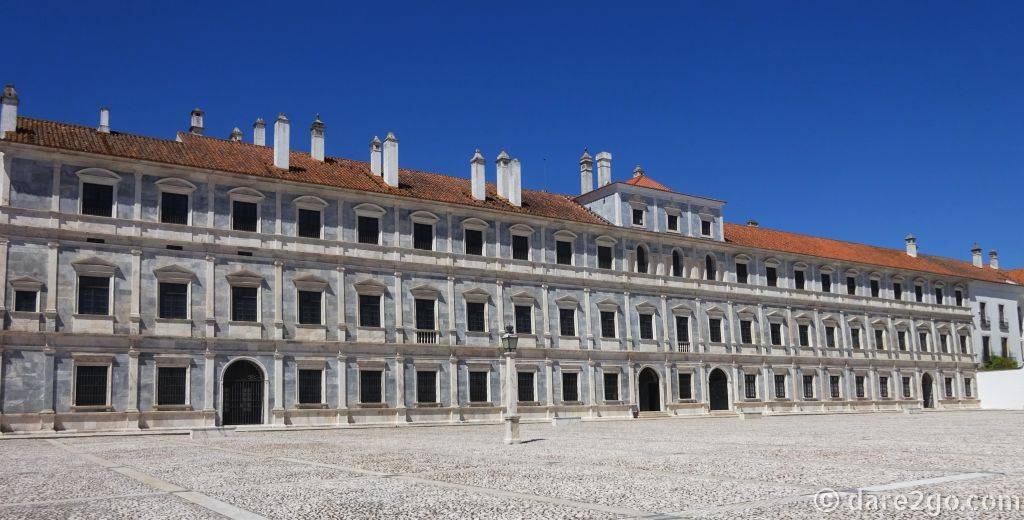
The Ducal Palace of Vila Viçosa is a magnificent structure utilising marble.
You could also visit Évora on the way from Lisbon to Spain, or even Madrid. If so, you will pass through an area of great historical interest; the towns of Estremoz, Vila Viçosa and Elvas.
We found these places to be worth individual blog posts:
Our travel tip: Vila Viçosa and Estremoz , two intriguing small towns in the east of Alentejo. Both have important roles in Portugal’s history and economy.
Elvas is a worthy World Heritage destination in the east of Portugal. Its impressive fortifications are the largest in the world. The best: Elvas is not crowded!
Cork Forests of Alentejo
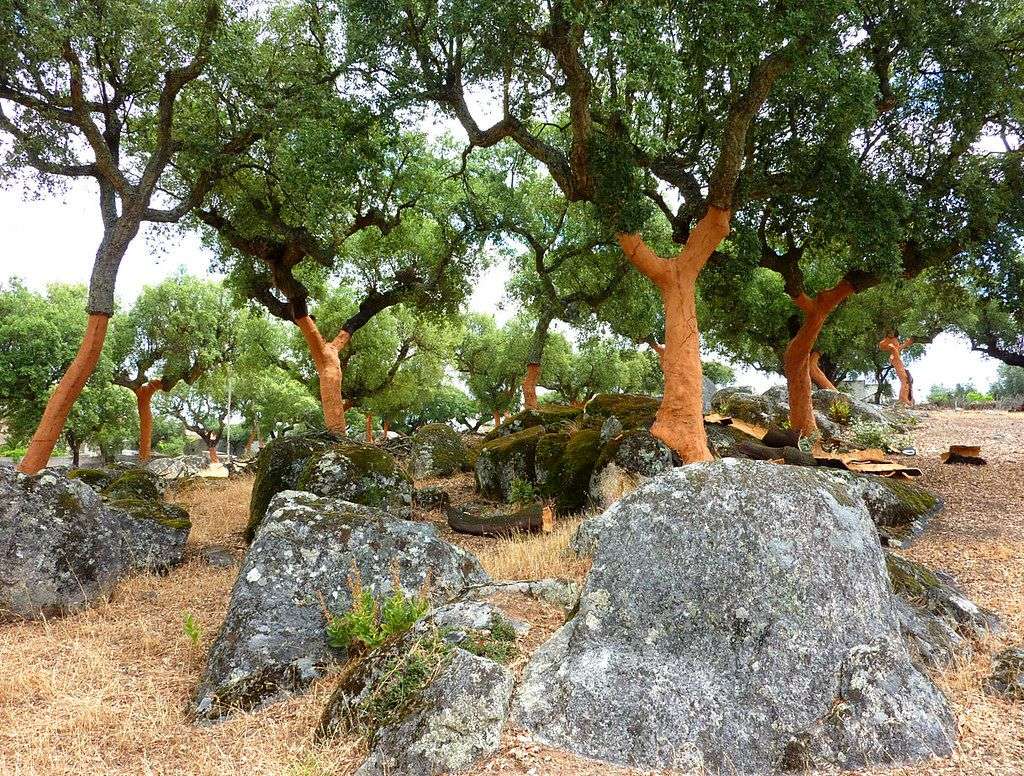
Freshly harvested oak trees in an Alentejo cork forest. [photo credit ]
Wherever you road trip in Alentejo, don’t forget to look out for the cork forests. Portugal is responsible for almost half of the cork produced globally; the Region of Alentejo has the largest cork forests in the world!
In fact, the Montado Landscape in Portugal is on the tentative list to be recognised as a World Heritage Cultural Landscape .
The oldest and largest cork oak tree, Sobreiro Monumental, can be found in Águas de Moura. This is a small village on the main route from Lisbon to Évora.
Facts about this famous Oak Tree (Quercus suber):
- 234 years old
- 16 m tall
- more than 4m trunk diameter
- it’s been harvested more than 20 times
- biggest harvest, in 1991, produced more than 1200kg of cork; enough to make more than 100,000 wine bottle corks!
- most trees produce around 45kg per harvest, so it can produce more cork in one harvest than many trees produce in a lifetime
- it’s called The Whistler Tree by locals because of the many songbirds, who live in its ginormous canopy
- voted European Tree of the Year for 2018
In the Alentejo Region, you will also find many opportunities for guided tours to cork farms.

This is likely to be the most accurate paper map you can find for the Iberian Peninsular.
And, the answer is…
Can you guess the answer to my question: Are Evora and Alentejo Worth a Trip from Lisbon?
I hope I have given you plenty of reasons to make a trip to the Alentejo Region from Lisbon. There are also many ways to do this. Of course, our preferred mode is a road trip in our mobile home. A rental car would give you a similar experience. But, a road trip by bus would also provide you with most of the opportunities I’ve told you about above. Many of the rest are available as guided tours from any of the bigger destinations.
We hope you have fun planning a road trip through Alentejo, Portugal. And make sure you include some of the amazing UNESCO World Heritage sites (or tentative sites) of Portugal that are in the Region.
Have you visited Alentejo in Portugal?
What were your favourite places?
Tell us in the comments below.
Please share this post on Pinterest to show your friends or to remember for later:









I love discovering these less touristy towns. So rich in history and culture. 😊
Thanks Lorelle, we also prefer to find the less touristed spots. It has the added advantage that it’s usually much easier to manoeuvre and find a park for Bertita – our overlanding vehicle.