Historic German Settlements: Rundling Villages of the Wendland
Today we would like to introduce you to some surprising historic sights in Northern Germany, which are very unique yet little known: the Rundling Villages of the Wendland.
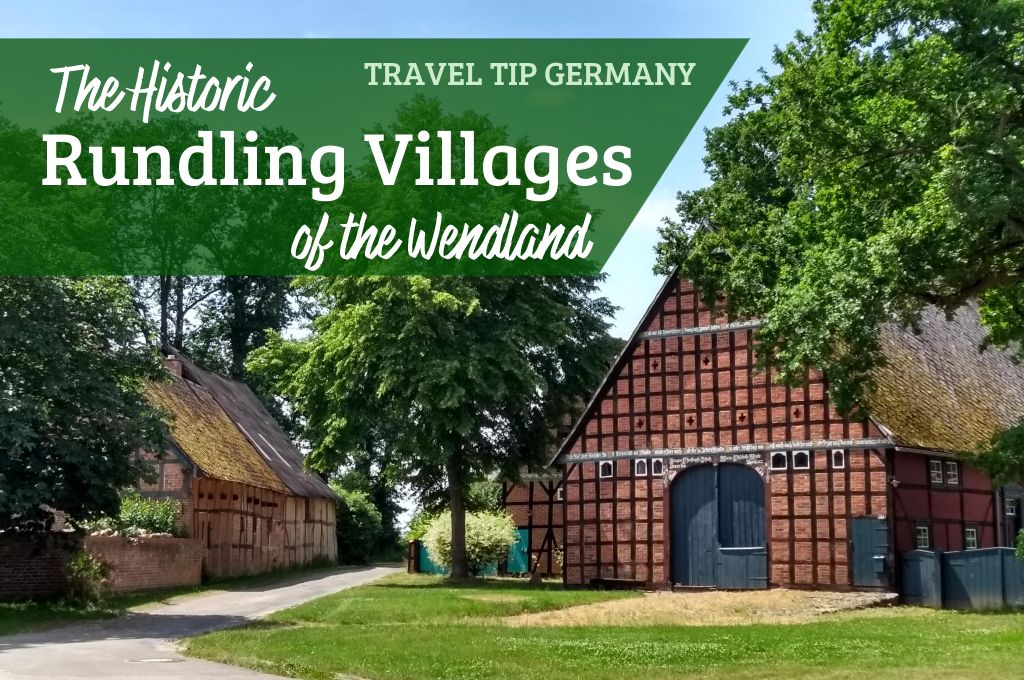
Not all attractions in Germany are historic cities or castles ruins. Explore with us the historic circular Rundling Villages of the Wendland in Germany’s north.
What you will find in this article:
If you don’t know what to look for, you could crisscross the north of Germany for days and never find one. Yet, more than one hundred of these villages are preserved, more or less, in their historic state. It’s no wonder that many Germans don’t know about the Rundling Villages of the Wendland either because all of them are hidden off the main roads. We learnt about the existence of the rundlings from a good friend, who is an architect.
The History of the Rundling Villages
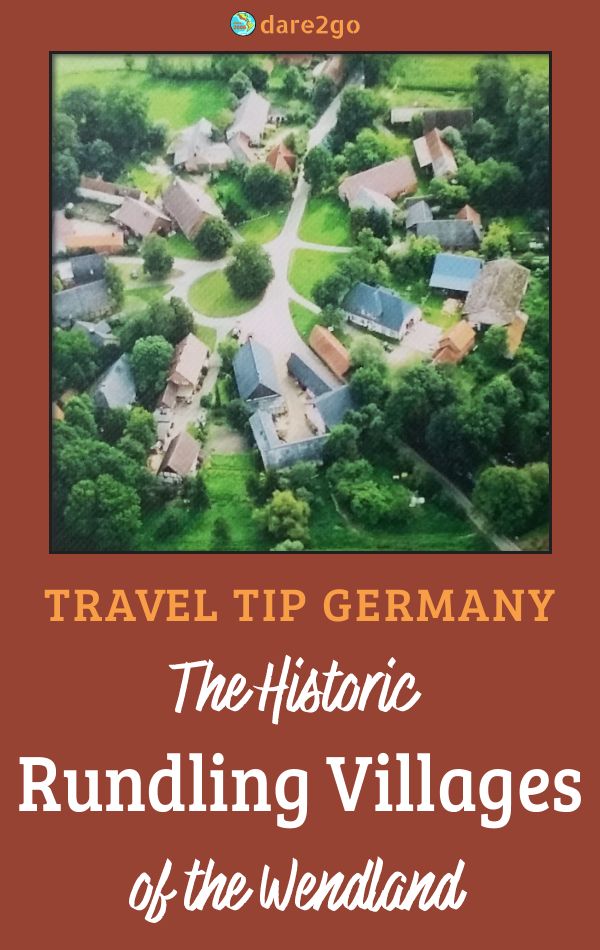
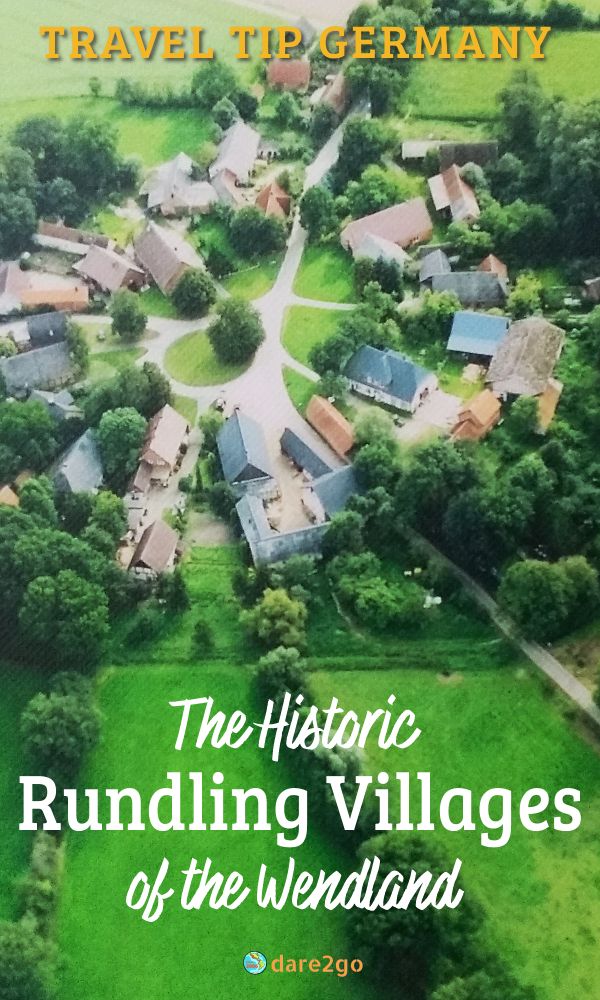
Now, before I proceed, I should explain what a “Rundling” is and how they came to be. Literally translated, these are circular villages. But not all are perfectly circular; some can be horseshoe-shaped.

Lübeln: a Google satellite view capture of the village, which shows the circular layout very well.
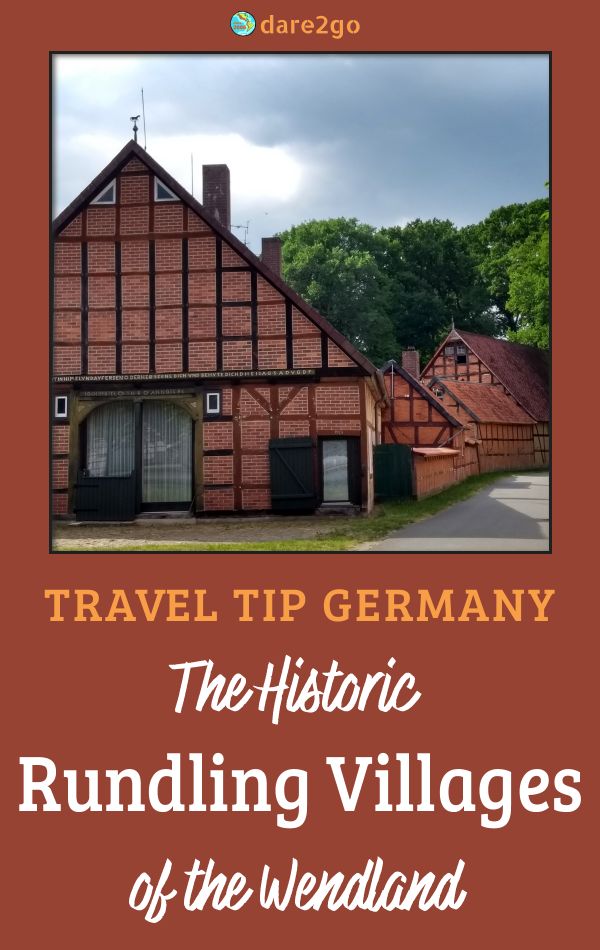
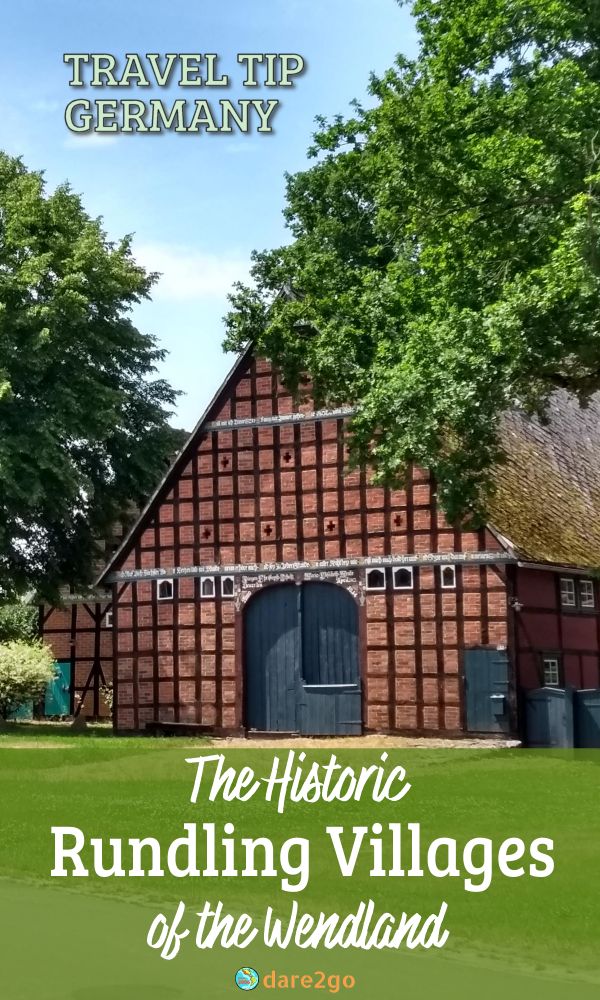
The typical building in a rundling village is the “Fachhallenhaus”. This is a half-timbered hall house, where nearly everything was under a single roof: animal stables, provisions and fodder for the animals, tools and, of course, the living quarters.
The buildings always face their large hall and stables towards the village centre; the more private living section is located towards the rear garden. Here one will find more outbuildings like a pig stable, bakehouse (always separate, for fire risk), outhouse, flax storage and possibly workshops like a smithy.
From the air, the individual blocks look like slices of cake or pizza. The land, which fans out towards the back, has kitchen gardens, orchards and then the fields. The old partitioning of the fields in Guestritz. (Please click for larger view – external source)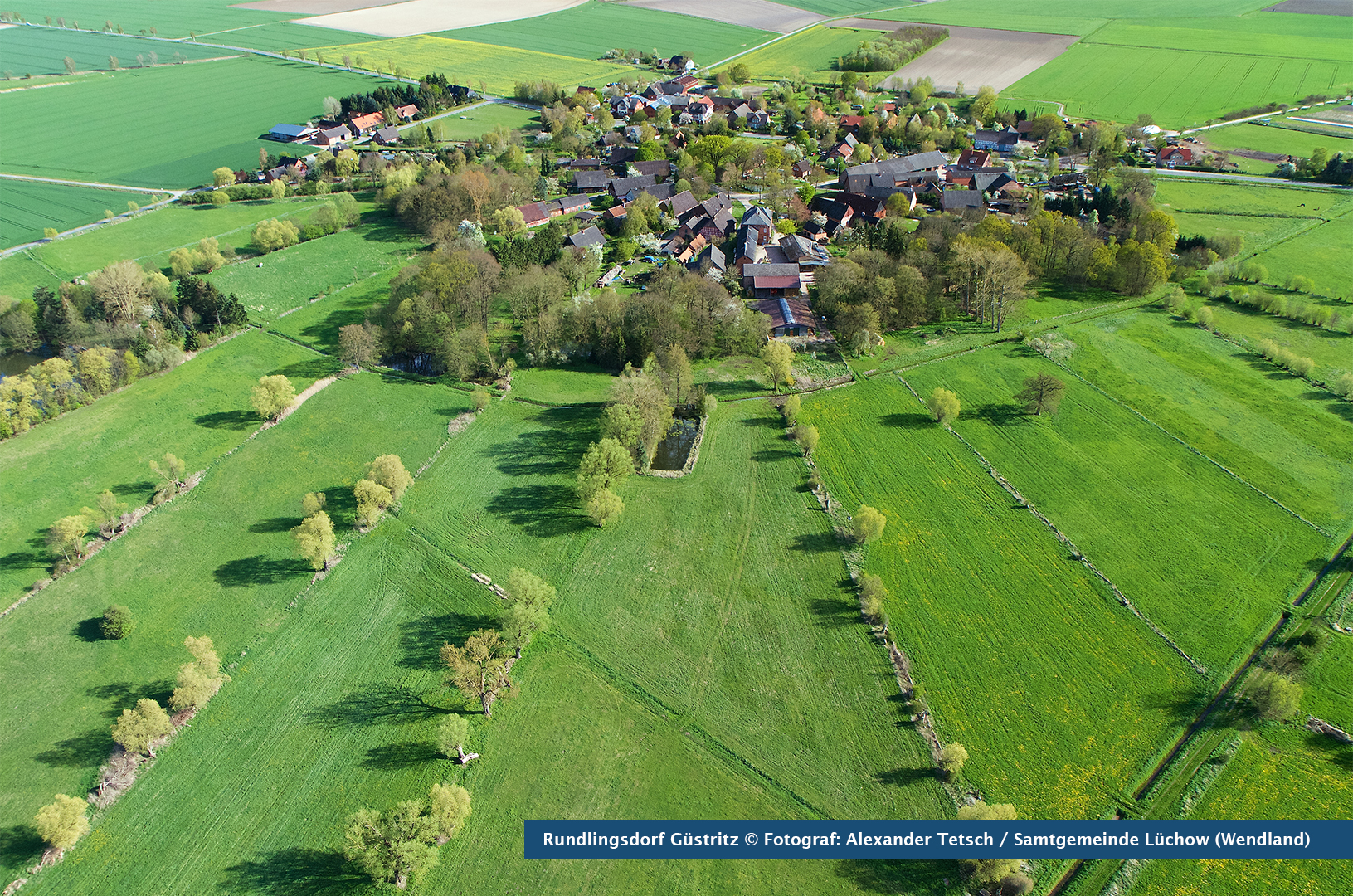
As far as one can tell, the rundling villages date back 12th century and all were settled by people of Slavic heritage. Until the late 18th century, the villagers had their own language and the Slavic naming of some specific things has survived to this day.
It’s assumed that the noble landowners wanted to make better use of their holdings and allocated land to the Slavic settlers in a small cluster. Each family was allocated one “Hufe” of land to farm. A “Hufe” is an old Germanic land measurement, whose size varies greatly according to the fertility of the region. In the Wendland it was just under 10 hectares.
The initial settlements were usually only three or four farms, later the hufe were further divided and more families moved in, thus the appearance of a rundling slowly developed. In larger settlements, a “Dorfschulze” was installed by the landlord. The Schulze’s function was to be the village leader and contact person for the nobility, similar to a bailiff in the UK. His house was usually right opposite the entrance road, in the middle of the circular cluster of buildings.
For those of you who would like to learn more about the rundlings’ past, there is a good page by the local rundling association (with more photos).
A Walk Around the Rundling Museum
We can highly recommend beginning to explore the rundling villages and their unique features at the Rundling Museum in Lübeln. It is open from April to late October, Tuesdays to Sundays . Most facts I have written about in this article, we either learnt there or were inspired to research a little further.
With the audio guide, we spent a little over 2 hours at the museum. We visited on a Saturday in late June and the place was absolutely not crowded; for example, we had the textile exhibition all to ourselves.
The museum’s open-air compound takes up the entire area of a former farm and is filled with original buildings; historic buildings that were disassembled and moved here, and a few smaller buildings that were reconstructed in the old style.
The Original Four-Post Farmhouse
Facing the village green is the entrance, shop and administration of the museum. This is a beautifully preserved four-post house from 1832. To understand the term “four-post house” you should learn that this is referring to the size of the building and the number of load-bearing posts. The graphic below [from Wikipedia ] shows the difference between it and the smaller three- and two-post houses.
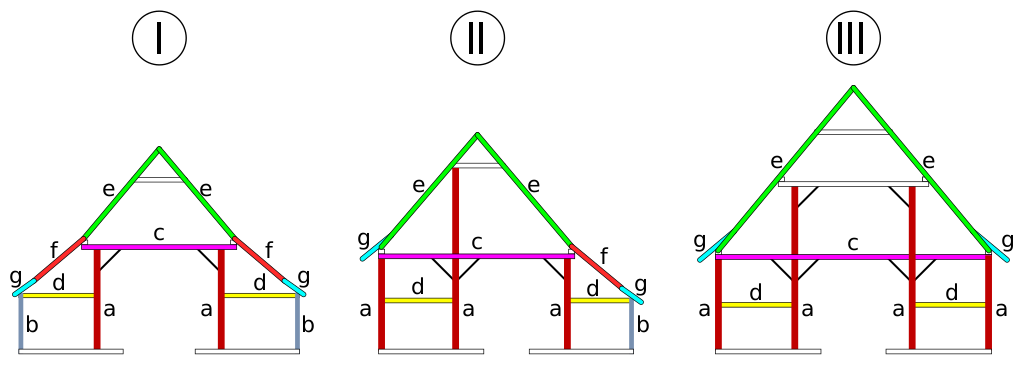
The principal post lay out of the different styles of a “Hallenhaus”. No I is a two post design (marked in red), No II is a three post house, No III a four post building.
Step Back In Time in the Heimathaus
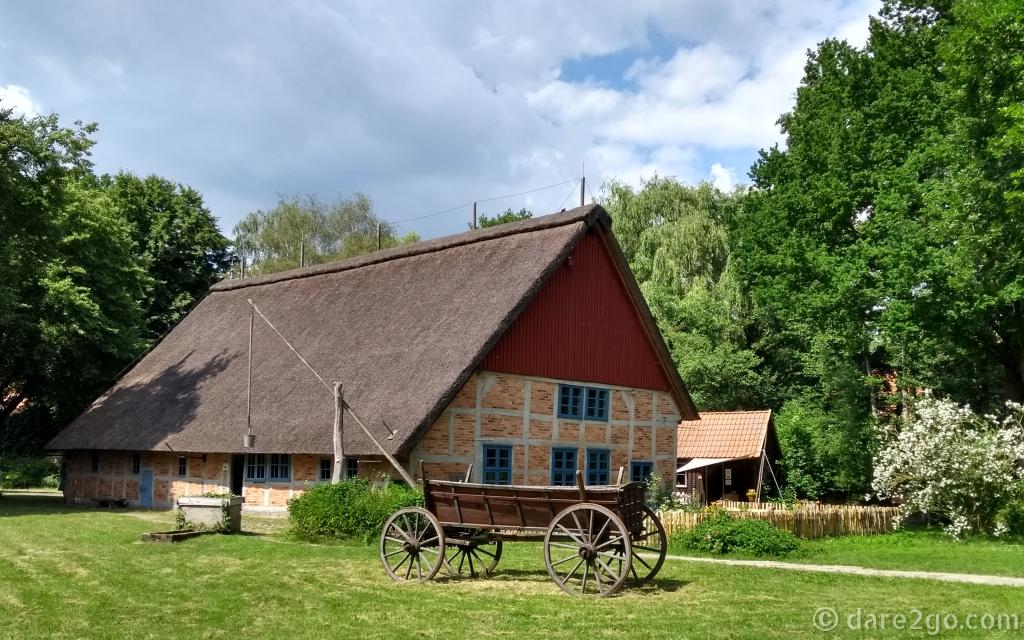
This is the main structure, where you (like us) might spend the most time. The “Heimathaus” is a three-post building from 1733, which was moved to the museum. The interior is full of period pieces and thus provides a good insight into the farmers’ lives a couple of centuries ago.
You’ll enter through the large gate, which is big enough to drive in a cart loaded with hay or harvest. To the left are the old horse stables, to the right the cow stables above which the farmhands used to sleep.
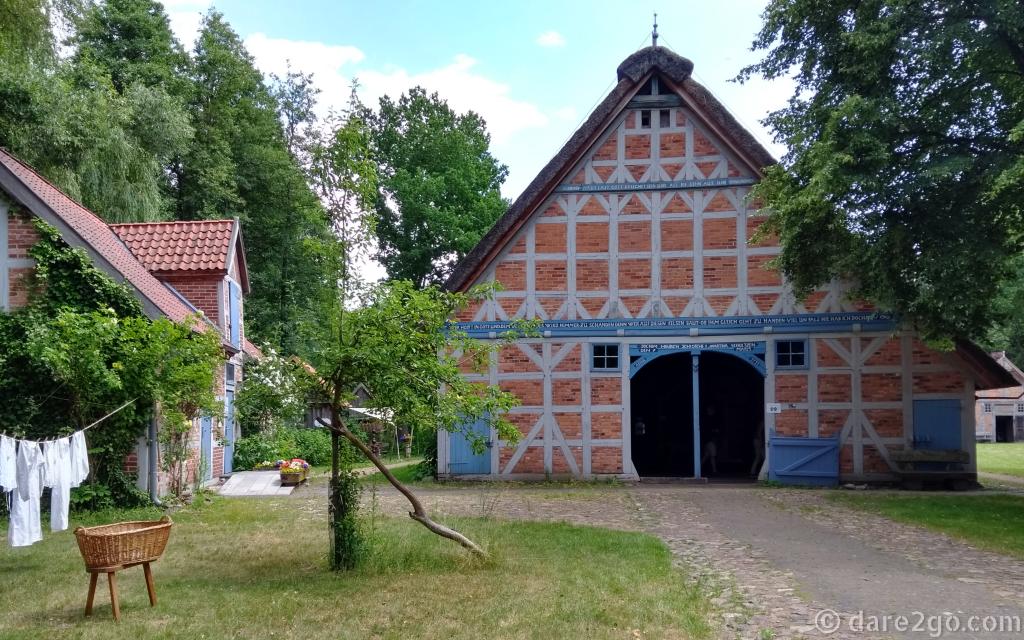
Rundling Museum Lübeln: to the left the pig stables, now textile exhibition, to the right the large “Heimathaus”.
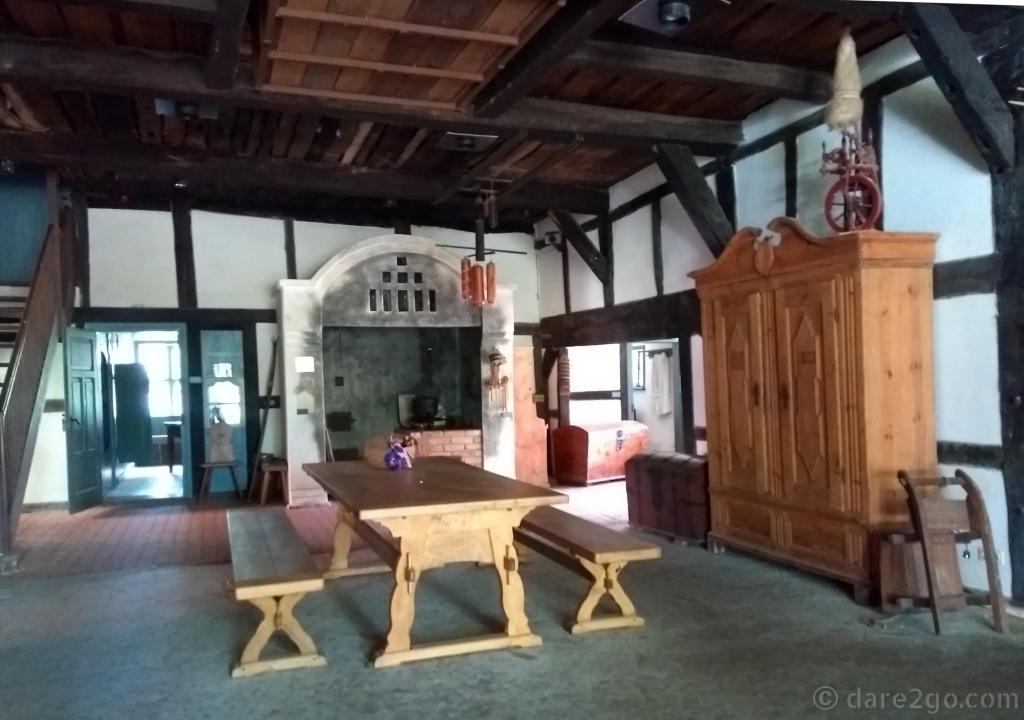
The large hall was the centre of nearly all daily activity; working, cooking, eating, meeting point for celebrations (once cleaned), and more. At the far end, you will find the only fireplace in the house. This one is enclosed with a “Schwibbogen”, an arched brick structure that became a requirement in the early 19th century.
You see, these old farmhouses never had a chimney (more about this later) and gabled thatched roofs – a recipe for disaster. Nowadays you’ll hardly find any houses that date back earlier than 1800 because most burned down, often engulfing half the village in flames. The last time that nearly the entire village of Lübeln burnt down was in 1811.
To the rear are the private quarters of the farmer’s family. But don’t expect anything luxurious, these fairly cramped simple rooms were a hive of activity during the colder months: spinning and weaving linen.
There’s one curiosity you shouldn’t miss: like most houses, this one has a small glass pane mounted low in the wall to the hall. Through this, the farmer could always peek to see what was going on with his animals and servants.
The beds you see are absolutely small, barely more than four feet long and not very wide either. Yet these used to sleep up to four adults each! People in those days slept in a sitting position, in order to be able to breathe more easily because the whole house was filled with smoke.
If you exit to the right, you come to what is called in good German “Remise” (a French word). This is a (reconstructed) shed to store farming equipment and carts. There’s also an old draw well installed in the yard.
Please click thumbnails below for a larger photo with description.
-
- Lübeln: the “Heimathaus” of the Rundling Museum with the resconstructed well in front.
-
- Lübeln: inside of the big hall of the “Heimathaus” in the Rundling Museum.
-
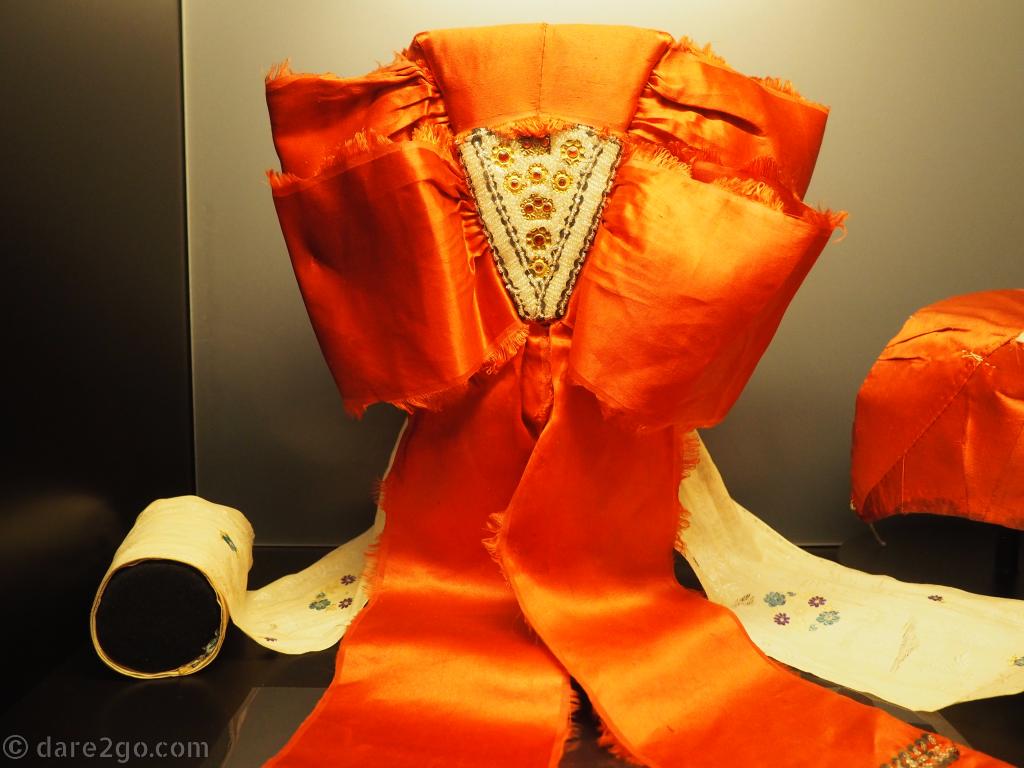
- Rundling Museum in Lübeln: an old head covering on display in the textile exhibition
-
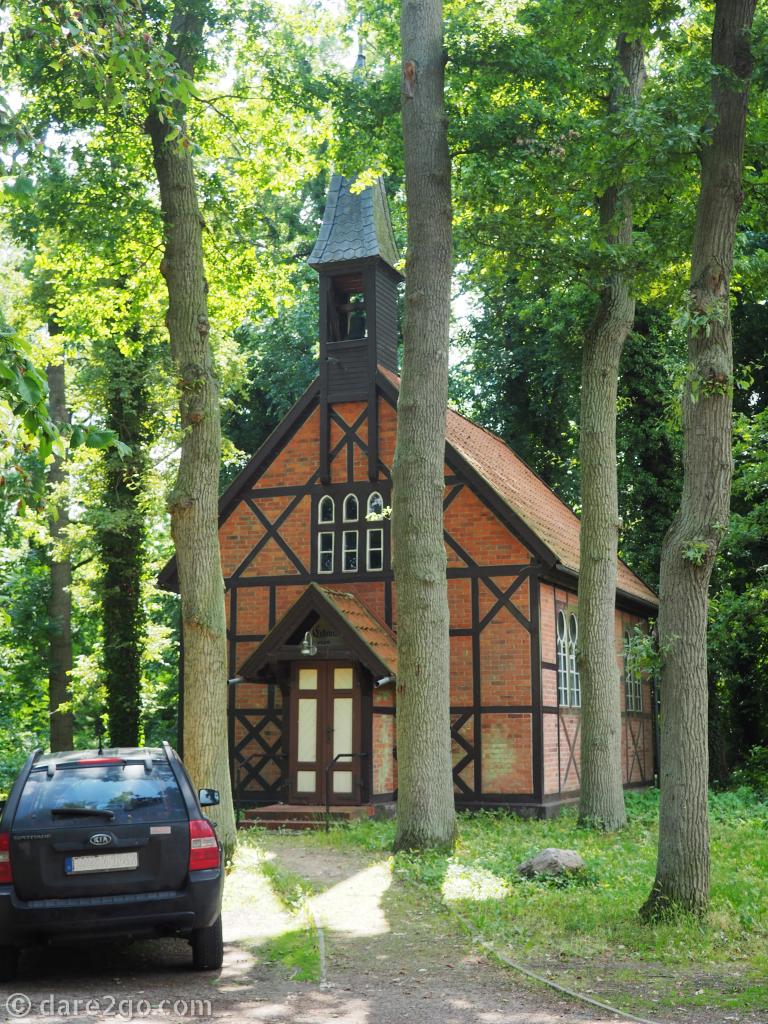
- Lübeln: the small and unassuming church stands at the edge the village.
To the left you come to the second very interesting building:
The Old Pig Stable, now a Textile Exhibition
The old pig stable has been converted to house the museum’s small but astonishing textile collection. The door to enter is always closed but that’s only because the rooms are climate controlled to protect the precious exhibits. So don’t hesitate and step inside!
In two small rooms, you will find antique pieces of clothing and adornments, from everyday work clothes to Sunday’s finest. A large part of the collection is made up of exquisite garments that were only worn on special occasions or annual outings.
Unfortunately, the signage is only in German (but the audio guide is really good). This exhibition provides a good insight into the daily lives and rituals of the Wendland Slavic people a few hundred years ago.
Apparently, in later years they were frequently criticised for their extravagance and taste in expensive, imported fabrics. Through their refined craft of creating high-quality linen cloth, many had become considerably wealthy, which they liked to show off whenever possible.
Other Outbuildings on this Wendland Farm
Just past the pottery, where you can buy colourful souvenirs, is the outhouse, sometimes called “Pardemang” or “Privy” or simply “Schiethus”.
Further from the other buildings are the bakehouse and the flax kiln. These were kept separated to prevent fires from spreading. Baking was usually a communal effort because it took over two hours and a considerable amount of wood to fire up the oven.
Among the other outbuildings, like the smithy and cartwright you will find a reconstructed linen storage barn, where some of the old tools, used to work the flax into linen, are on display. It would go beyond the scope of this article to explain the labour intensive process of growing flax and turning it into linen cloth. Instead, I recommend this video from Ireland .
The Parum-Schultze-House
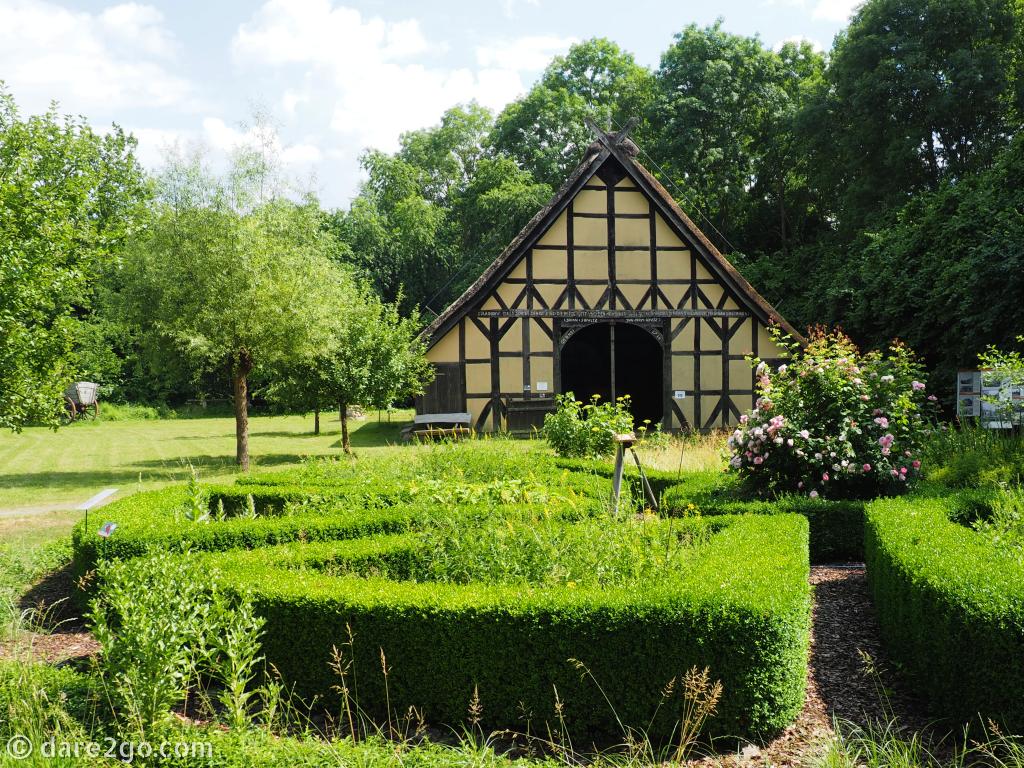
Rundling Museum in Lübeln: the Parum-Schultze-House behind a traditional garden design
This two-post house stood originally in Süthen and was moved onto the museum’s ground. Johann Schultze was an outstanding person for his time. Not only was he a respected village leader, but he was also one of the very few ordinary people in his day who could read and write.
And he wrote a lot: from reports about basic costs to observations of life in his village to annual harvest documents, he kept meticulous written records. His estate offers a wealth of detail for historians. Inside the house, some copies of his writings are on display.
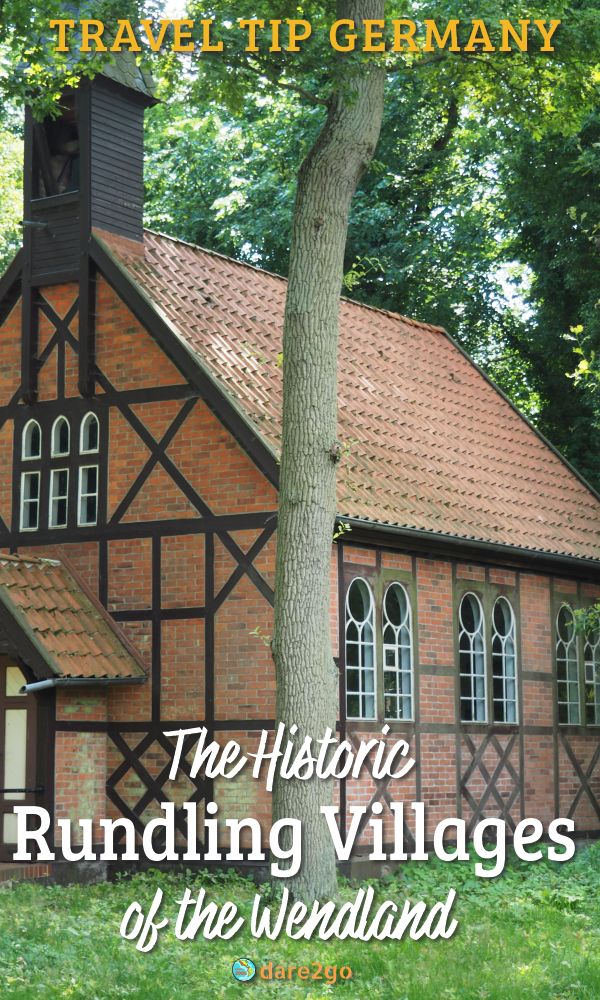
Just outside the fence, next to the Parum-Schultze-House, stands the church of Lübeln. This is another quirky feature about rundling villages: their churches are always at the edge of the village or even further away. From all accounts, the Slavic people converted late to Christianity and always kept their churches outside the centre of their life.
The Drive-Through Barn
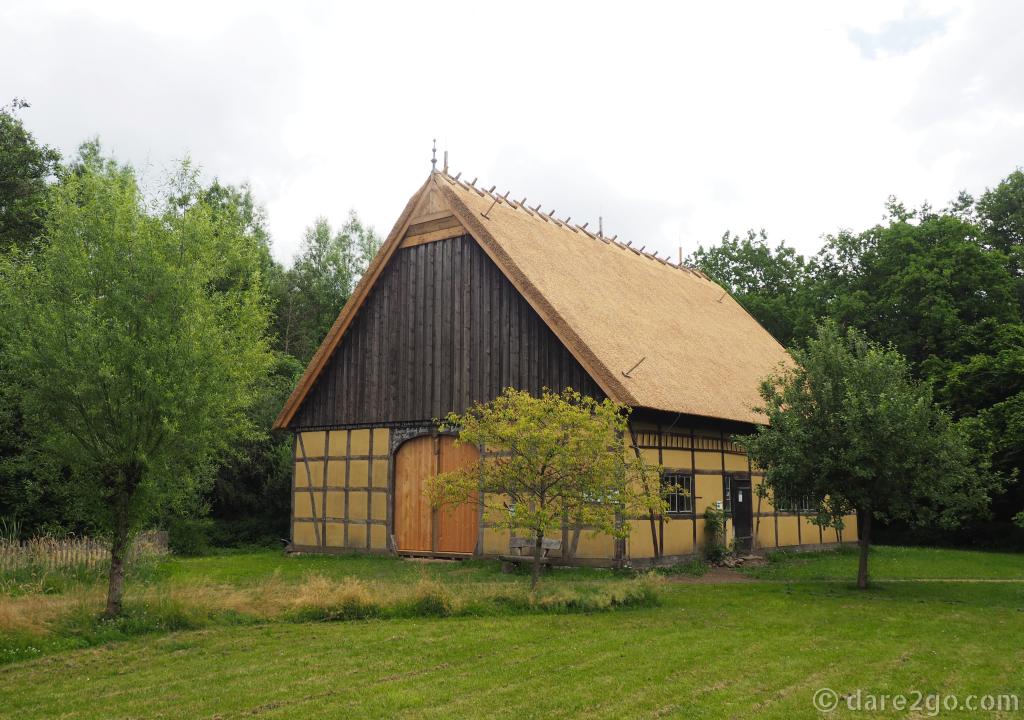
Rundling Museum in Lübeln: the Drive-Through Barn with freshly thatched roof
To the rear of the property, just before you reach the fruit orchard, stands the drive-through barn. Usually, this houses an exhibition about the rundling villages and their history. Unfortunately, at the time of our visit, it was undergoing an extensive restoration and was closed.
Inhotim: Unexpected Fusion of Botanical Garden and Art
The Berber Granaries of Morocco should be World Heritage!
Let’s Explore the Rundling Villages
Now, that you have gained a little insight into the history of the rundling villages you are well prepared to go and explore some of these beautiful and relaxed villages.
Please click thumbnails below for a larger photo with description.
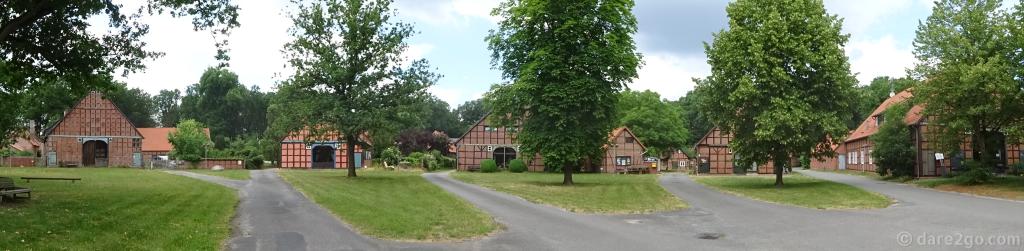
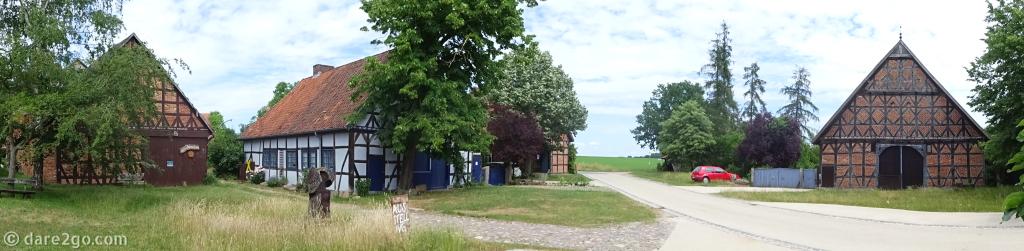
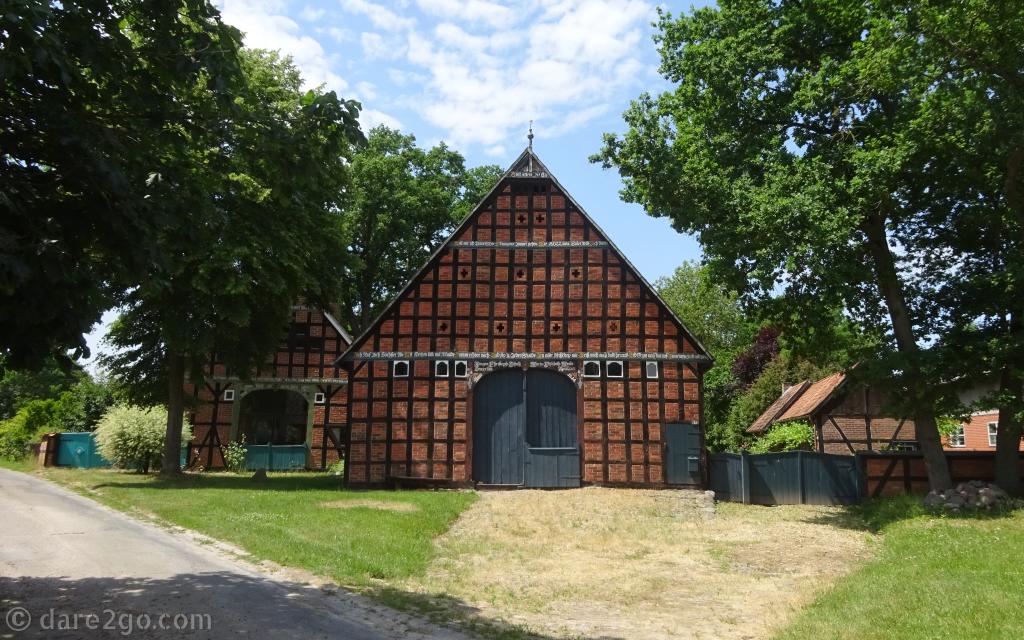
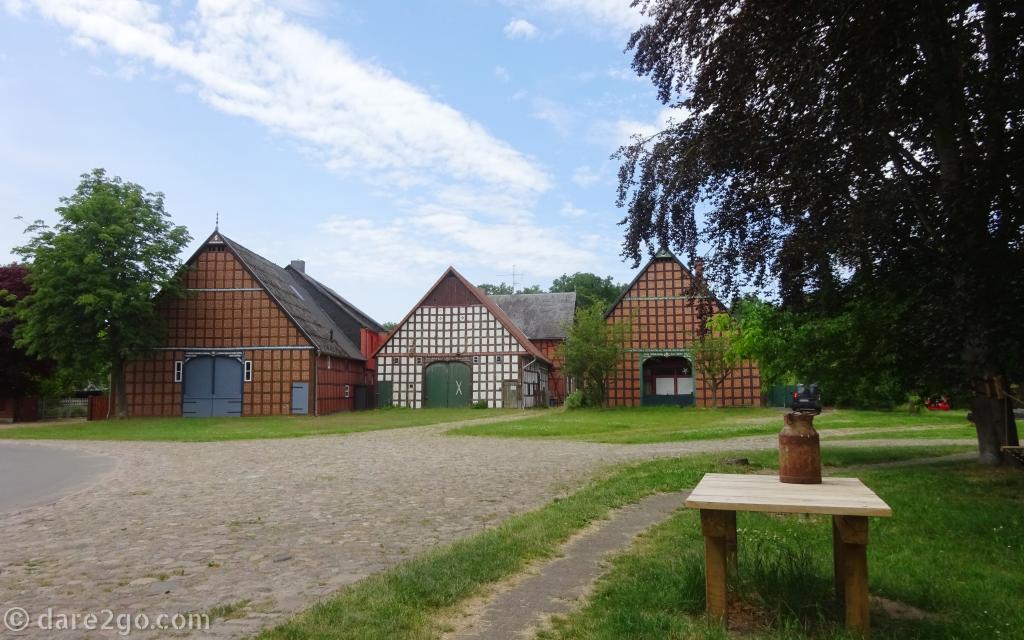
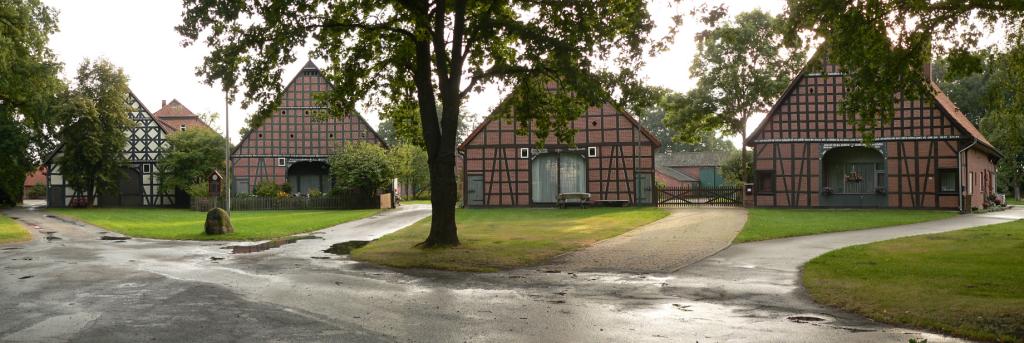
Location of most Rundling Villages
You will find the most rundling villages in Germany between Uelzen and Lüchow, closer to the town of Lüchow. As mentioned above, all villages are off the main roads (some only a stone’s throw, others a bit more). We visited several with our Bertita (camper truck) but it was occasionally tight to get through or to park in a village.
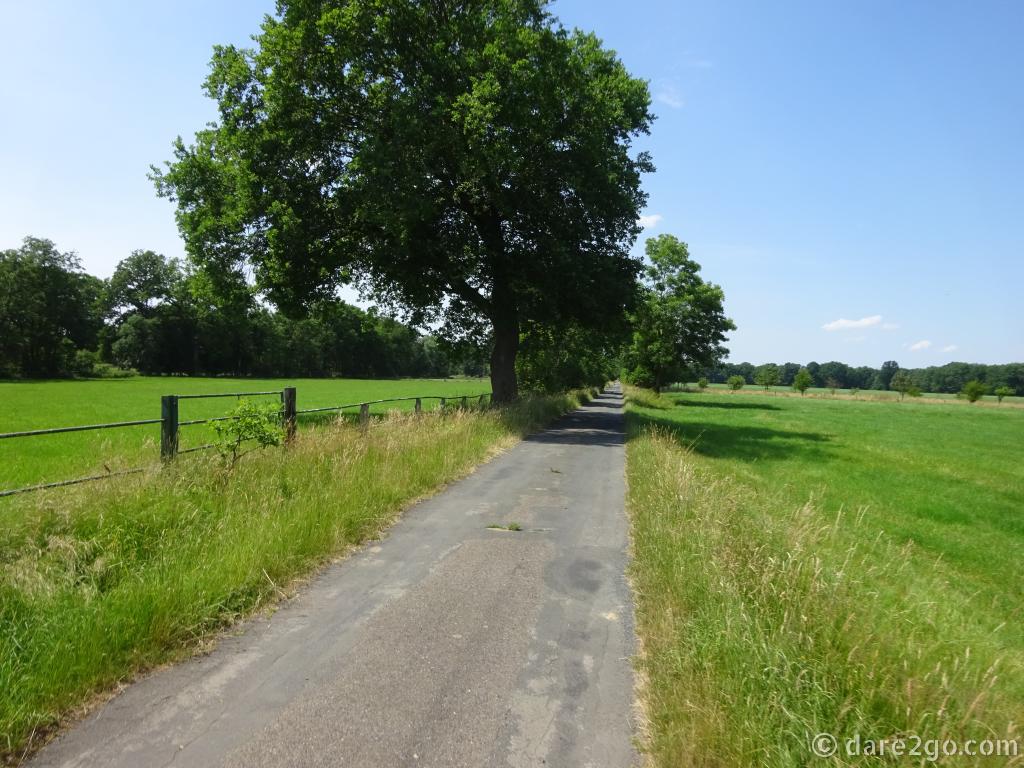
Most Rundling Villages are well off main roads. To reach them you can drive, cycle, walk, or ride a horse down narrow country roads.
The rundlings are much easier to visit by bicycle! The landscape is flat and there’s not much traffic on the narrow roads leading to them. Many villages cater for day visitors with a shady place to have small refreshments. In some villages, you can find private boarding houses.
When you load the page of the World Heritage initiative and scroll down, you will find a map with markers of all villages included in the World Heritage application – a good start!
Which reminds me, I should have mentioned that there is a strong initiative to have the rundling villages added to the UNESCO World Heritage List – so better visit before they gain this well-deserved added popularity!
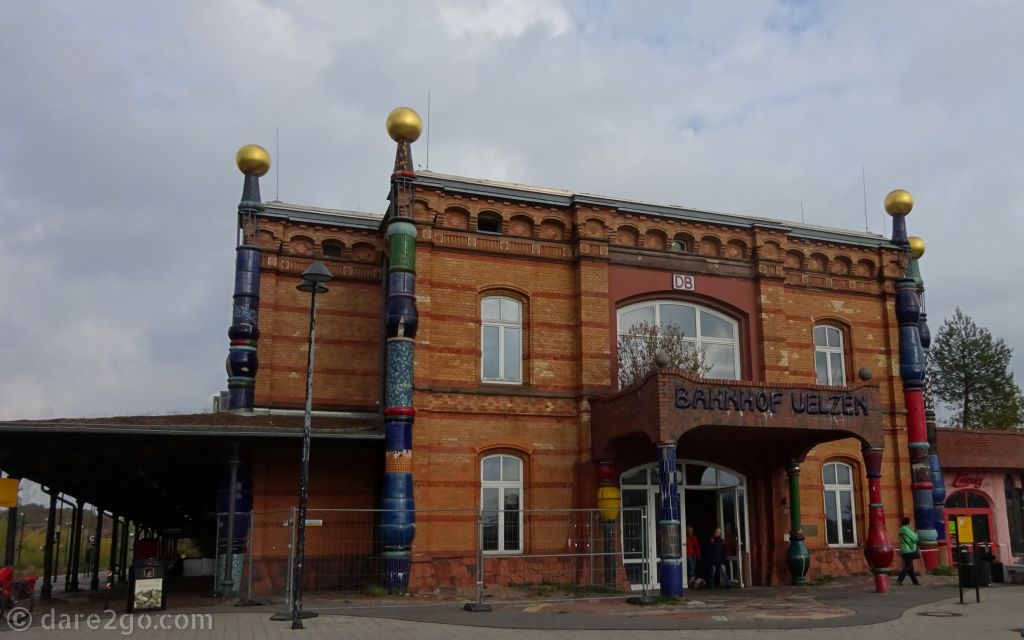
The train station in Uelzen was transformed by the famous architect and artist Hundertwasser. It is the only station he has ever worked on.
Please share this post on Pinterest to show your friends or to remember for later: