6 Best Road Trips to See Morocco’s Beautiful Landscapes
Morocco has been a favourite tourist destination for decades. But how many visitors leave the well-known tourist attractions to experience Morocco’s beautiful landscapes ? [< link to our gallery with stunning landscape photos from these trips and more.] In this post, we will show you what you can see when you get outside of the main tourist centres of Morocco. We also share our best roadtrips to take you there. Just pick the one(s) you like – or take them all!

6 road trips to wow you. See the beautiful landscapes of Morocco: endless mountain vistas, striking geographical features, lush oases and ancient kasbahs. Photo taken on Roadtrip #1, inland from Tamri.
We love to get off the beaten path to explore the back roads. When you picture the countryside of Morocco, do you see arid deserts with camels wandering through the sand? It may surprise you that, although the country is almost surrounded by either ocean or desert, the majority of Morocco is actually mountainous. These mountain landscapes, with their plateaus, river valleys, gorges and canyons, provide the opportunity to see incredible sights and stunning views. As do the ocean and the desert.
The following road trips would work equally well for those who travel in their own vehicle as we do, and for others who decide to rent a car locally, to get out of town.
6 Road Trip Routes to See Spectacular Moroccan Landscapes
What you will find in this article:
We like to let the road take us where it will and to have the flexibility to stop anytime we want to. So our roadtrips are not detailed itineraries; we encourage you to travel with some flexibility if time allows. Also, this is by no means a complete list of possible road trips in Morocco. Others may be more scenic – or even more scary!
Please note: we have included screen capture maps for each road trip at the bottom of the page!
- The Road Map Morocco from Michelin , updated in 2018
- The more expensive Morocco Map from Reise-Know-How , Edition 2017. This German produced map is printed on special paper, which doesn’t rip or tear. We use their maps almost everywhere!
You can order both for quick delivery on Amazon!
1. Atlantic Coast from Essaouira to Agadir via Paradise Valley
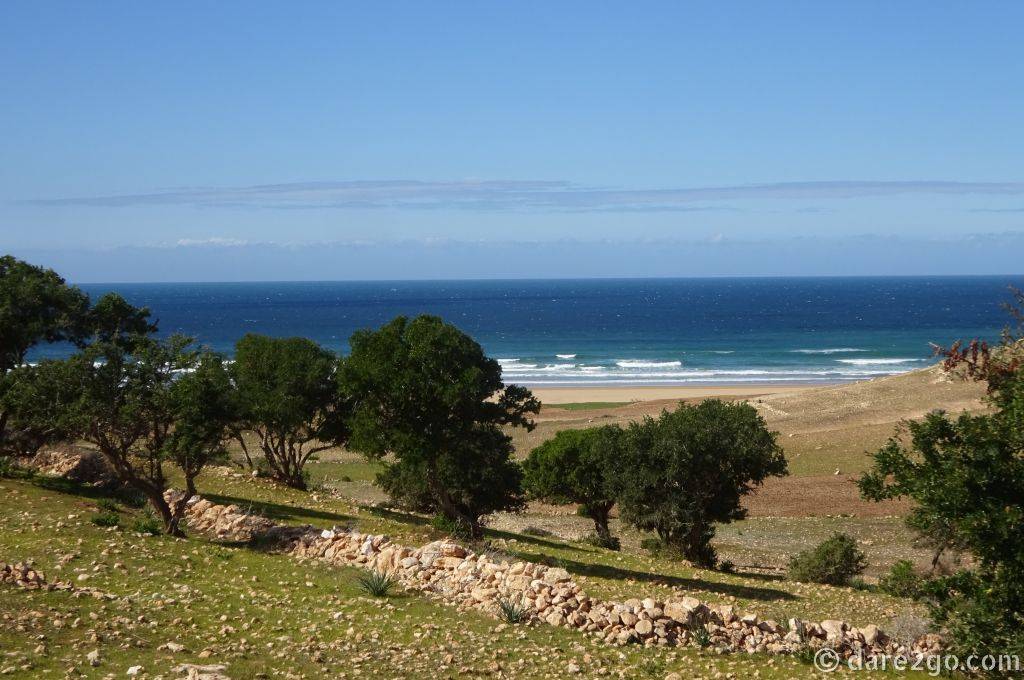
Argan trees are native to southern Morocco. Their fruit produces Argan oil, which is used in cosmetics as well as in food. On our road trip following the Atlantic coast, we saw our first examples of this versatile species.
Making a roadtrip from Essaouira southwards along the Atlantic coast gives you plenty of ocean views. We made our first stop in the surfing town of Sidi Kaouki, where there are camping grounds, hostels and hotels right by the beach. It’s a spot for beautiful sunsets.
Travelling further south, the views are usually from higher above the ocean. The main road – N1 – takes a more inland route. When you have the opportunity, make sure you turn off onto minor roads, which will take you closer to the coast. You will be rewarded with wonderful vistas. This is also an area where you will see the famous argan trees and if you are very lucky, the goats who climb them to eat their fruit.
When you reach Tamri, we recommend making a detour away from the coast to Imouzzer Ida Ou Tanane. This route surprised us with its outstanding terrain and views that seemed to go on forever. From Imouzzer you can drive through Paradise Valley, then back towards the coast and the city of Agadir.
Please click thumbnails below for a larger photo with description.
-
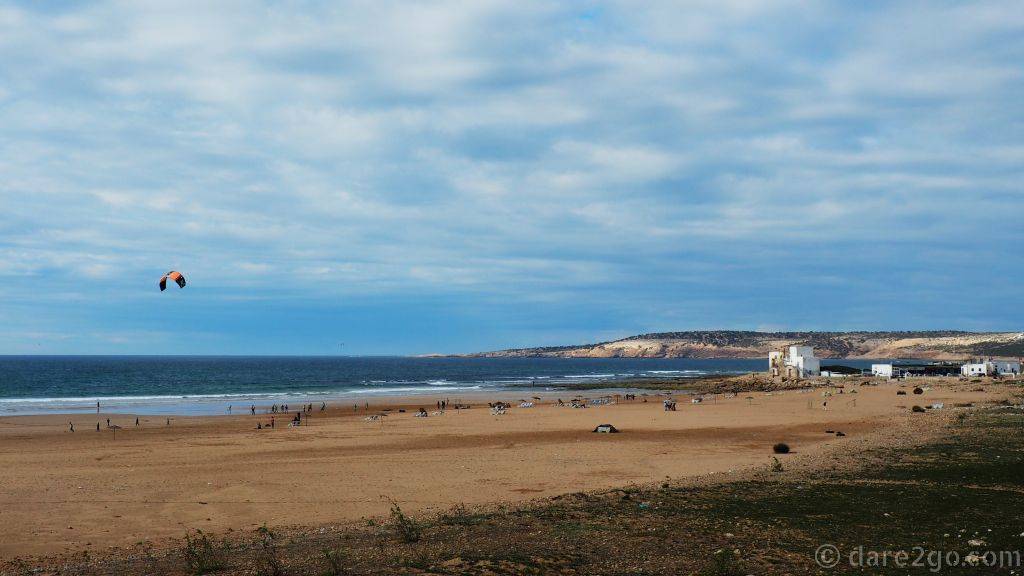
- The beach at Sidi Kaouki is a vast expanse of sand. This village is popular with visitors for all kinds of water sports. It was our first stop on our road trip from Essaouira to Agadir.
-
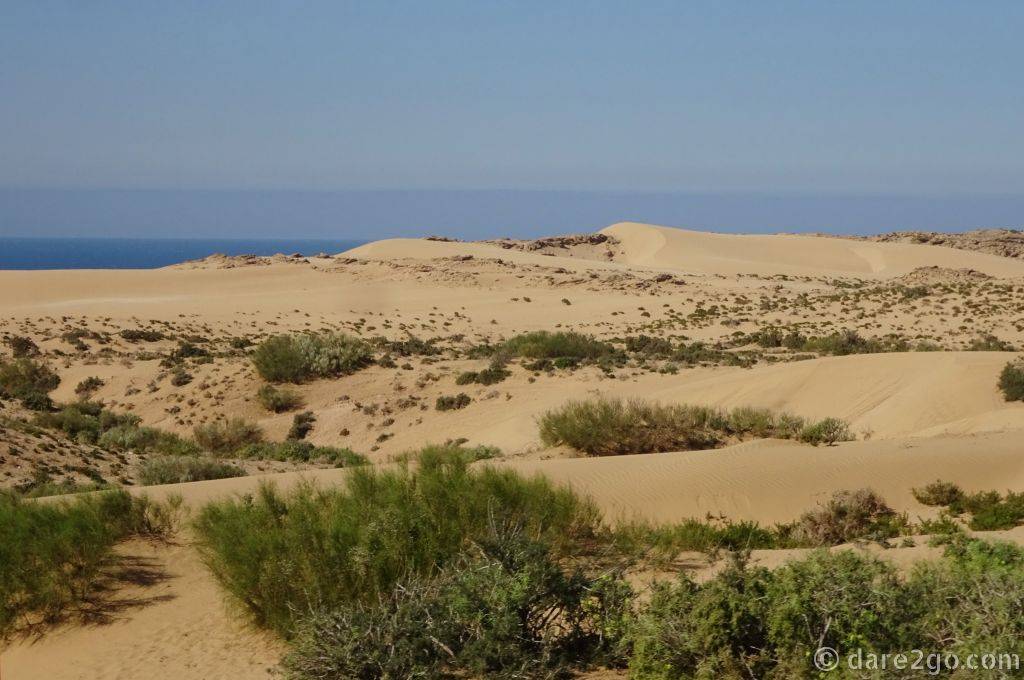
- Sand dunes along the Atlantic Coast, with the ocean in the background. Because of illegal sand-mining for construction work, dunes like these are disappearing all along the Moroccan coastline.
-
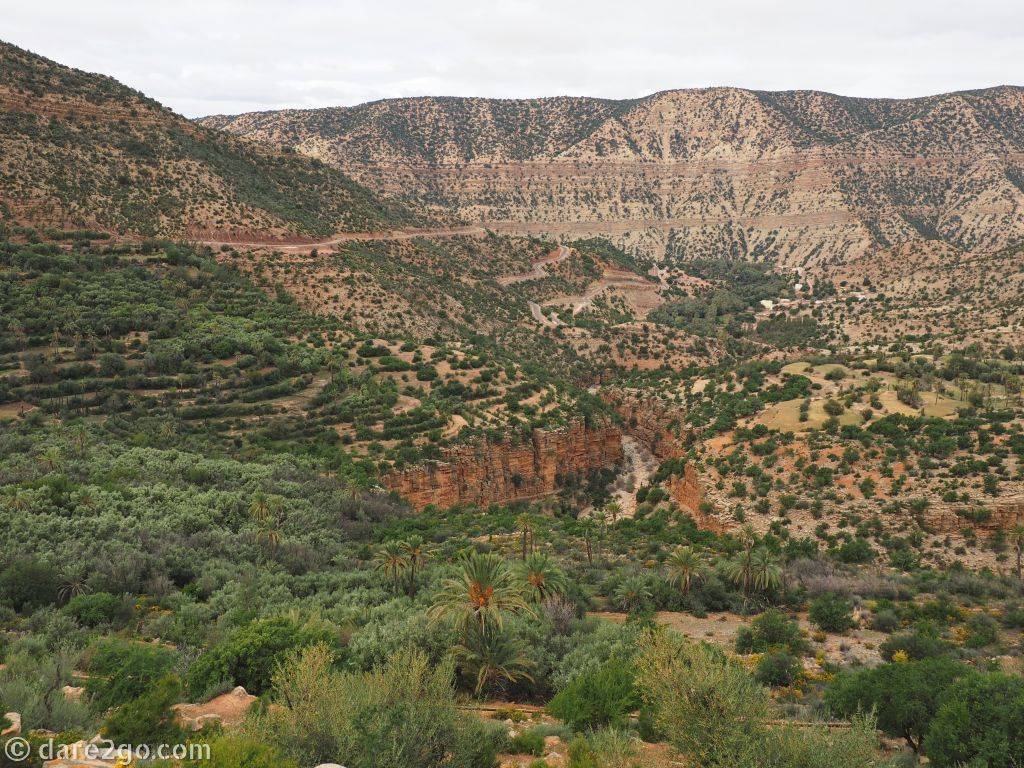
- This mountain and valley view, which appears to go on forever, is a good example of the mountain vistas we enjoyed when we left the coast at Tamri on our roadtrip south from Essaouira.
-
- These turquoise pools, surrounded by lush vegetation, are what bring people to the spectacular Paradise Valley. Along with swimming in the clear water, hiking and horseback riding are other popular activities. [photo credit ]
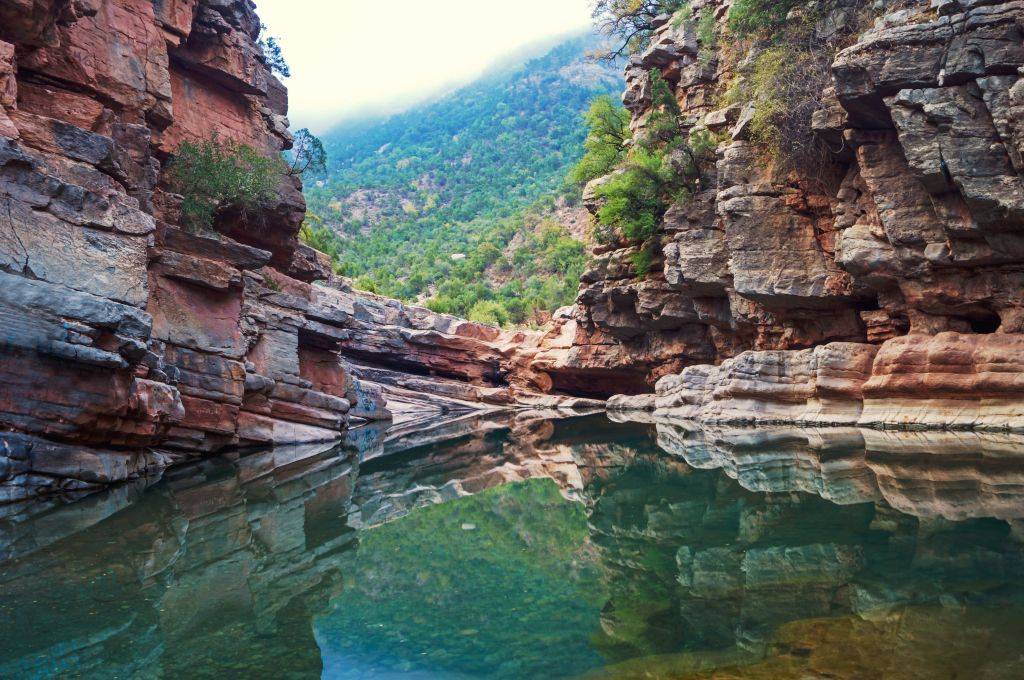
Paradise Valley was less inspiring for us than the first part of this detour; probably because we only drove through it, and it was suffering damage from recent heavy rains. But there is an extensive choice of hiking opportunities in the valley, and it has a reputation for living up to its name. Lots of people take day trips from Agadir to experience Paradise Valley .
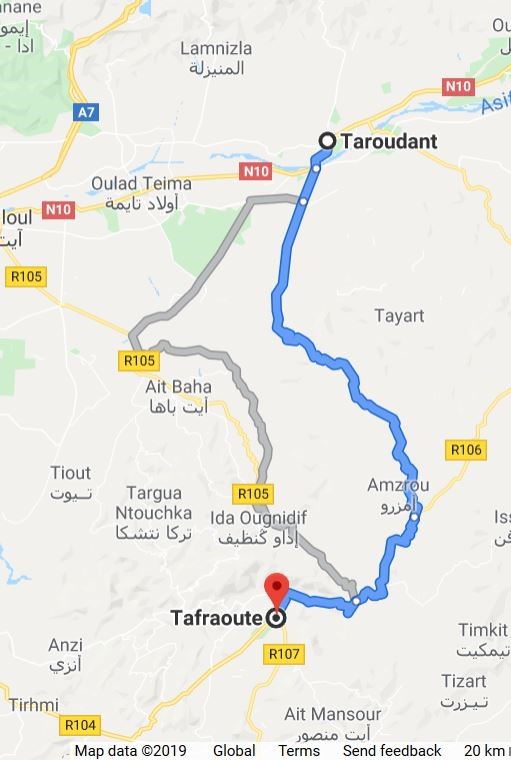
2. Taroudant to Tafraoute, discovering Berber Granaries
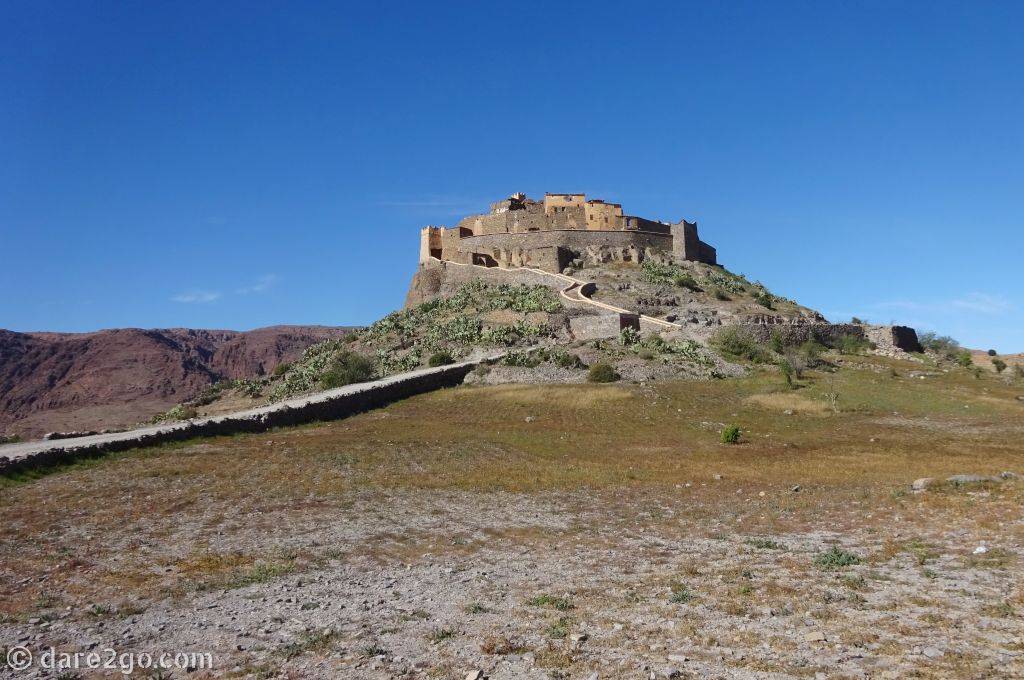
Kasbah Tizourgane, perched atop a rocky outcrop. You can’t miss it when driving the R105. Alongside many Berber granaries, this Kasbah was an exciting discovery on our road trip from Taroudant to Tafraoute.
We became fascinated by the Berber Granaries (or Igoudar) in Morocco. After some extensive research, we discovered that we could possibly find some to visit when travelling from Taroudant to Tafraoute through the Anti Atlas Mountains. Along the way, we got to see some absolutely jaw-dropping scenery, as well as these fascinating structures.
Please click thumbnails below for a larger photo with description.
-
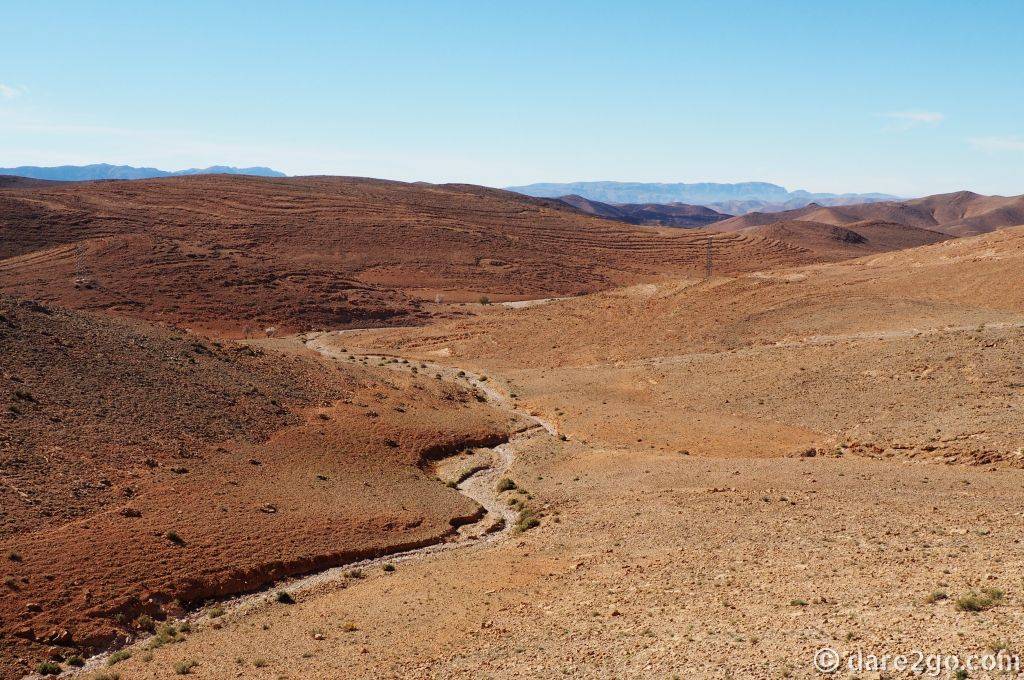
- The landscapes of Morocco provide many striking geographical features like these unusual mountains, which seem to go on and on. Our roadtrip from Taroudant to Tafroute provided many such photo opportunities – this one from the R106.
-
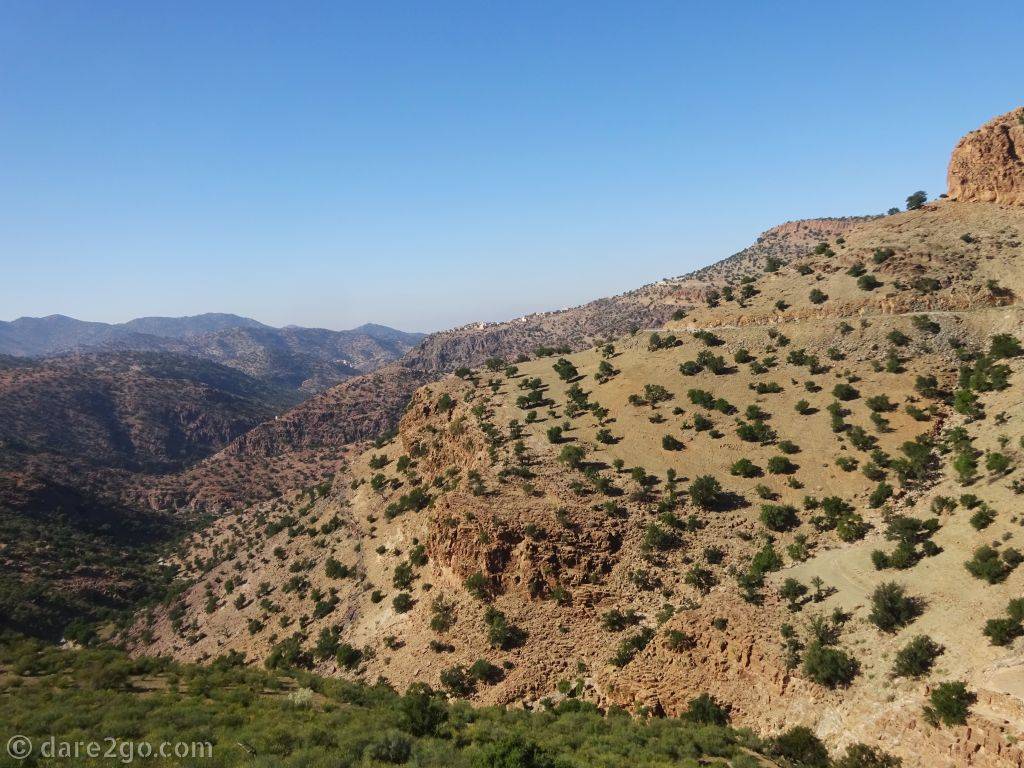
- We were searching for Berber granaries but we also found some beautiful vistas driving along the R105. Mountains and valleys of arid landscape, interspersed with argan trees dotting the landscape.
-
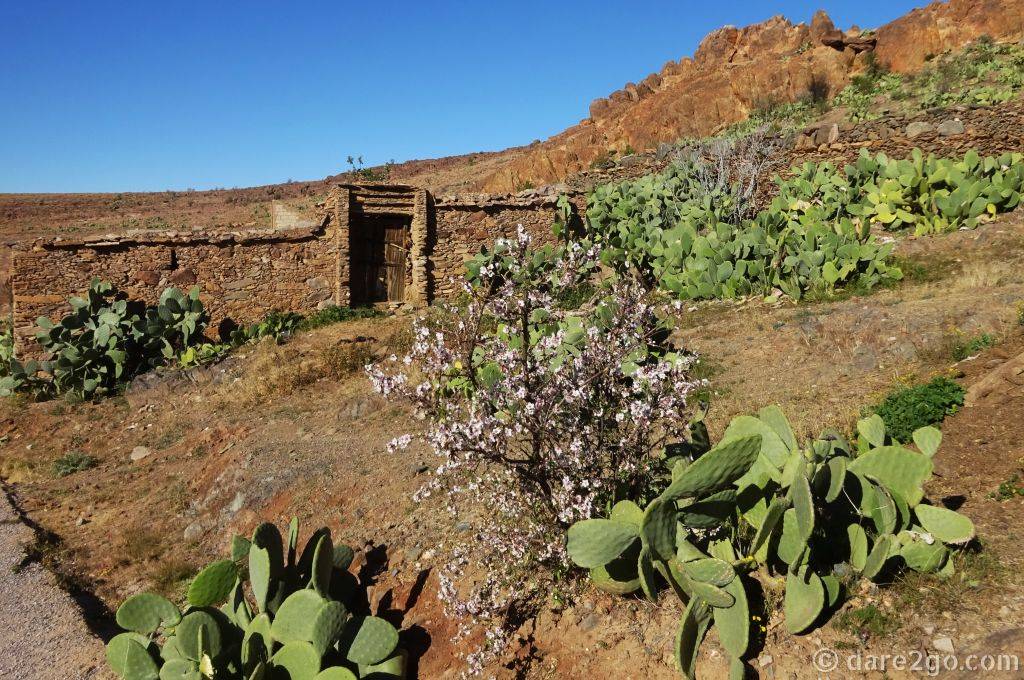
- Driving yourself through the landscapes of Morocco gives you the opportunity to see many, varied sights. Here we have a mixture of vegetation: almond trees in blossom and cacti – and a stone wall enclosure, with a wooden door, as a backdrop.
-
- Agadir Amzouar, next to the village it is named for, almost gets lost in the landscape of like coloured mountains behind. But the distant range has a colour of its own. These are the panoramic mountain vistas we loved to see, driving from Taroudant to Tafraoute.
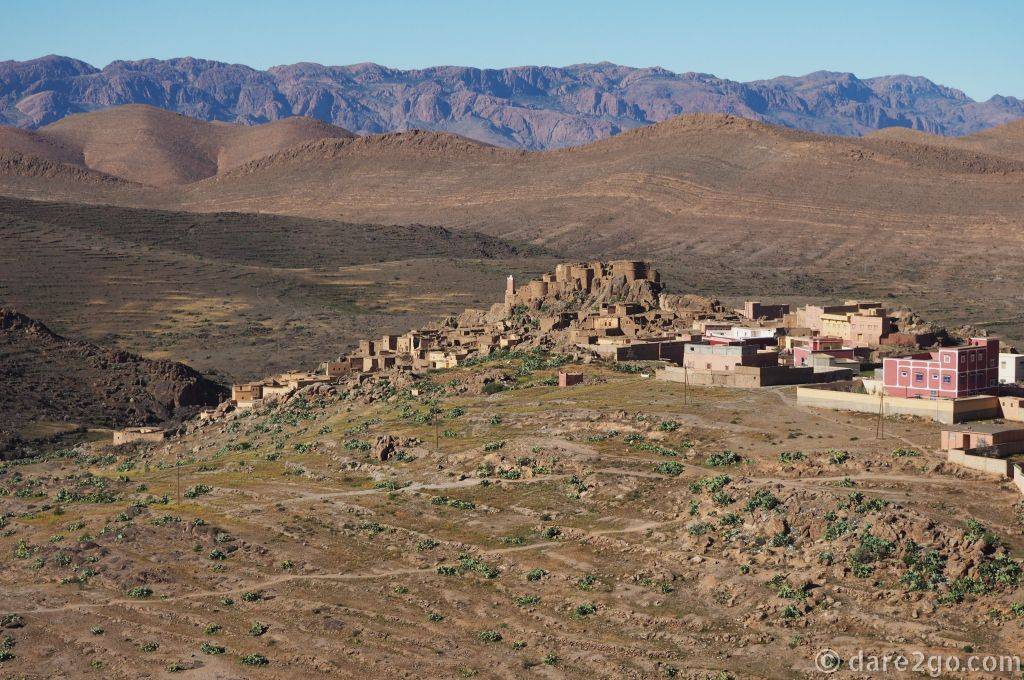
The result of our roadtrip quest can be found on our Berber Granaries post . If you are interested in following in our footsteps, there are GPS points for the 8 granaries we found in this area. These Igoudar are off the 2 main routes from Taroudant to Tafraoute: the P1723/R106 and the R105/R106. The description of our journey, as well as the GPS points, should help you plan your trip to include as many as you would like to see.
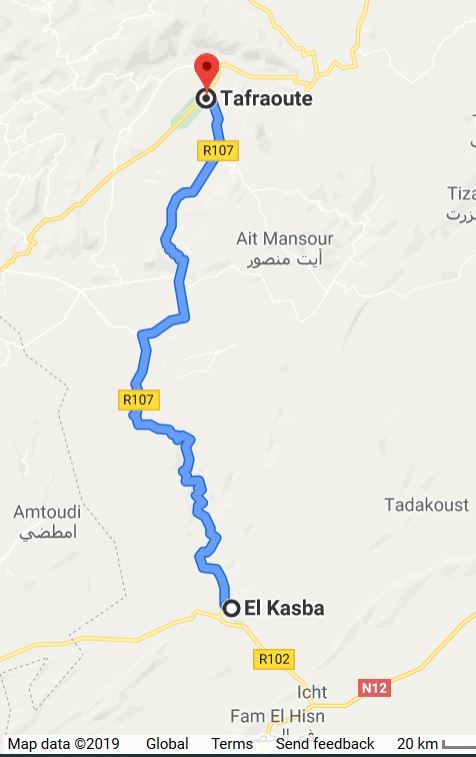
3. El Kasba to Tafraoute via the R107 Scenic Route
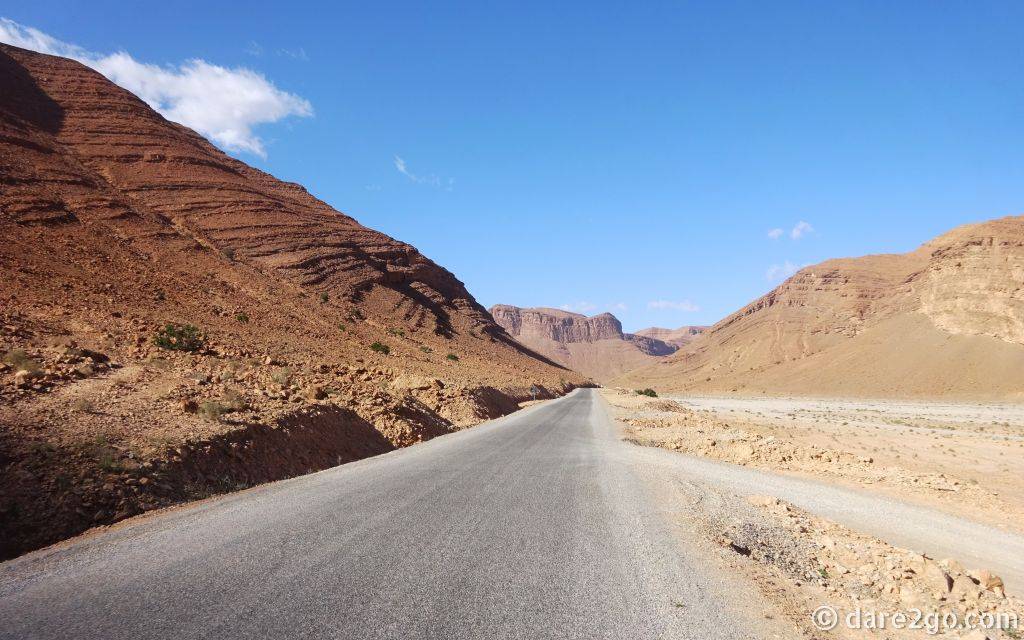
The R107 was once a ‘dangerous road’. Recently it’s been remade, wider and sealed. But this doesn’t change the amazing landscape views to be had on this roadtrip from El Kasba to Tafraoute.
We were heading for Tafroute for a second visit. This time we had been to see the Agadir Id Aissa at Amtoudi – it is really one of the most impressive Berber Granaries we have seen. The R107, through the central Anti Atlas Mountains, had been recommended to us as a beautifully scenic road to take back to Tafraoute.
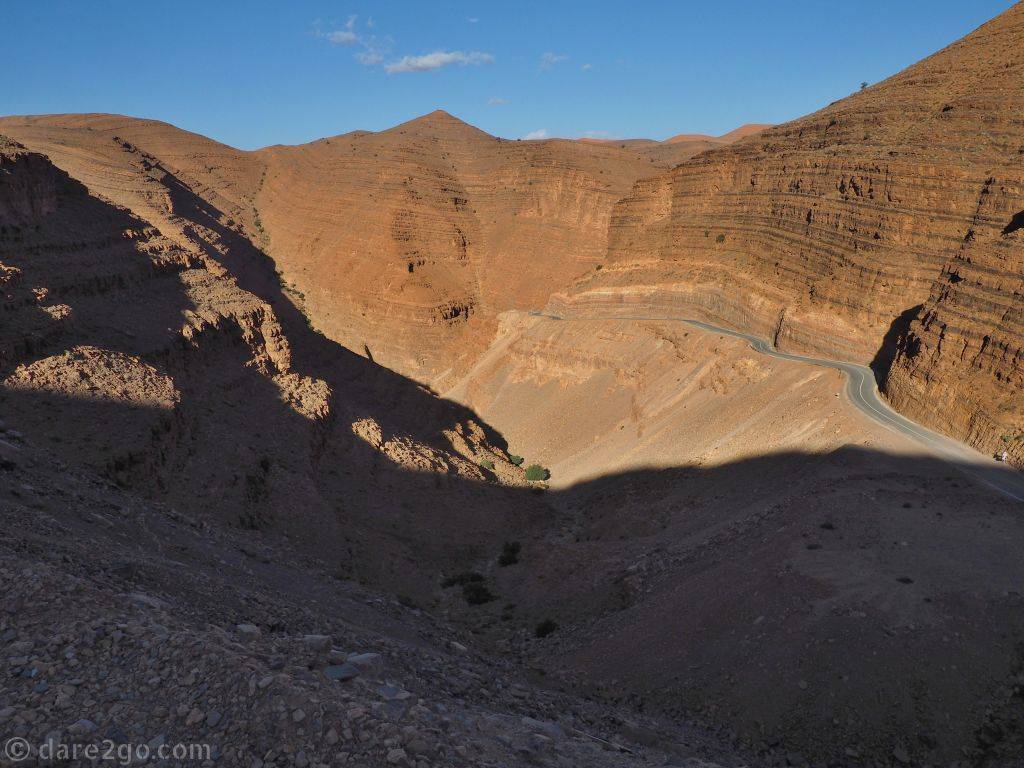
It was once considered a Dangerous Road . These days, it is a new road; paved and wide enough for anyone. It’s no longer the challenge to drive that may have drawn adventurers in the past, but it still has around 90 kilometres of curves and vertigo-inducing drops. Its gorges and canyons, peppered with oases, are just breathtaking.
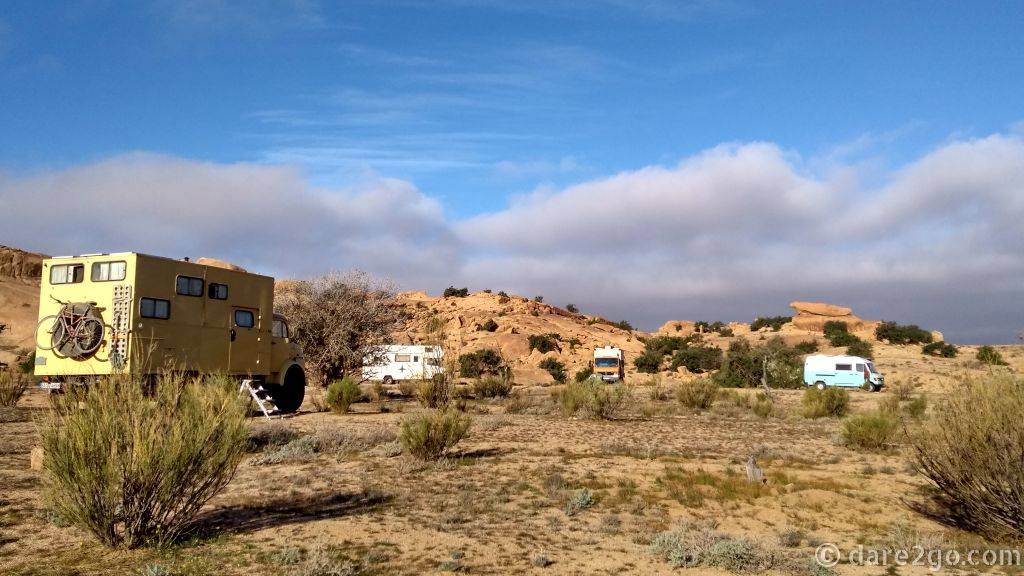
You may be wondering why we were returning to Tafraoute. Well firstly, it’s a great place for overlanders to spend some time. When you come towards the small town from the South, as we did this time, you pass an area called Painted Rocks or sometimes just Blue Rocks – although they’re not all blue! It’s a huge wild-camping paradise for anyone with a self-sufficient vehicle. There are no street lights, just a starry sky above and the odd campfire – and no parking inspectors.
Please click thumbnails below for a larger photo with description.
-
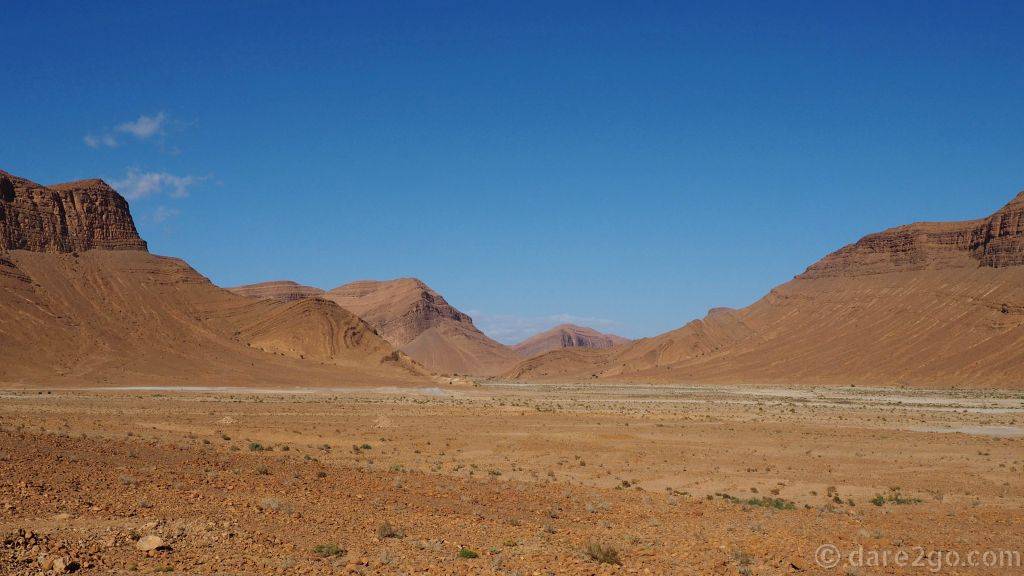
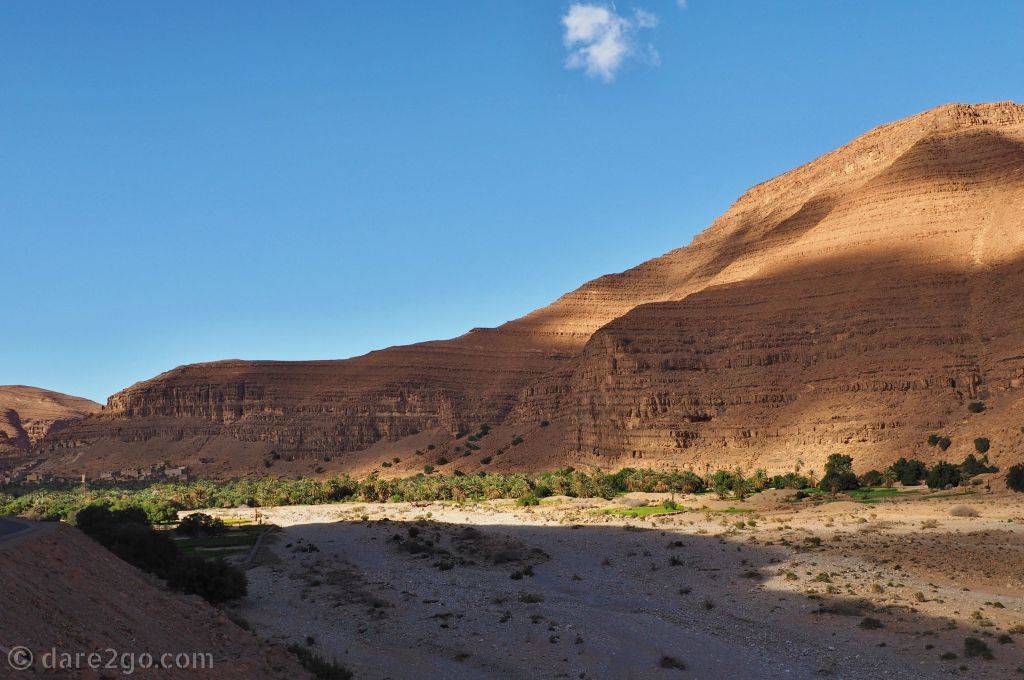
- At the beginning of the R107, near El Kasba, we are following a wide, dry river bed with wide-open views to interesting geographical features. Can you see a face in this photo?
-
- Our altitude slowly increases driving up the R107; the mountains come closer and the dry riverbed is getting narrower. The road begins to wind along the riverbank.
-
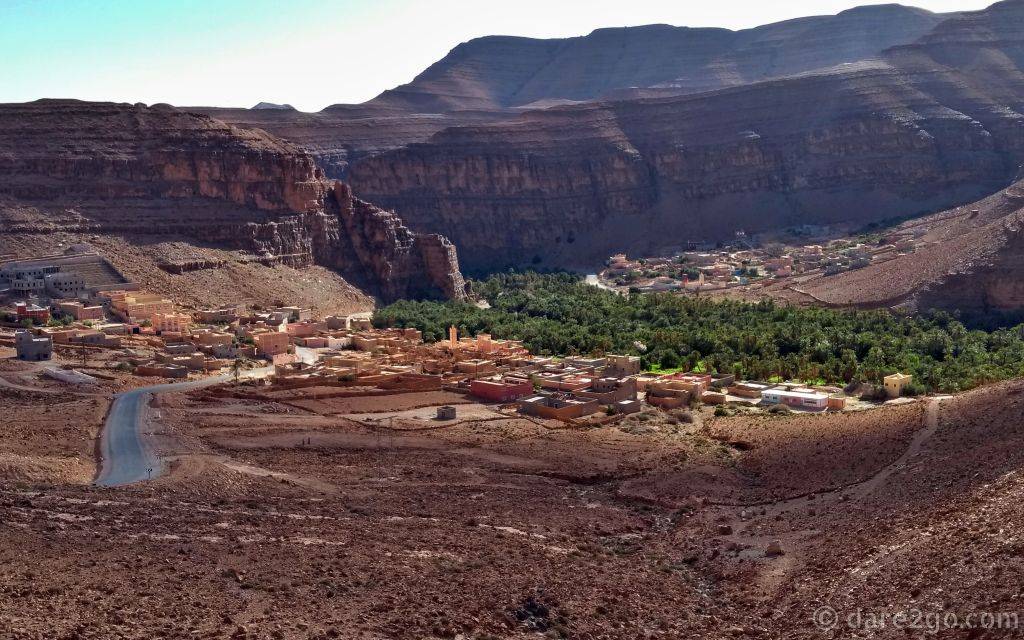
- While still driving along the river on the R107, we come to the village oasis of Timoula – one of several in this valley.
-
- Now we are right in the river gorge and the R107 shows why it was once an adventurous road to drive. Notice the roadworks are complete here – right down to the white line down the middle of the road.
-
- When we drove the R107 from El Kasba to Tafraoute, we actually stopped around 10 Kilometres before the end in the huge natural area known locally as Painted Rocks. You can camp in this natural environment, surrounded by stunning landscapes. This photo shows us sharing space with 3 other campers. There is so much room available that everyone has plenty to spare. If you are following our road trip in your own self-sufficient camper, we really recommend this place to spend some time.
-
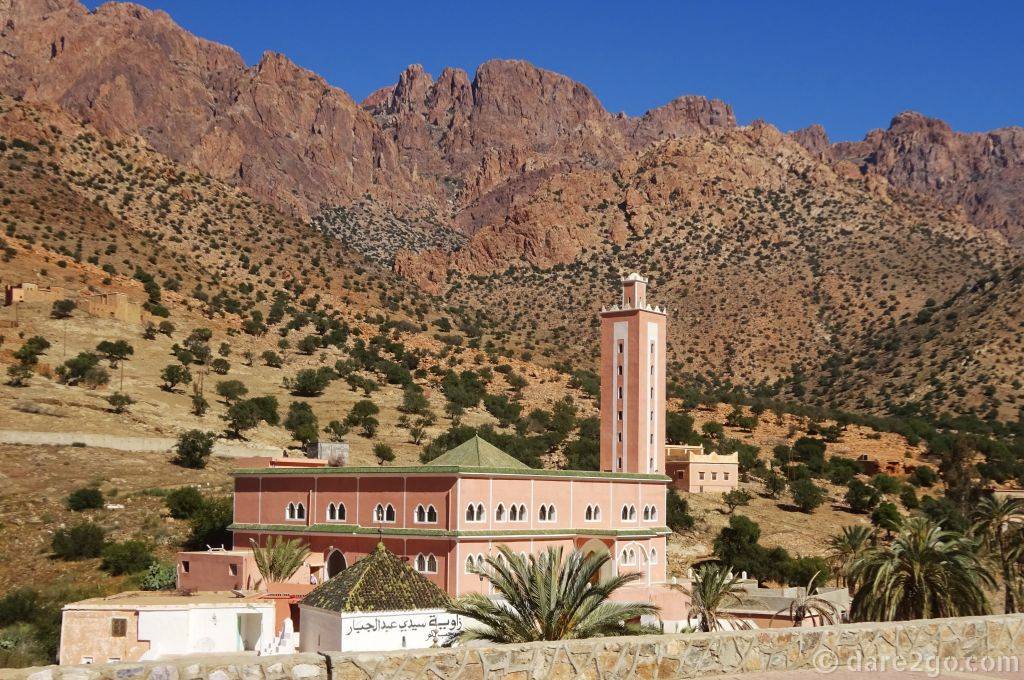
- Entering Tafroute from the north will bring you through the beautiful Ameln Valley. This amazing mountain scenery with a mosque in the foreground is just on the outskirts of the town.
-
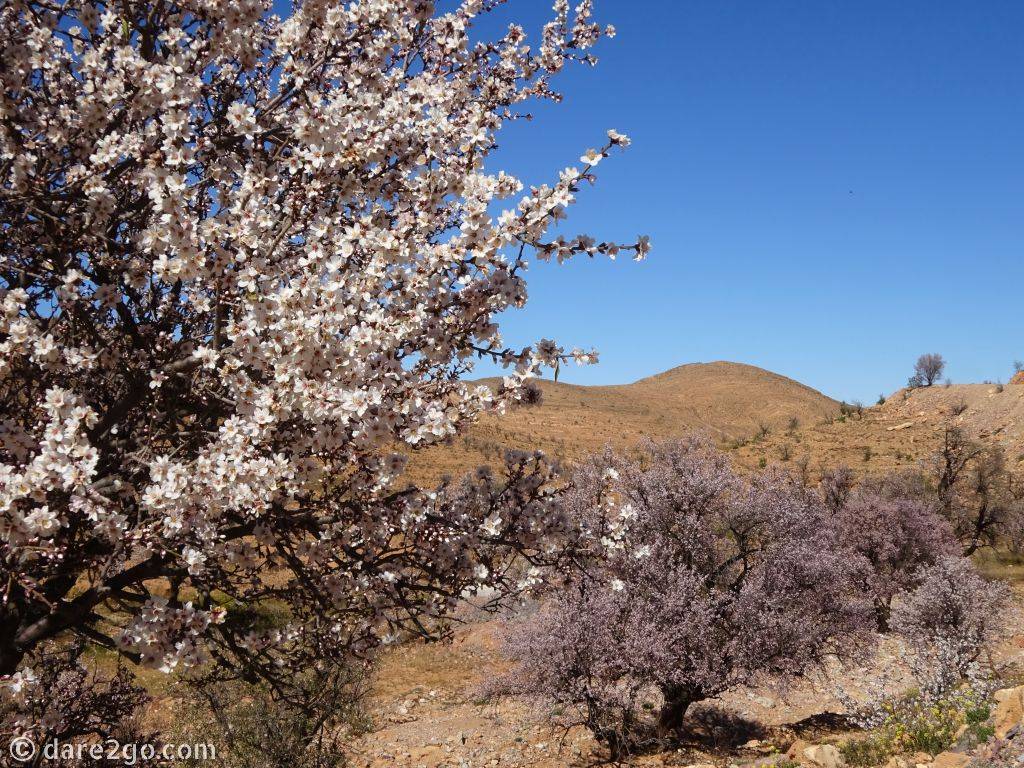
- Some of our roadtrips took us through some fairly barren landscapes, which were often brightened by the beautiful pink blossoms of the almond trees – sometimes in the most unlikely places. These are in the Ameln Valley, just outside Tafraoute.
-
- The Ameln Valley views from the road are exceptional. But if you have some time to spend around Tafraoute, the hiking in this area should be a wonderful experience of beautiful nature.
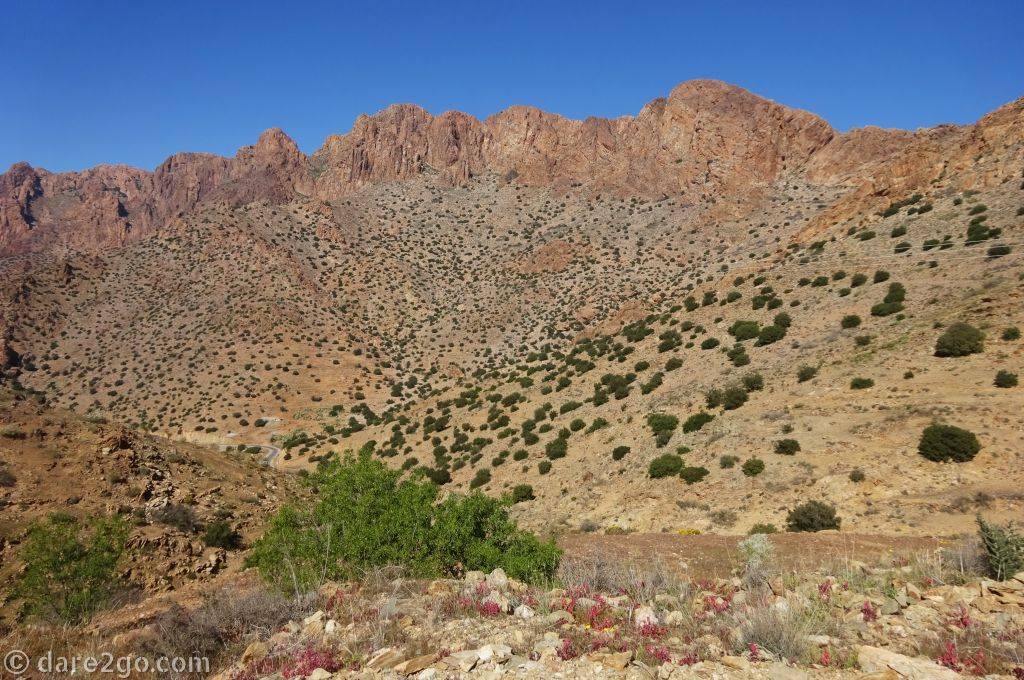
Also, the area surrounding Tafraoute is full of interesting natural sights: on our Reise Know-How map of Morocco [Find it on Amazon], there are at least half a dozen scenic road routes marked, including the R107, that originate in Tafraoute.
When you enter or exit Tafroute from or to the North, you will drive through the Ameln Valley. It has beautiful mountainscapes, almond trees, which were in blossom when we drove through, and it’s also a hikers’ paradise.
4. Tafraoute to Tata, with a fabulous shortcut

This unusual geographic feature popped up as we came round a bend in the road, on our scenic shortcut to Tata. Views like this are why we take road trips on the back roads.
When we left Tafraoute, to drive east towards Zagora and the Sahara Desert, we stumbled upon this incredibly scenic route on our way to Tata. Our navigator wanted us to drive the R106 up to Igherm and then take the R109 from there down to Tata. We thought we should be able to follow a smaller road, which cut directly across from the village of Azoura on the R106 to Souk Khemis d’Issafen on the R109. It was 45 kilometres instead of almost 100!
It didn’t even have a number; just a sign naming it Route vers Tafraoute (road to Tafraoute). The road was paved but narrow, and some of the edges were very broken. This route crosses the Anti Atlas Mountains up to a 1900m plateau, and then down again to the river valley. It’s slow going but if you’re patient and in no hurry, the rewards of excellent landscape vistas are really worth it.
Please click thumbnails below for a larger photo with description.
-
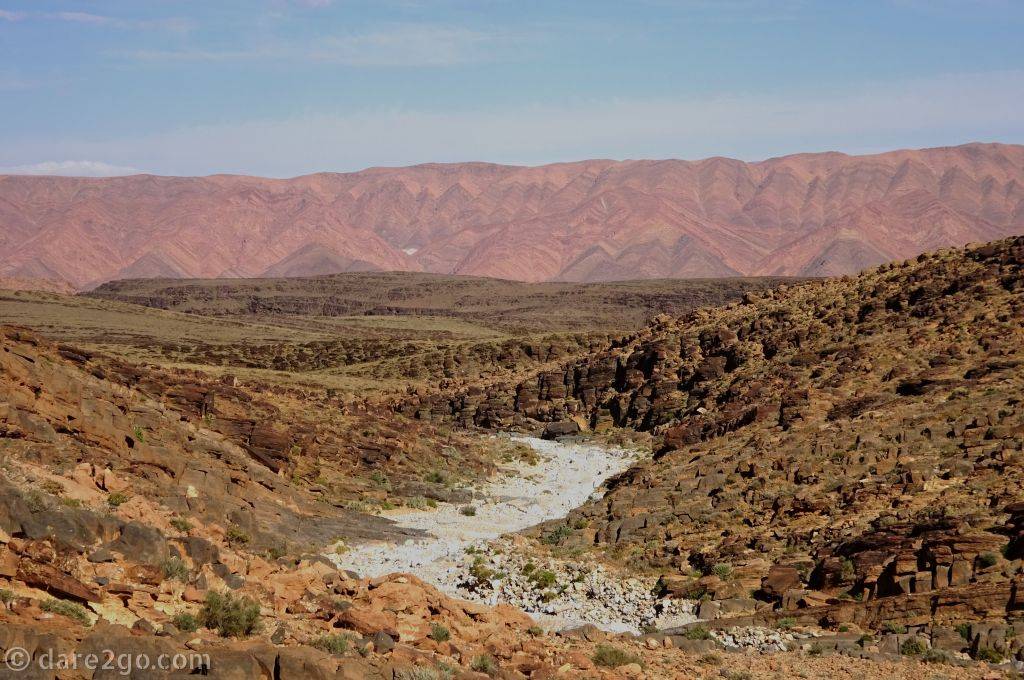
- Driving along the scenic shortcut between Azoura and Souk Khemis d’Issafen, we first caught sight of these coloured mountains in the distance.
-
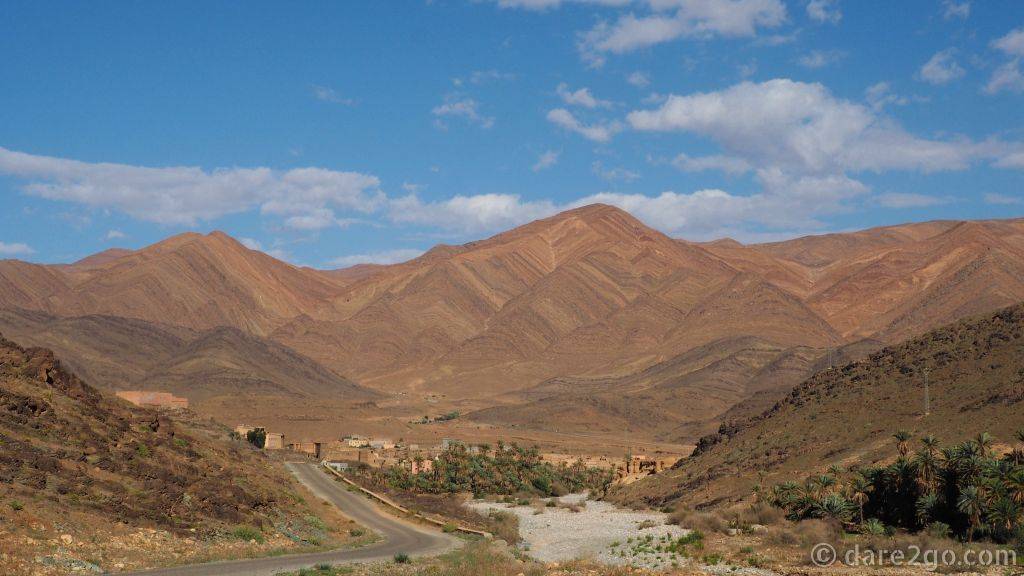
- The coloured mountains are now closer, as a backdrop to Souk Khemis d’Issafen at the end of our scenic shortcut, driving from Tafraoute to Tata.
-
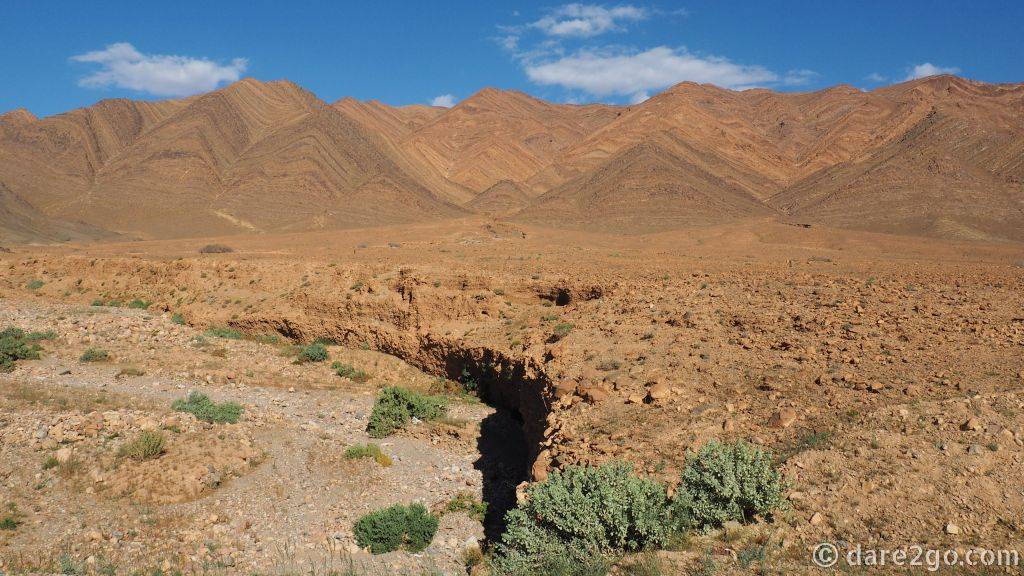
- The R109 brings us much closer to those unusual coloured mountains as we continue our roadtrip to Tata.
-
- Once we left our scenic shortcut, the main road to Tata provided mountain views of many different shapes like this one.
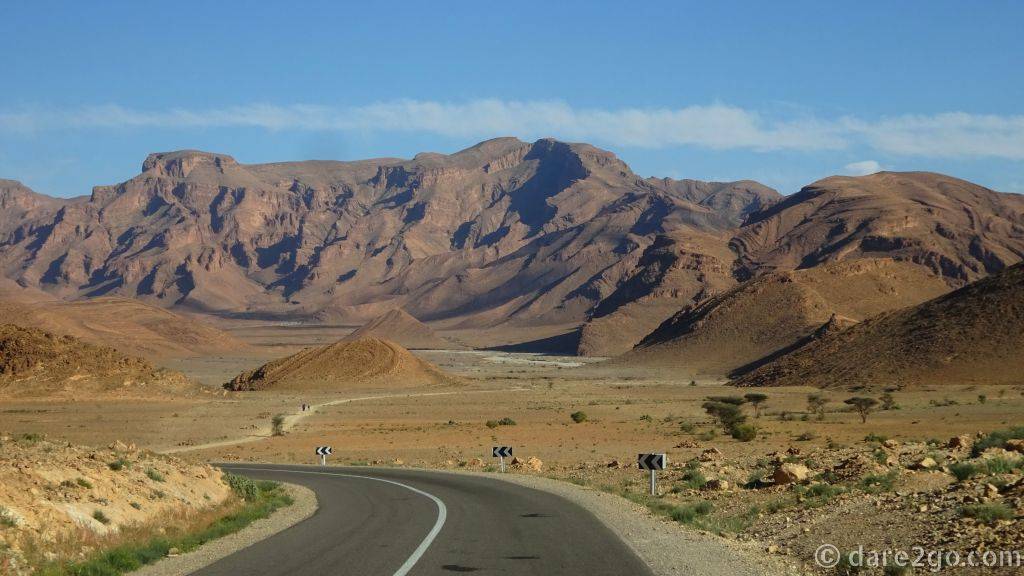
Actually, interesting mountain features continue all the way to Tata. So, if you’re heading for Zagora from Tafraoute, we recommend a road trip taking this route, including our scenic shortcut.
5. Zagora to the Sahara, and our desert debacle
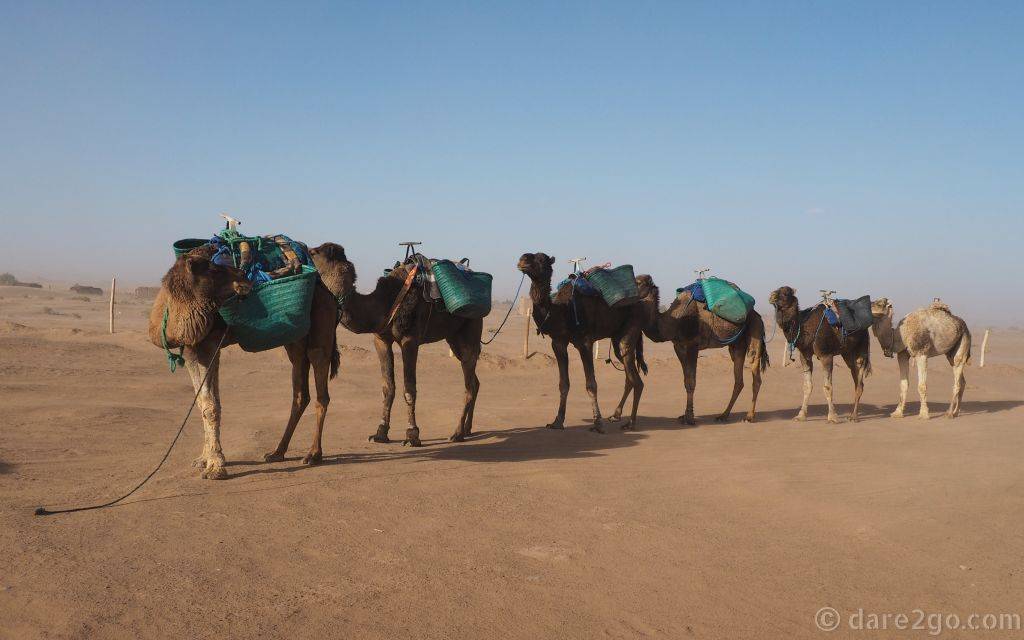
Such a typical view one would expect in the Sahara Desert – a camel train. This was waiting for us when we arrived in M’hamid from Zagora. Unfortunately, we were not to have the Desert Dream we had planned. Maybe next time…
A desert experience was something we really wanted during our visit to Morocco. We talked to other travellers, looked for information, and ultimately planned a visit through the settlement of M’hamid. It’s around 100 kilometres from Zagora, has a well-recommended place for overlanders, and you are able to take guided tours from there, deeper into the Sahara.
We left Zagora with high hopes. There was some sand on the road and blowing across the landscape, but we were heading into one of the largest deserts on earth, so what would you expect? The landscape was interesting in that it became more like the desert we expected, the further we progressed. Also, there were several oases along the way, as you would also expect.
By the time we arrived in M’hamid, the wind was up and more sand was moving. We were invited inside at the camping place and offered tea – of course. They were so optimistic about the weather and discussed where they could take us in the desert and how much it would cost and so on. We put off making a decision until morning because we were doubtful that the weather would really improve.
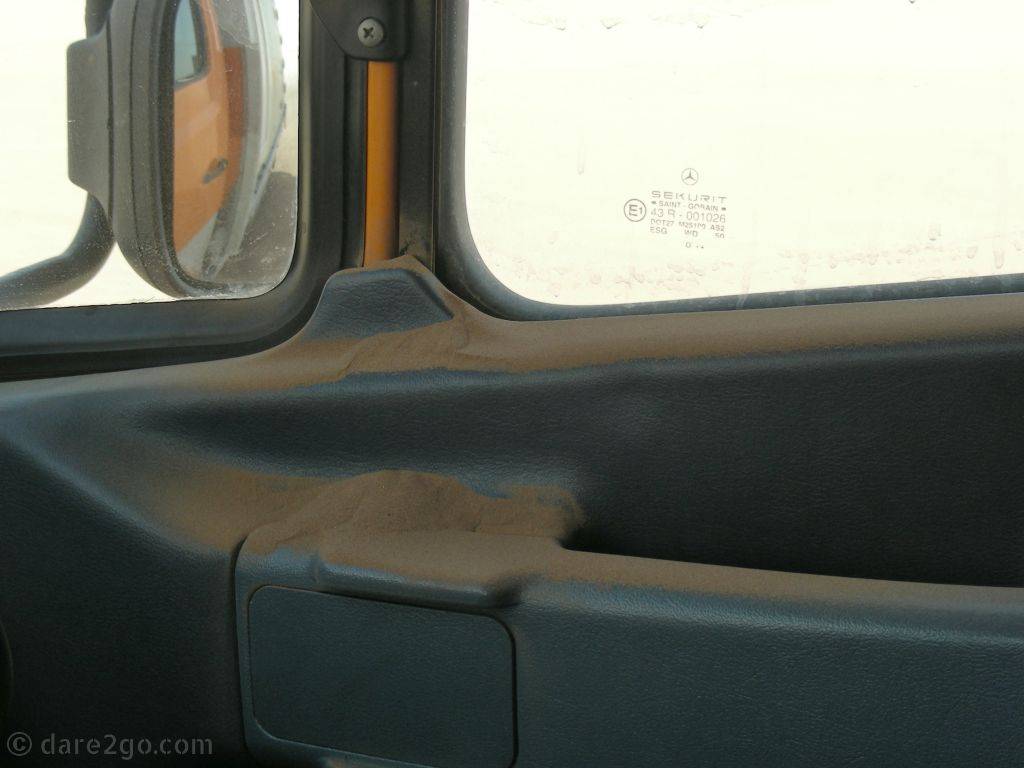
It didn’t. Overnight there was a full-blown sand storm that rocked our camper and sand-blasted the outside. In the morning, visibility was severely limited and there was red sand everywhere – inside and out of our truck and camper, despite all doors and windows being closed! Needless to say, all we wanted to do was to drive north and keep going until there was no sand blowing!
Please click thumbnails below for a larger photo with description.
-
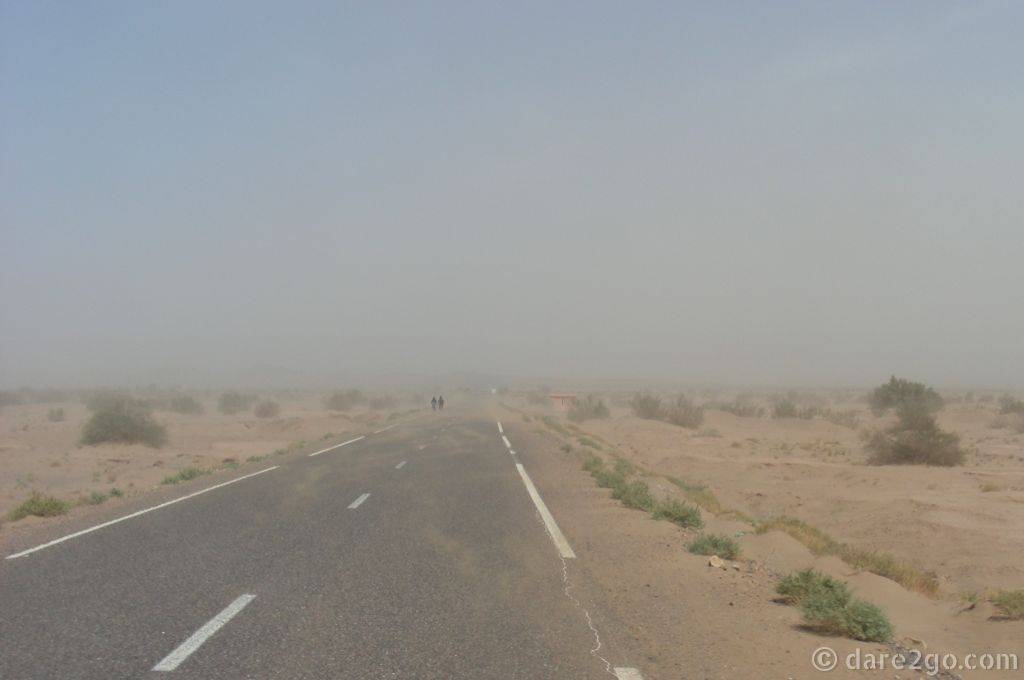
- Driving back from M’hamid to Zagora, the sand storm had abated, but still plenty of sand – everywhere.
-
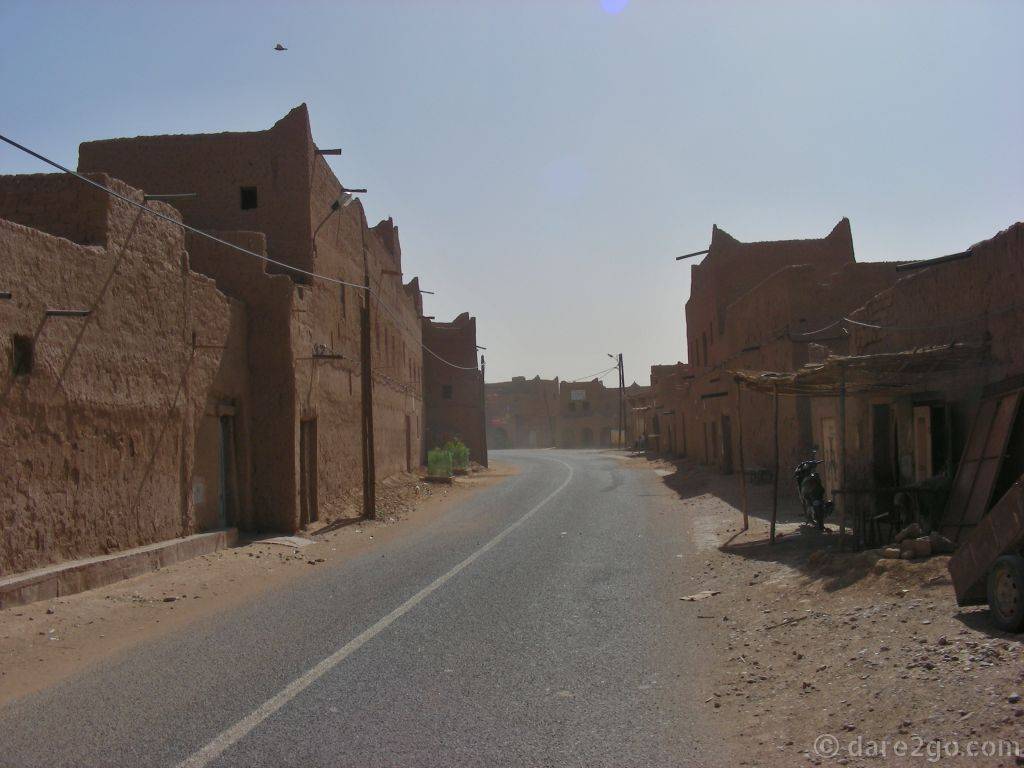
- This is the main road through a village between M’hamid and Zagora. In the aftermath of the sandstorm, you might think it is deserted.
-
- Road trips don’t always go as planned. A sand storm, overnight on the edge of the Sahara, deposited this much sand inside our truck cab, even though the windows and doors were closed.
-
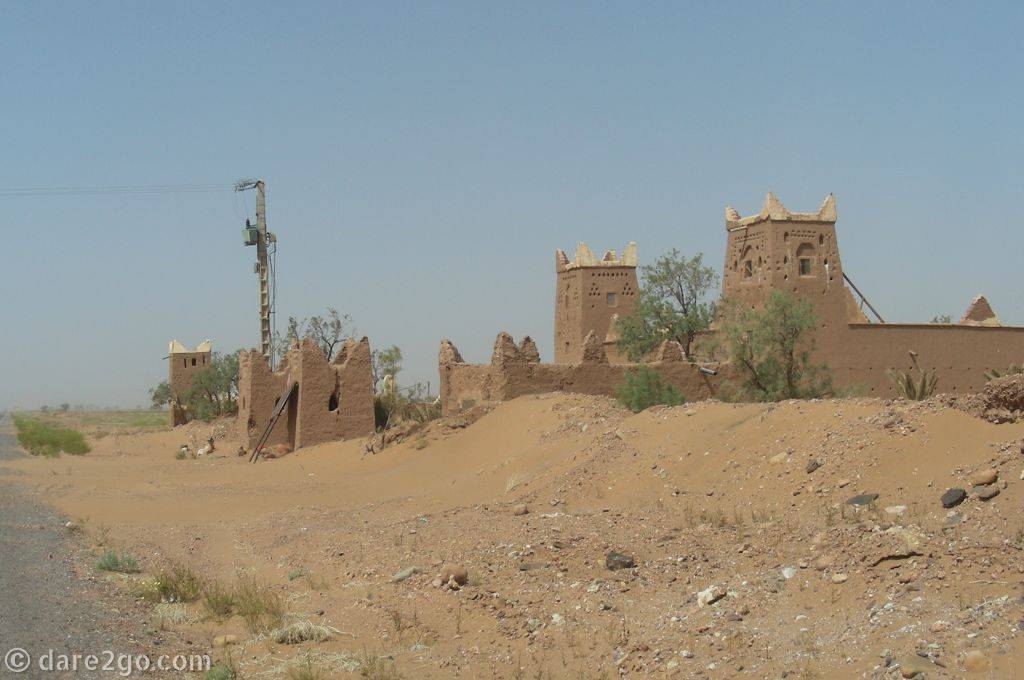
- This Kasbah-style hotel is abandoned and the desert is trying to take it back. This stands on the road between M’hamid and Zagora.
This story is not meant to discourage you from going to the Sahara Desert. We would have loved to, and were very disappointed. Just maybe this is one time a self-drive roadtrip may not have been the best way to go. But it could just as easily have turned out completely differently.
6. Through the Dades Valley & Gorges, and over the High Atlas
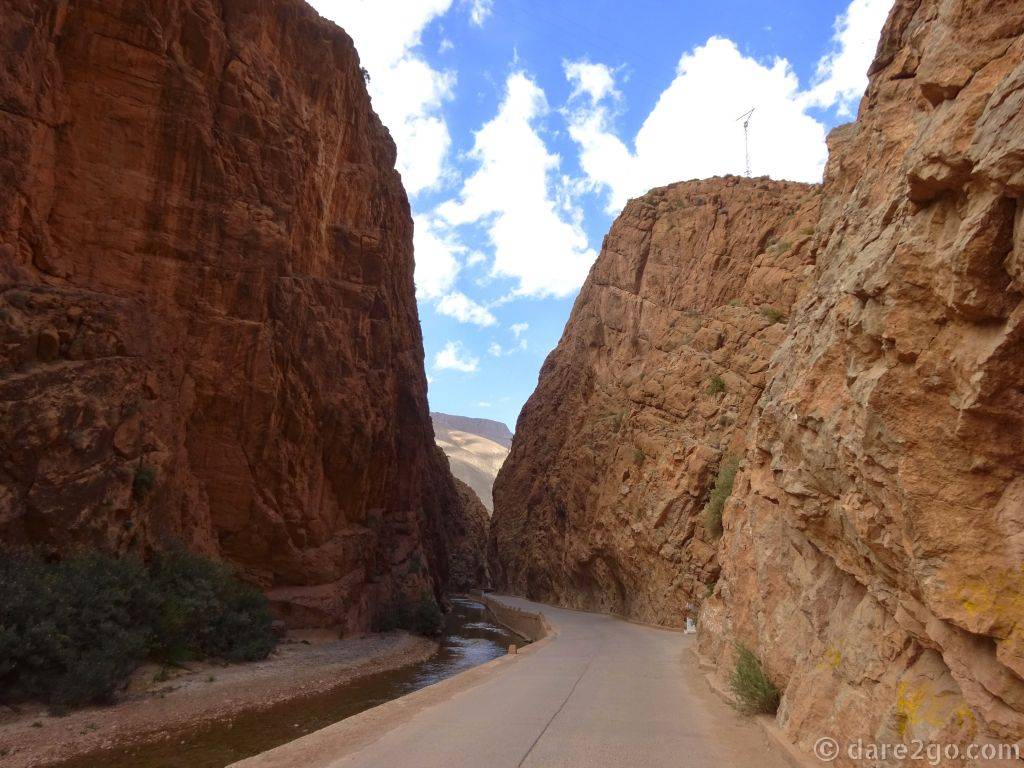
This is the Dades Valley Gorge: a narrow road squeezes between the cliff faces and the river is confined to a narrow ditch. Still, there is space for some foliage. Isn’t this an incredible sight?
There are several lovely routes recommended to cross the High Atlas Mountains into the northern part of Morocco. We chose the Dades Valley. Our journey started in Ouarzazate, but first we took a brief side trip to the famous UNESCO World Heritage listed Ksar of Ait-Ben-Haddou .
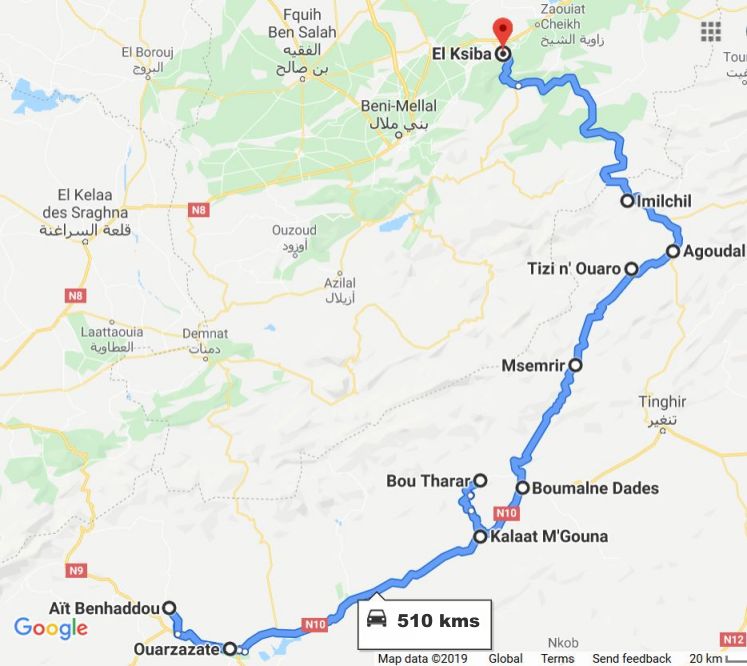
Follow the Dades Valley along the N10 from Ouarzazate to Boulmane Dades. There is an optional, small side trip you can take from Kalaat M’Gouna up the M’Gouna Valley, also known as the Rose Valley, to Bou Tharar. The valley is well-known for growing roses, but it also has some unusual and striking geographical features, particularly the further you drive into it. We went a little beyond Bou Tharar, but then the road became too difficult, so we turned around and retraced our steps.
At Boulmane, the Dades Valley turns away from the highway and we follow it up into the High Atlas Mountains. In the beginning, it’s mostly Kasbahs in various states of repair, and agriculture in the river valley. This is beautiful scenery but, as we go higher and reach the Dades Gorges, the landscape becomes (quite literally) gorgeous.
When we reached Msemrir, we were faced with a decision. There are 3 possible directions to proceed. Probably the most popular one, for those on a quick tour, is to turn around and go back to Boulmane Dades. There is also a 4-wheel drive track to the Todra Gorge, making it a round trip back to the N10. When we were there, that way didn’t have a very good reputation, except with the very adventurous.
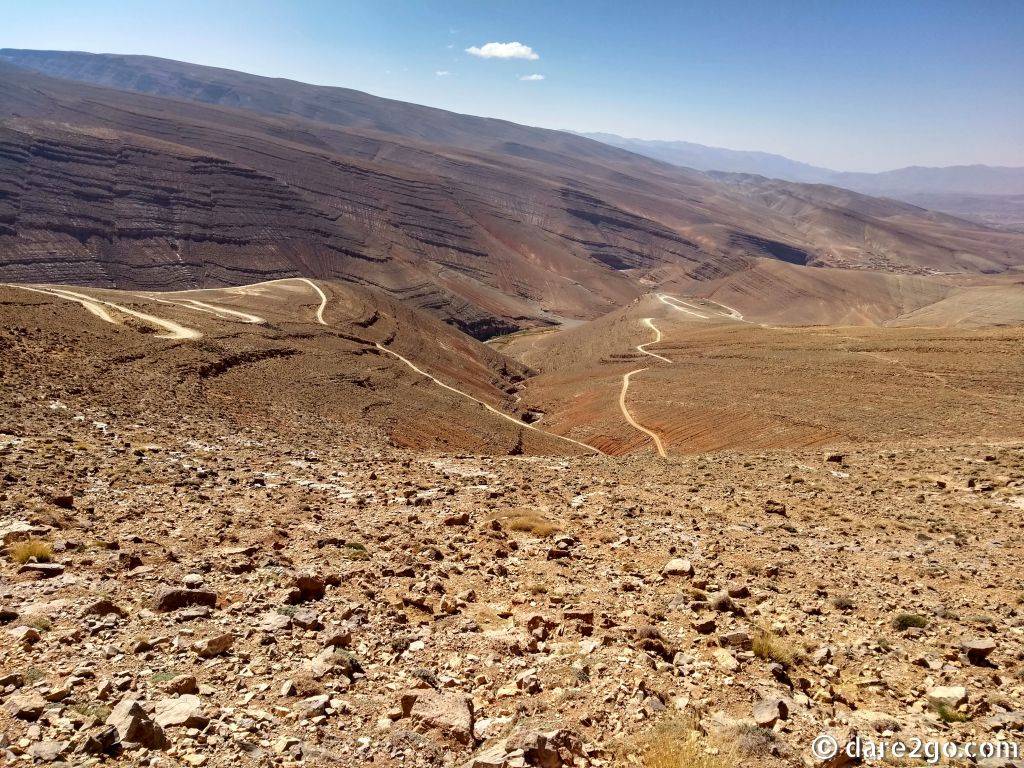
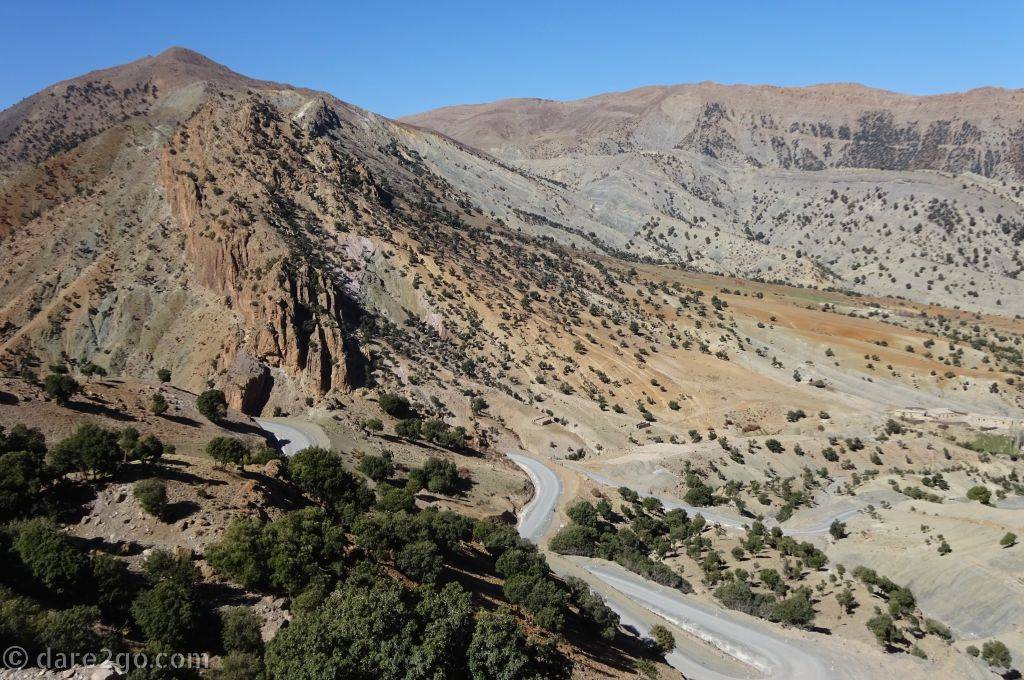
The 3rd option is to continue north into the High Atlas and cross over them. We took this option, without having a lot of information about it. It’s not for the faint-hearted. The highest point – Tizi n’Ouano pass – is just over 2900m and the road is narrow gravel, without guard rails, for 55 kilometres. But the panoramic mountain views are totally breathtaking.
Please note that we are quite experienced in travelling these types of roads. Here’s an example of a more scary road that we drove through the Andes , in a larger vehicle.
Please click thumbnails below for a larger photo with description.
-
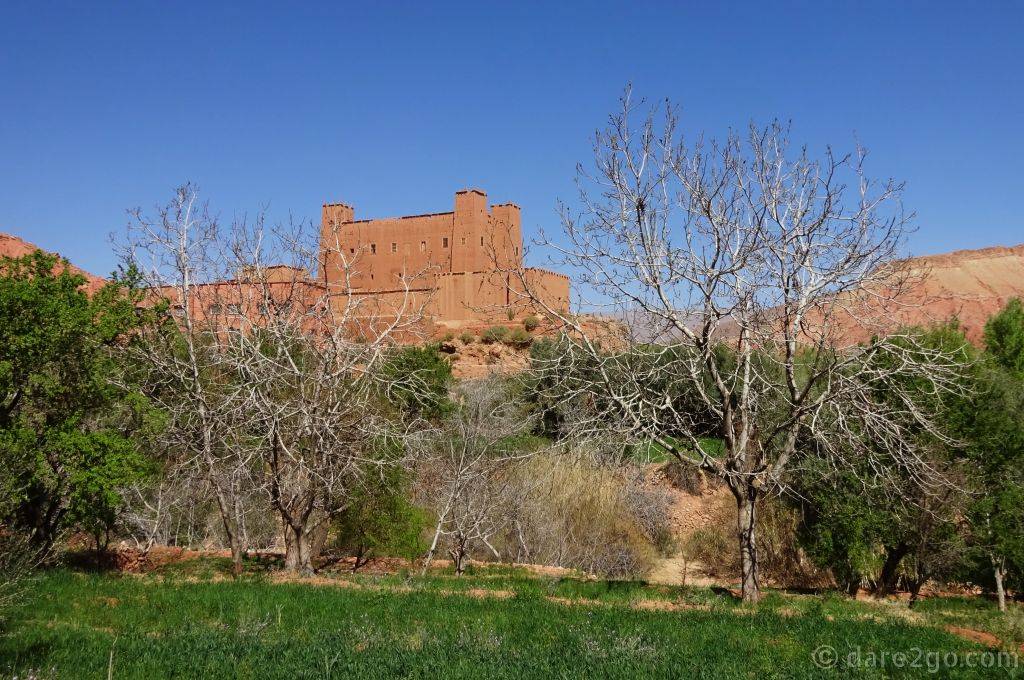
- A typical view, driving through the Dades Valley. The valley floor is lush and green, fertile and productive. The riverbanks are populated with villages and towns, including a large number of Kasbahs in varying states of repair. The very best are now usually hotels.
-
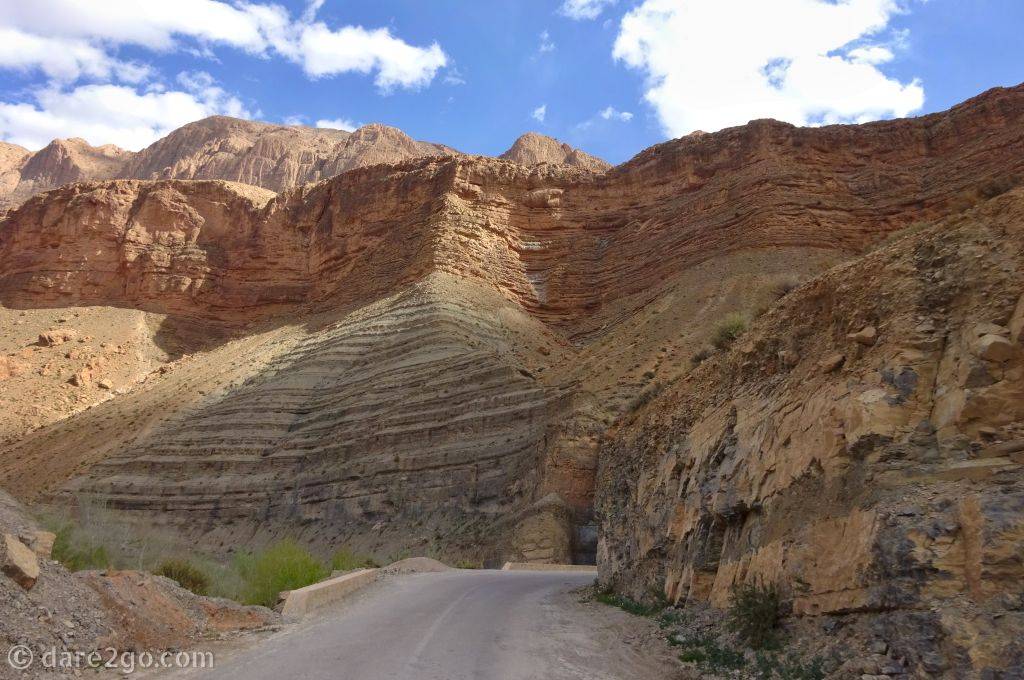
- Your Dades Valley roadtrip takes you higher, out of the valley and into the Dades Gorges, where the rocky mountains tower over the road.
-
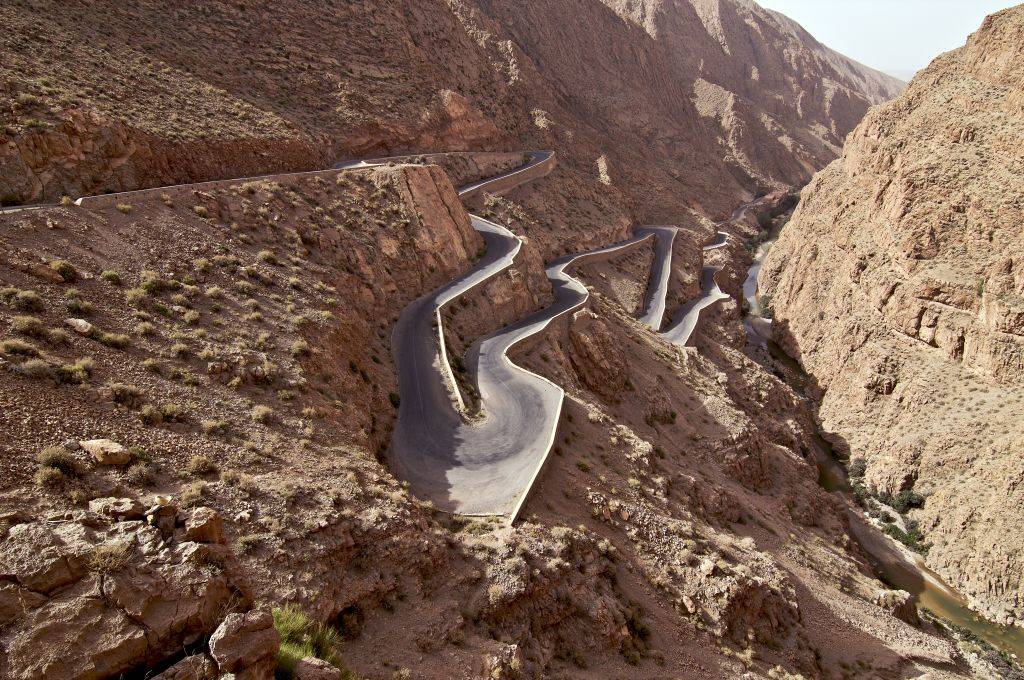
- As you drive even higher into the Dades Gorges, this is the road you will navigate. Scary or exhilarating – you just have to drive it a section at a time. Then look back and see what you’ve achieved. This is what road trips are all about. [photo credit ]
-
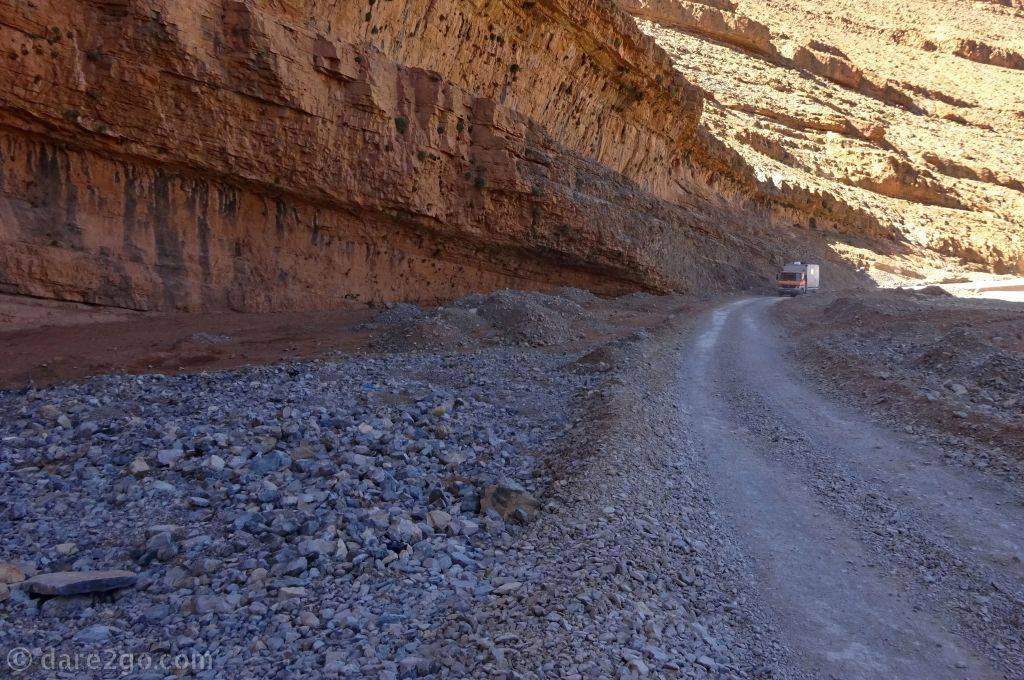
- We’ve left the gorges behind, but now we are following a dry river bed that would be the upper reaches of the Dades River. The road deteriorates as we head towards the higher mountains.
-
- The next part of this roadtrip is the most challenging. You leave the Dades and cross the High Atlas mountains, on a narrow road with no guard rails towards Agoudal. But the scenery is breathtaking.
-
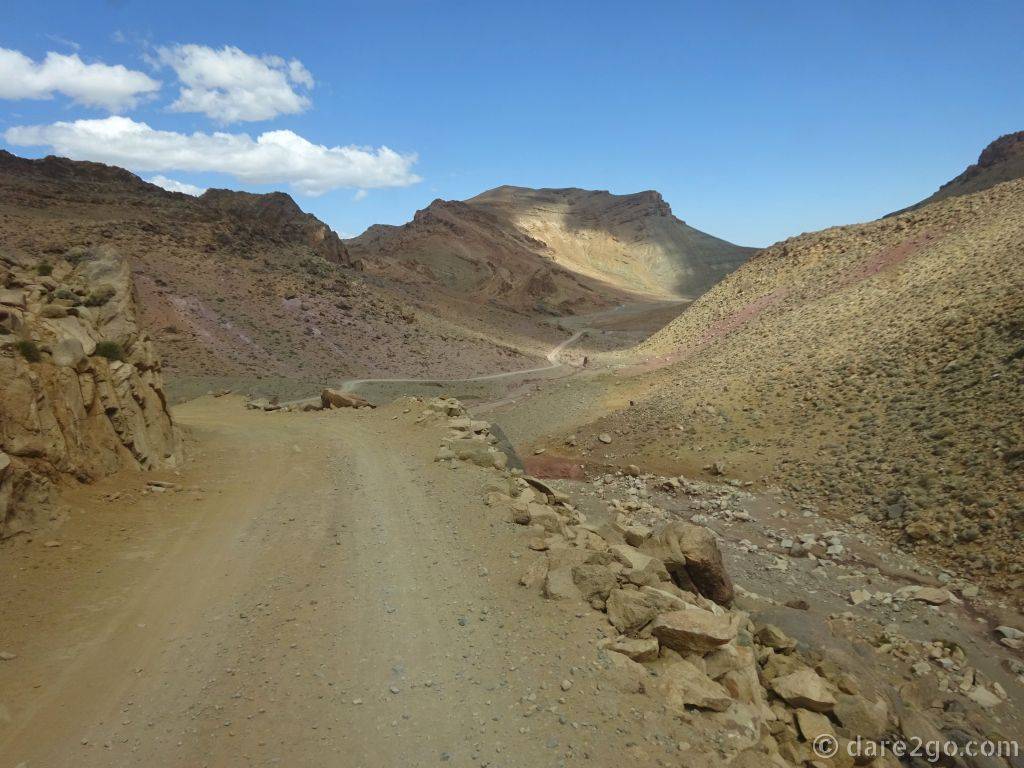
- We didn’t know it, but the end was almost in sight. The vertigo-inducing drops were behind us and Agoudal was not far ahead. Not your everyday road trip.
-
- We didn’t realise there would be more spectacular views to come. But the road beyond Imilchil was as outstanding as it was different from those that had come before. This is a road trip that keeps on surprising.
-
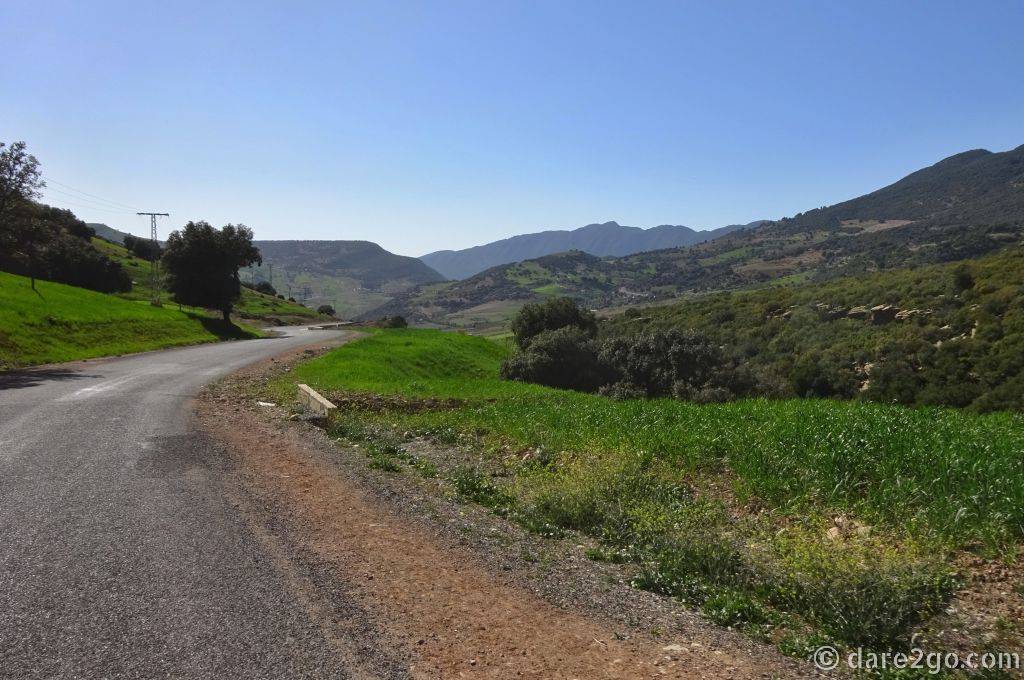
- As we approach El Ksiba and the N8, which will take us into northern Morocco, the landscape changes completely. The rugged mountains are behind us, and everywhere we look is green.
We’re certainly happy to have made this road trip – these are some of the best landscapes to see anywhere in Morocco. But it was also a relief to arrive in Agoudal, and continue driving on a sealed road to Imilchil for a well-earned rest. Then continue to El Ksiba and the N8, which goes north to Fes and beyond.
Check this route out on Dangerous Roads before you decide – there’s a video too!
“Serra do Rio do Rastro”, a spectacular short trip in Santa Catarina, Brazil
See the famous White Villages of Andalusia on this scenic roadtrip
Are you ready to take a Road Trip in Morocco?
You really must agree that Morocco has some stunning landscapes . So what’s stopping you from getting into a vehicle and leaving town on a road trip? Are you just a bit cautious about the roads and driving in Morocco?
In our experience, the traffic in Morocco generally is not that bad. Sure, in the northern cities it can be a bit chaotic, perhaps even crazy at times. But on our roadtrips, particularly through the mountains, there was very little traffic. The further you leave the towns and cities behind, the less vehicle traffic you encounter. Sometimes a truck or mini-bus, over-stacked with whatever they are carrying but going slowly as a result. And you will have to look out for animals on the roads. Also, make sure you have a vehicle suitable for the roads you choose to take.
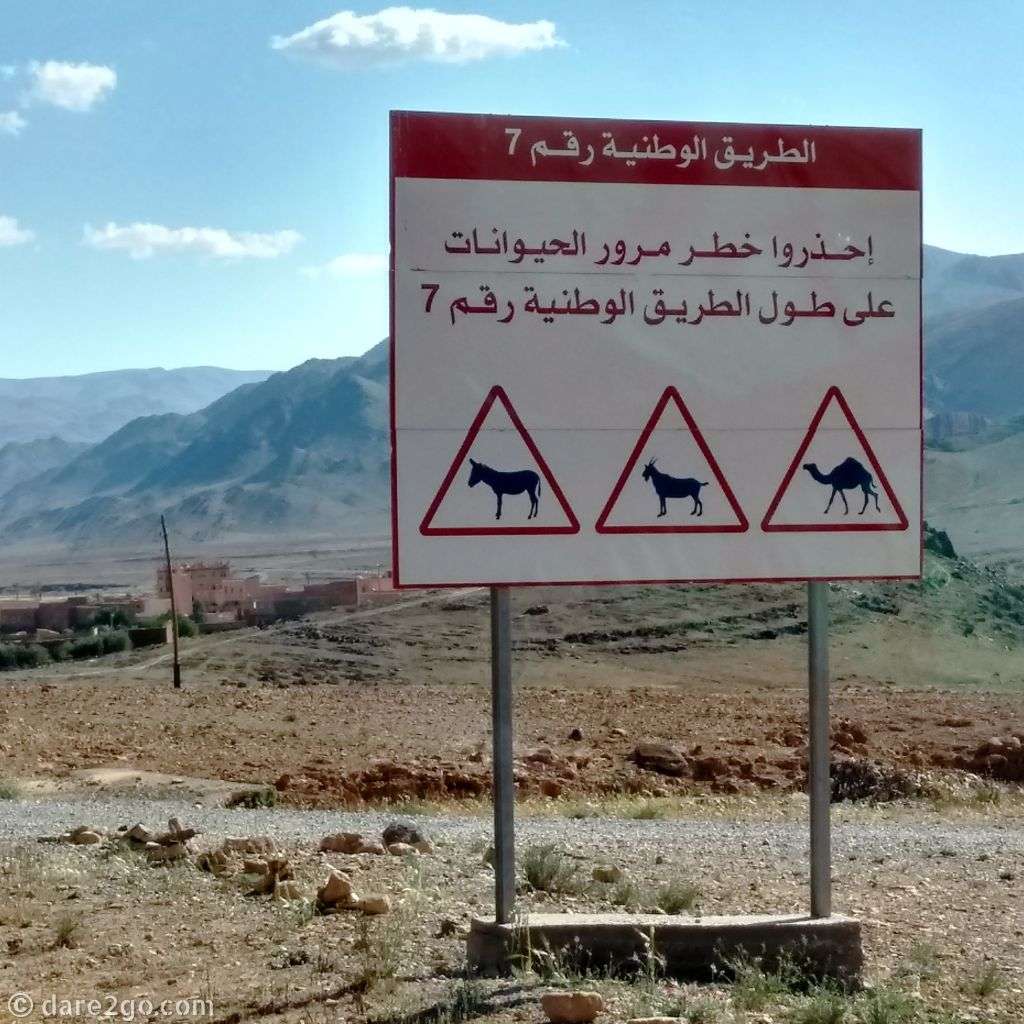
Things to be careful of if you are taking a roadtrip through the landscapes of Morocco. Here are some of the animals you will have to look out for along the road.
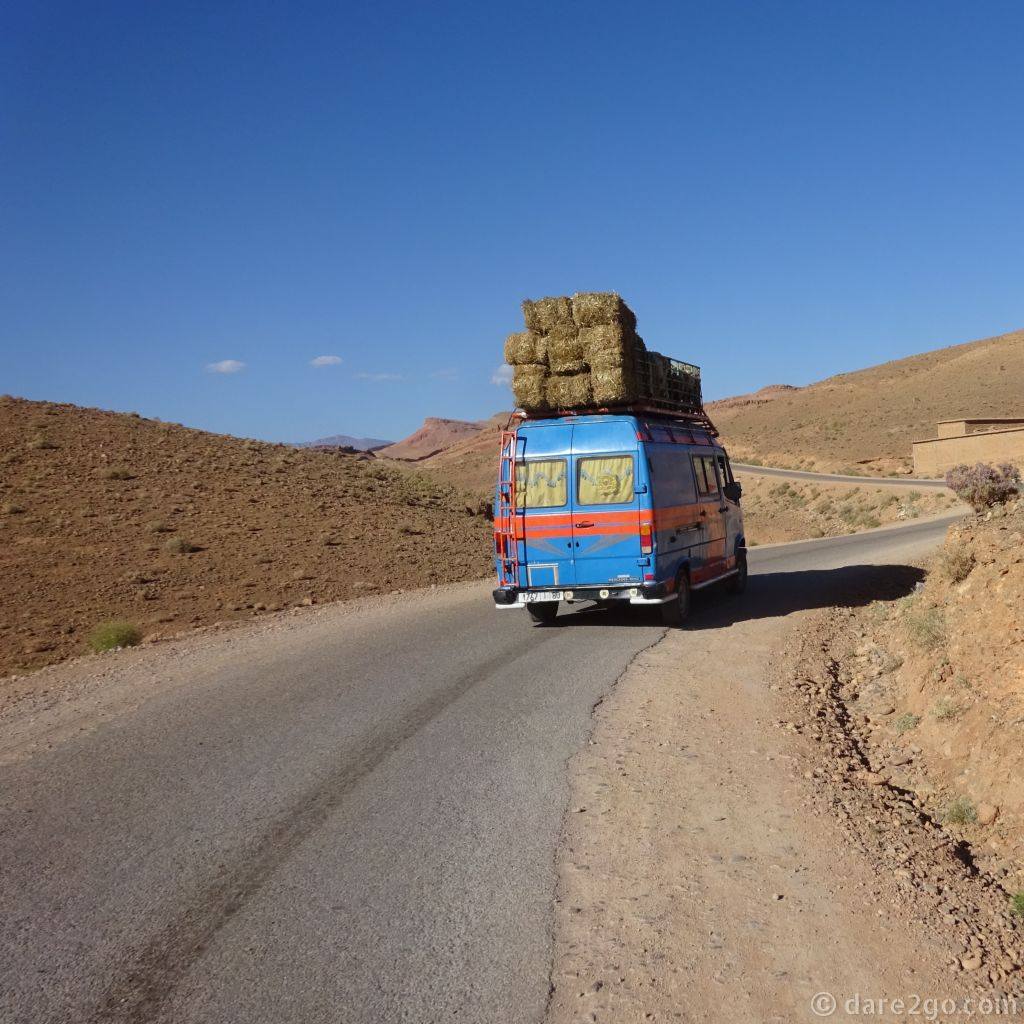
Overstacked vehicles are common in more remote areas. This typical Mercedes Bremer minibus is carrying people inside. As well as the pile of hay, there are a number of animals on the front part of the roof – mostly sheep, I think.
Overall, our driving experience in Morocco was more comfortable than we had expected. Except in Casablanca! There it was crazy!
Maps of our best road trip routes
Please click thumbnails for a larger view!
-
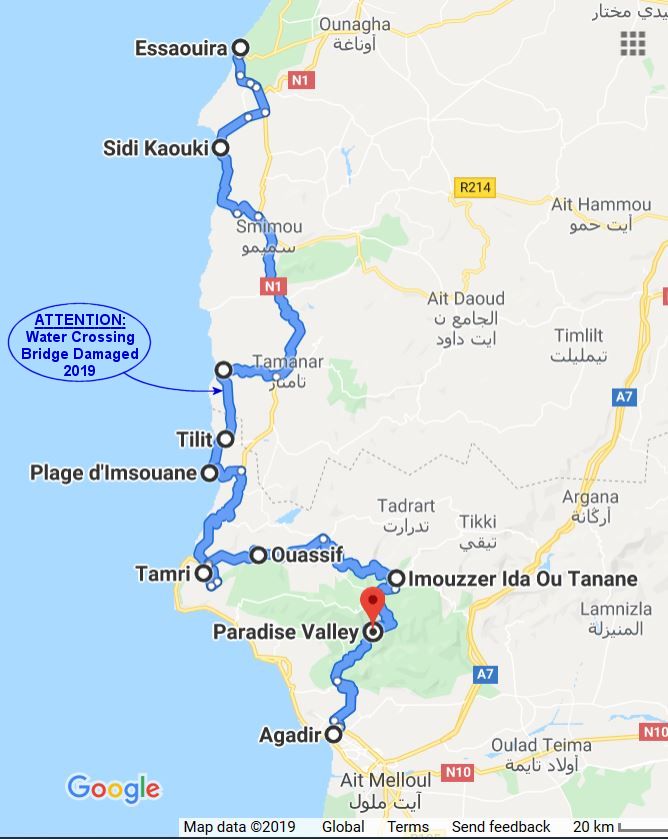
- Morocco route map for road trip from Essaouira to Agadir via Paradise Valley
-
- Morocco route options for road trip from Taroudant to Tafraoute
-
- Morocco route map for road trip from El Kasba to Tafraoute
-
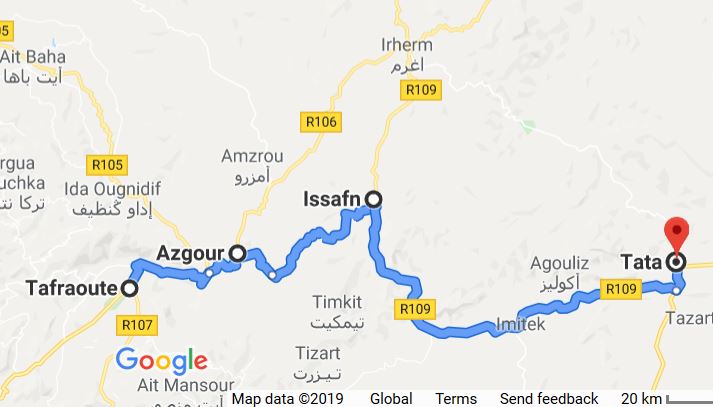
- Morocco route map for road trip from Tafraoute to Tata (with recommended shortcut)
-
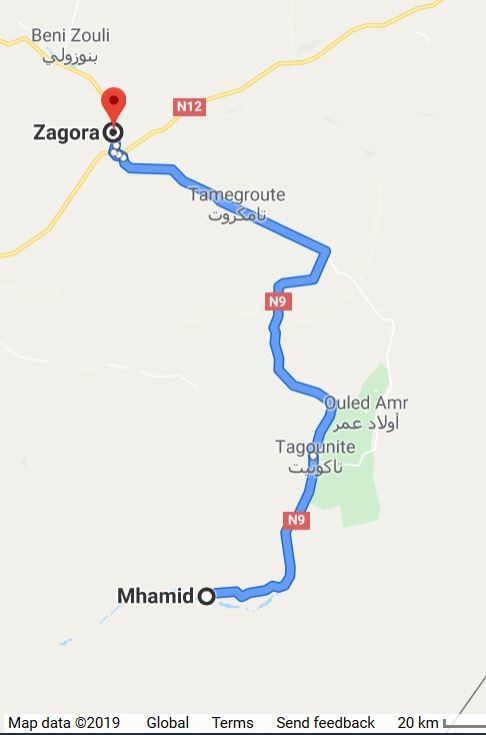
- Morocco route map for road trip from Zagora to M’hamid
-
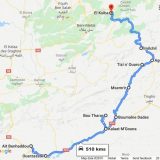
- Morocco route map for road trip from Ait Ben Haddou to El Ksiba
Helpful Tips for Driving in Morocco
Navigation
When driving the back roads, we recommend the free offline app, MapFactor Navigator [Available for Android and iPhone !]. We often find that other apps, including Google maps, don’t want to navigate via these usually more scenic roads. Navigator allows you to add as many waypoints as you need to make it follow the route you really want to take.
Take Your Time
When taking a roadtrip, it’s always important to allow more time to reach your destination than your navigation app suggests. Morocco’s landscapes will draw your eyes and wow you, so you will want to drive more slowly than usual. And, you will want to make frequent stops to photograph the stunning vistas. Some roads have only a single lane of tar with wide verges. You will need to slow down for oncoming traffic, which you might encounter every 5-10 minutes or not at all.
Car Rental
You can rent reliable vehicles in all cities and major tourist centres. If you’re going to hire a car you might find our post, Save Money on a Rental Car to Follow in our Footsteps helpful, particularly for Collision Damage Waiver (CDW) protection.
Our alternative recommendation: the MOON Guide Morocco (on Amazon).
Which of our recommended best road trips would you choose?
Or have you already followed one or more of these routes to see the stunning landscapes of Morocco?
Tell us in a comment below.
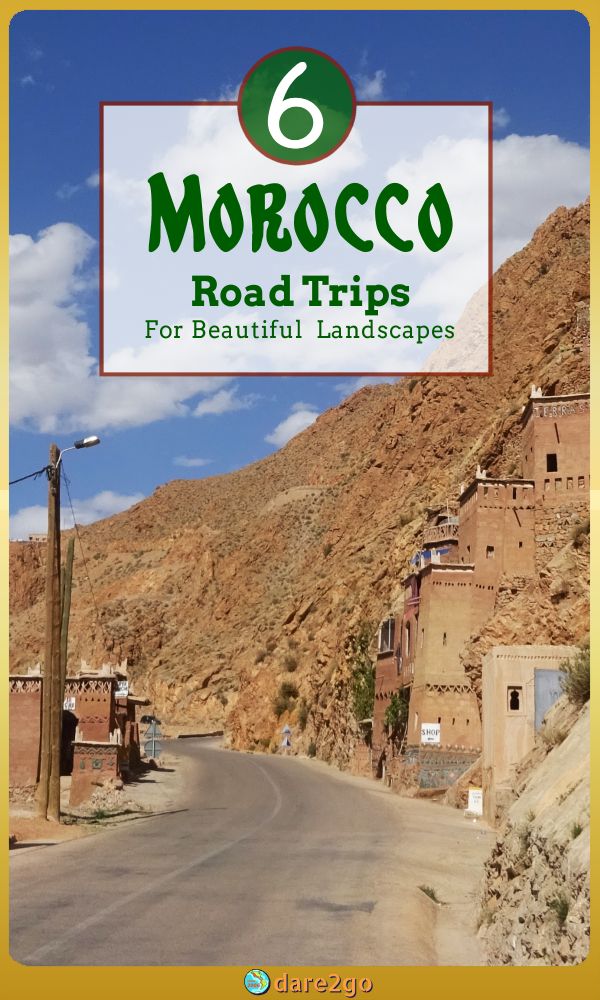
Please share this post on Pinterest to show your friends or to remember for later:







Hey :) thanks for this inspiring article. Me and my friend are considering to drive through the Dades Valley and over the high Atlas- we were wondering how much it would cost to do this with a driver ? Thanks!
Thanks for your comment, Lisa. We do like to inspire people.
Hiring a car with a driver is very common in Morocco, so you should have no difficulty finding one.
As usual in Morocco, you should probably check out possibilities and then bargain…
Great post! Lovely to see your pictures and be reminded of a wonderful place. We did several of these as well, but with a driver — that let both of us enjoy the scenery. But whether self-driving or with a driver, you are correct in identifying these as incredibly scenic routes that relatively few visitors experience. And, having been there, I’d drive most of these myself — everywhere but the desert, as those roads seemed to vanish under the sand without much warning!
Thanks, Cindy – it’s always great to evoke pleasant memories for our readers. I always enjoy photos and blog posts that remind me of somewhere I’ve been and enjoyed. I hope that your comment will help us to encourage others to take to plunge so that they can also enjoy the wonderful landscapes of Morocco on a road trip.
These all seem like very interesting itineraries to discover more of the unkown Morocco. I wonder though, as a woman solo, is it easy to do this? even if you are the one driving? Thanks!
Hi Jenn, thanks for your comment.
Most of these road trips were completed in one day – so, from town to town.
The Atlantic coast took a bit longer, but probably only because we took it very slowly.
The Dades Valley and over the High Atlas needs a bit longer because it’s very slow going.
I would think that all, except that last one, would be fine for you as a solo woman, driving yourself. And even that one could be fine, but you might feel better travelling in tandem with another vehicle.
If you want some inspiration for travelling solo in Morocco, I can really recommend this solo German woman, who travels by bicycle.
https://www.pushbikegirl.com